Why Does Mona Lisa's Smile Change?
Get the world’s most fascinating discoveries delivered straight to your inbox.
You are now subscribed
Your newsletter sign-up was successful
Want to add more newsletters?
Delivered Daily
Daily Newsletter
Sign up for the latest discoveries, groundbreaking research and fascinating breakthroughs that impact you and the wider world direct to your inbox.
Once a week
Life's Little Mysteries
Feed your curiosity with an exclusive mystery every week, solved with science and delivered direct to your inbox before it's seen anywhere else.
Once a week
How It Works
Sign up to our free science & technology newsletter for your weekly fix of fascinating articles, quick quizzes, amazing images, and more
Delivered daily
Space.com Newsletter
Breaking space news, the latest updates on rocket launches, skywatching events and more!
Once a month
Watch This Space
Sign up to our monthly entertainment newsletter to keep up with all our coverage of the latest sci-fi and space movies, tv shows, games and books.
Once a week
Night Sky This Week
Discover this week's must-see night sky events, moon phases, and stunning astrophotos. Sign up for our skywatching newsletter and explore the universe with us!
Join the club
Get full access to premium articles, exclusive features and a growing list of member rewards.
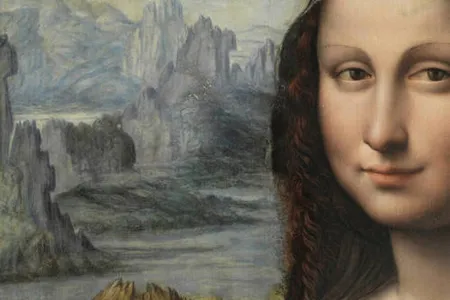
Strolling through the Louvre, you stop at Leonard da Vinci's Mona Lisa. Initially, she appears to be smiling; but as you move your gaze, the expression changes — not so happy anymore.
Among the top questions baffling art enthusiasts is the elusive grin. Did da Vinci intentionally create the ambiguous appearance?
Here's her secret: Your first stare at the legendary canvas will most likely be directly at the sitter's eyes. At this point, the part of your eye called the fovea that picks up fine details such as color will process the image of the eyes, while your imprecise peripheral vision will pick up the image of the lips. Because peripheral vision can't distinguish fine details, it mistakes the shadows from the sitter's cheekbones as a smile. When you return your gaze to the lips, your fovea sees the fine details of the lips. Voila! A smile turned upside down.
Follow Life's Little Mysteries on Twitter @llmysteries. We're also on Facebook & Google+.
Get the world’s most fascinating discoveries delivered straight to your inbox.