When volcanoes erupt, they create a stunning visual spectacle for anyone watching, but they also emit impressive noises that range from low rumbles to concussive blasts. Some of the sounds are below the range of human hearing, and a new study suggests they can be used to better understand and monitor eruptions.
Geophysicist Aurélien Dupont of the Pusan National University in South Korea studied the low-frequency sounds made by gases percolating through basaltic magma, a type of magma that flows easily because it has a low viscosity (or, roughly, thickness) and gas content. Volcanoes that spew basaltic lava tend to have gentle slopes, making impressive eruptive displays of rivers of lava running down their sides.
As the magma travels from the volcano's underground magma chamber, pockets of gas trapped inside it expand (and produce the low-frequency sound, or infrasound) until they reach the surface, where the gas can bubble away into the atmosphere.
Latest Videos From
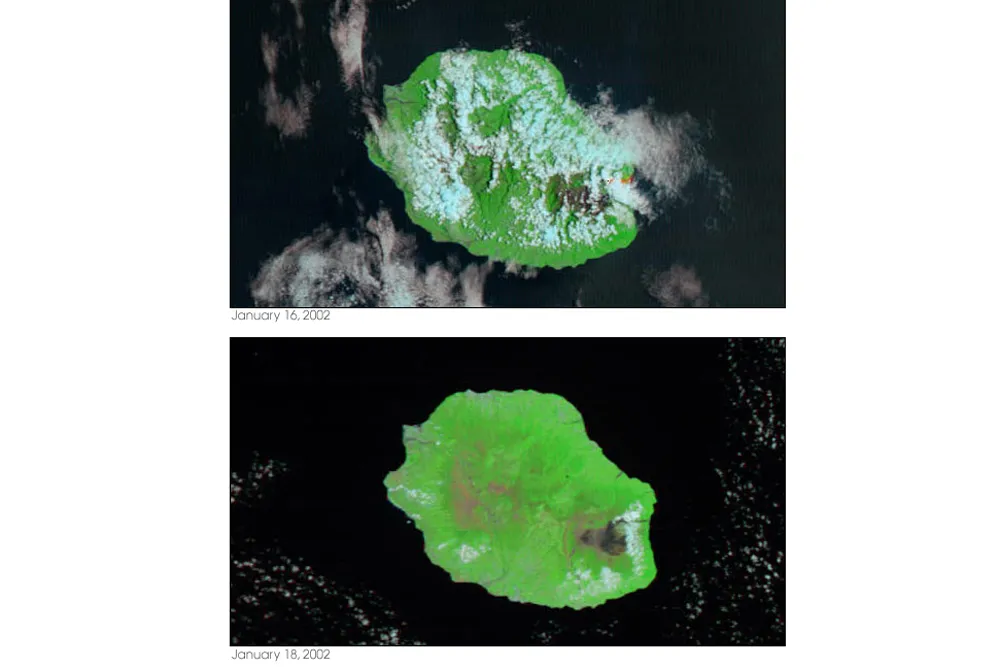
Dupont and his colleagues used condenser microphones and microbarometers to track the underground sounds of Piton de la Fournaise volcano on Reunion Island in the Indian Ocean between 1992 and 2008. They found they could match the sounds produced by the gas to its flow out of vents in and around the volcano crater, and map the course of the eruption.
"If no volcanic gas escapes anymore from the vents, detections stop and the eruption is over. Infrasound can accurately characterize the beginning and the end of an eruption," Dupont said in a statement.
The research, to be presented in Hong Kong at a joint meeting of the Acoustical Society of America, the Acoustical Society of China, the Western Pacific Acoustics Conference, and the Hong Kong Institute of Acoustics, shows that infrasound is another tool that can be used to probe volcanic eruptions, the scientists say.
"The quantitative analysis of the noise produced by the gas flow allows us not only to understand a natural system as complex as a volcano but allows us also to better monitor it," Dupont said.
Follow OurAmazingPlanet for the latest in Earth science and exploration news on Twitter @OAPlanet and on Facebook.

 Live Science Plus