
 Live Science Plus


Why Older Women Gain Weight More Easily Than Men

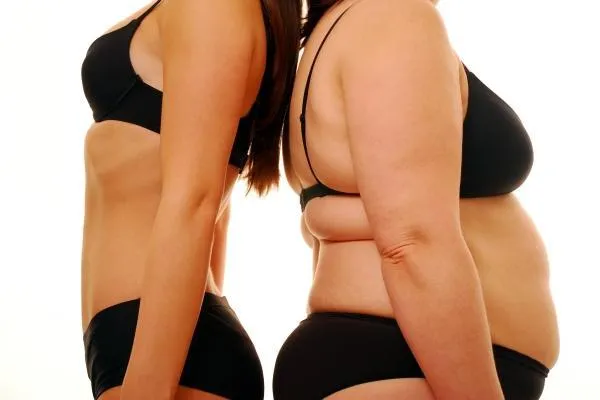
Many women find they pack on the pounds more easily than men do as they get older, and a new study on mice may help explain why.
After menopause, the activity of a particular enzyme involved in fat production — called Aldh1a1 — increases, the researchers said.
The enzyme is found in mice as well as people. During the study, female mice that ate a high-fat diet had more Aldh1a1 activity and made and stored more visceral fat (fat around the abdomen) than did male mice who ate a high-fat diet.

By contrast, female mice remained lean on a high-fat diet if they had been genetically engineered to lack the enzyme.
The female hormone estrogen appears to suppress Aldh1a1 activity. This might mean that younger women, who have high levels of estrogen, are protected against the enzyme's undesirable effects. But after menopause, levels of estrogen decrease, causing Aldh1a1 activity to increase and making females vulnerable to weight gain.
By targeting Aldh1a1, researchers may be able to develop an obesity treatment specifically for women, said study researcher Ouliana Ziouzenkova, an assistant professor of human nutrition at Ohio State University.
However, such a treatment is unlikely in the near future. Because the study was conducted using mice, researchers first would have to show that the findings apply to people as well. Also, Aldh1a1 is important for other functions in the body besides fat formation, so researchers would not be able to create a therapy that eliminates the enzyme completely, Ziouzenkova said.
The study is published in the January issue of the journal Diabetes.
Pass it on: Anincrease in the activity of a particular enzyme after menopause may make older women more vulnerable to weight gain.
Follow Rachael Rettner on Twitter @RachaelRettner, or MyHealthNewsDaily @MyHealth_MHND. We're also on Facebook & Google+.
