 Live Science Plus





You are now subscribed
Your newsletter sign-up was successful
Want to add more newsletters?

Delivered Daily
Daily Newsletter
Sign up for the latest discoveries, groundbreaking research and fascinating breakthroughs that impact you and the wider world direct to your inbox.

Once a week
Life's Little Mysteries
Feed your curiosity with an exclusive mystery every week, solved with science and delivered direct to your inbox before it's seen anywhere else.

Once a week
How It Works
Sign up to our free science & technology newsletter for your weekly fix of fascinating articles, quick quizzes, amazing images, and more

Delivered daily
Space.com Newsletter
Breaking space news, the latest updates on rocket launches, skywatching events and more!

Once a month
Watch This Space
Sign up to our monthly entertainment newsletter to keep up with all our coverage of the latest sci-fi and space movies, tv shows, games and books.

Once a week
Night Sky This Week
Discover this week's must-see night sky events, moon phases, and stunning astrophotos. Sign up for our skywatching newsletter and explore the universe with us!
Join the club
Get full access to premium articles, exclusive features and a growing list of member rewards.
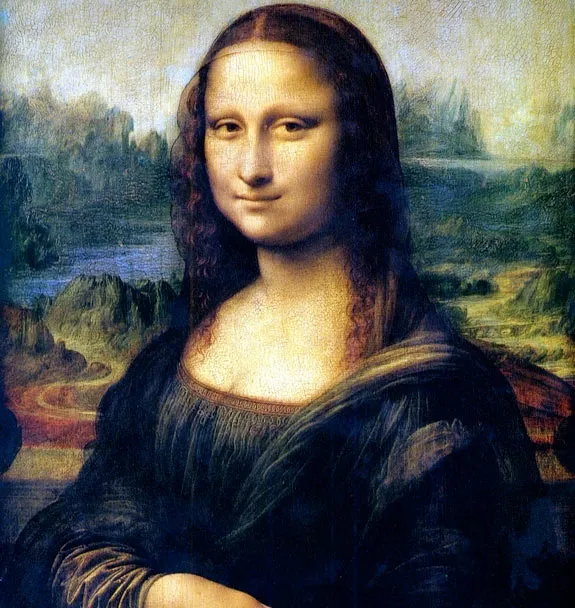
Archaeologists digging for the remains of the real-life Mona Lisa have found a female skeleton, but they say it doesn't belong to the mysterious Florentine noblewoman, according to news reports.
The team is excavating underneath a former convent in central Florence, searching for the body of Lisa Gherardini, the woman thought to be the model for Leonardo da Vinci's iconic painting finished around 1506. The skeleton that the archaeologists pulled out this week is the fourth they've found at the site. Silvano Vinceti, the researcher leading the search, said he believes the remains belong to a rich woman who died decades after Lisa Gherardini.
"The ledgers kept by the nuns of this convent tell us that, presumably, the remains exhumed today are those of Maria Del Riccio, a wealthy woman who (died) in 1609," Vinceti told a news conference Wednesday (Sept. 12), according to Italian news agency ANSA.
But Vinceti added that graves under the convent were buried on top of each other, meaning Gherardini, who died in 1542, "could be right here" if they keep digging deeper. [25 Secrets of Mona Lisa Revealed]
Vinceti has said that with Gherardini's skeleton, researchers could reconstruct her face to compare it with that of Leonardo's painting. The research team also plans to try to extract DNA from her skeleton to compare it with the remains of her two children, buried in a separate cemetery.
But some outside researchers have voiced skepticism about these goals, saying facial reconstruction is often unreliable and a DNA match with Gherardini's kids might only mean they've found one of her relatives.
Some archaeologists have also noted that the frantic pace of releasing various findings at the dig site may be problematic, as one couldn't put the remains into perspective and even declare spatial or temporal relationships between the remains without having this big-picture context at the end of the excavation process.
"Although the excavation is being carried out in a professional manner, Vinceti’s quest to dig up the 'real' Mona Lisa is not grounded in scientific research methodology," writes University of North Carolina, Chapel Hill anthropologist Kristina Killgrove on her blog, noting that Vinceti is not a scientist. "The news media’s breathless coverage of it threatens to signal to the public that archaeologists are frivolous with their time, energy, and research money."
Follow LiveScience on Twitter @livescience. We're also on Facebook & Google+.

