


Why Chimps Eat Dirt

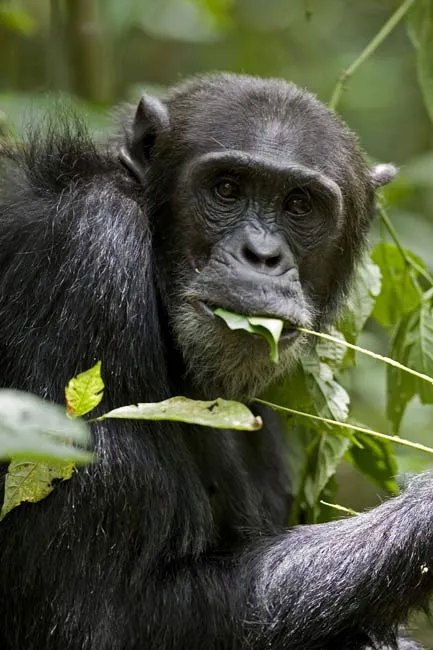
Chimps eat dirt. This has been known for years. And while chimp cuisine might look more gritty than gourmet to us, it turns out our closest animal relations have a good reason for feasting on soil: It improves their health. By studying samples of soil eaten by chimpanzees in Kibale National Park in Uganda, a research team led by Sabrina Krief of the Muséum National d’Histoire Naturelle in Paris found that eating soil with their meals boosts the anti-malarial properties of plants the chimps eat. Krief collected the dirt along with leaves from one of the chimps' favorite foods, the Trichilia rubescens plant. She found that when eaten alone, the leaves had no pharmacological effect, but when combined with soil, the mixture had clear anti-malarial properties. Scientists previously suspected that animals might eat dirt when stressed or as a source of missing minerals. This new result is the first suggestion that the combination of soil and other foods could have health benefits, Krief said. "Here we show by eating plants and soil shortly after, the properties of the plants may be revealed or enhanced," she told LiveScience. "It’s this association of items which provide potential benefits which is new." The study will be published online this week in the journal Naturwissenschaften. Krief also compared the dirt chimps eat to that used by nearby human healers to treat diarrhea. The samples shared many similarities, including a high concentration of the mineral kaolinite, the main ingredient of some anti-diarrheal medicines. "Local people around Kibale use soil in traditional medicine, associated to different plant parts," Krief said. "It may potentialize the properties of plant or attenuate their toxicity by adsorbing noxious compounds." This discovery could help reinforce the idea that conservation benefits humans and animals alike, Krief said. "This overlapping use by humans and apes is interesting from both evolutionary and conservation perspectives," she said. "Saving apes and their forests is also important for human health."
- Top 10 Missing Links
- Video: Jane Goodall's Wild Chimpanzees
- Image Gallery: The World's Biggest Beasts
Get the world’s most fascinating discoveries delivered straight to your inbox.
