 Live Science Plus





You are now subscribed
Your newsletter sign-up was successful
Want to add more newsletters?

Delivered Daily
Daily Newsletter
Sign up for the latest discoveries, groundbreaking research and fascinating breakthroughs that impact you and the wider world direct to your inbox.

Once a week
Life's Little Mysteries
Feed your curiosity with an exclusive mystery every week, solved with science and delivered direct to your inbox before it's seen anywhere else.

Once a week
How It Works
Sign up to our free science & technology newsletter for your weekly fix of fascinating articles, quick quizzes, amazing images, and more

Delivered daily
Space.com Newsletter
Breaking space news, the latest updates on rocket launches, skywatching events and more!

Once a month
Watch This Space
Sign up to our monthly entertainment newsletter to keep up with all our coverage of the latest sci-fi and space movies, tv shows, games and books.

Once a week
Night Sky This Week
Discover this week's must-see night sky events, moon phases, and stunning astrophotos. Sign up for our skywatching newsletter and explore the universe with us!
Join the club
Get full access to premium articles, exclusive features and a growing list of member rewards.
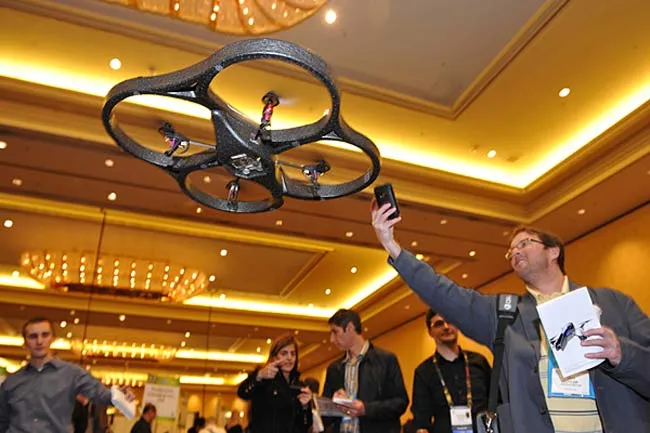
Drones use GPS to navigate as they fly about their business, but many commercial GPS systems can leave the flying robots open to hacking. Researchers used about $1,000 worth of equipment to show how they could take away control of a test drone from its original handlers in a recent test.
The possibility of hacked drones naturally worries the U.S. Department of Homeland Security. That's why officials invited researchers from the University of Texas at Austin to run the live hacking demonstration on a drone helicopter at the White Sands Missile Range in New Mexico, according to IEEE Spectrum.
Such GPS "spoofing" can threaten much more than just our flying robot friends — GPS helps automated systems guide aircraft, ships and all those smart cars that could transform into driverless cars in the near future. So perhaps the bigger lesson is to ensure standards for hardening commercial GPS systems against hacking.
But it's not all doom and gloom for drones. The Association of Unmanned Vehicle Systems International (AUVSI) wrote to IEEE Spectrum to explain that the civilian drone industry is already looking into anti-hacking technologies such as those being used by U.S. military drones. The latest example of drone hacking possibilities may serve to speed up the process of hardening civilian drones.
Source: IEEE Spectrum
This story was provided by InnovationNewsDaily, a sister site to LiveScience. Follow InnovationNewsDaily on Twitter @News_Innovation, or on Facebook.

