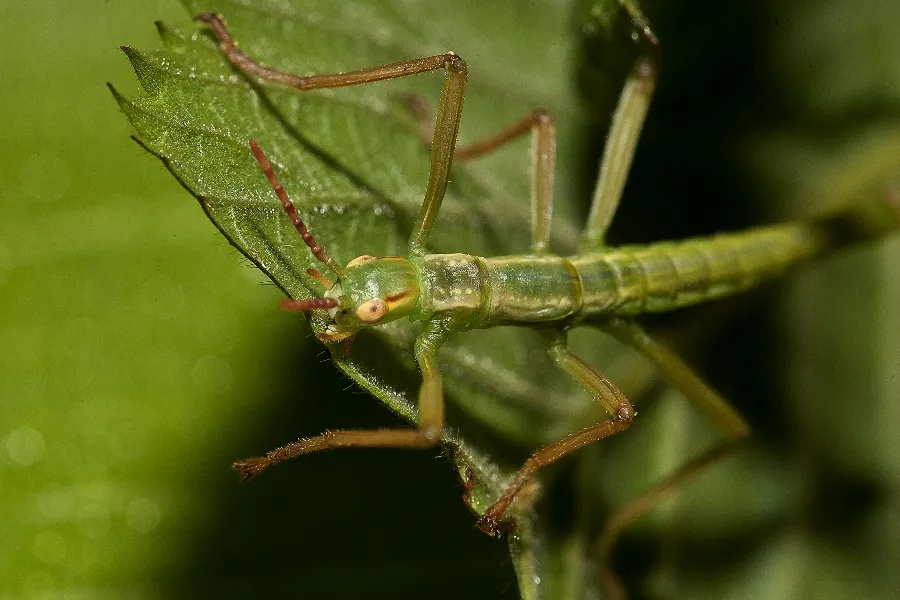
Critically Endangered 'Tree Lobsters' Hatched at Zoo
Get the world’s most fascinating discoveries delivered straight to your inbox.
You are now subscribed
Your newsletter sign-up was successful
Want to add more newsletters?
Delivered Daily
Daily Newsletter
Sign up for the latest discoveries, groundbreaking research and fascinating breakthroughs that impact you and the wider world direct to your inbox.
Once a week
Life's Little Mysteries
Feed your curiosity with an exclusive mystery every week, solved with science and delivered direct to your inbox before it's seen anywhere else.
Once a week
How It Works
Sign up to our free science & technology newsletter for your weekly fix of fascinating articles, quick quizzes, amazing images, and more
Delivered daily
Space.com Newsletter
Breaking space news, the latest updates on rocket launches, skywatching events and more!
Once a month
Watch This Space
Sign up to our monthly entertainment newsletter to keep up with all our coverage of the latest sci-fi and space movies, tv shows, games and books.
Once a week
Night Sky This Week
Discover this week's must-see night sky events, moon phases, and stunning astrophotos. Sign up for our skywatching newsletter and explore the universe with us!
Join the club
Get full access to premium articles, exclusive features and a growing list of member rewards.
Three critically endangered insects called Lord Howe Island stick insects, also known as tree lobsters, have been hatched at the San Diego Zoo for the first time.
The species was thought to be extinct after 1920, when the last known wild tree lobsters were devoured by rats on their native Lord Howe Island, off the coast of Australia. However, in 2001, a small group of the stick insects was discovered on Ball's Pyramid, a remnant volcano in the Pacific Ocean near the island. After discovering the rare insect, four were taken to the Melbourne Zoo, where zookeepers have successfully hatched a number of the insects in an effort to bring them back from extinction.

Eggs were shipped to San Diego to establish a new, separate colony, according to the zoo. After incubating the eggs at 80 degrees Fahrenheit (27 degrees Celsius), three nymphs emerged, which are now 1 inch (2.5 centimeters) long and light green.
They will grow to be around 7 inches (18 cm) long and become a very shiny, dark black-brown. Zookeepers hope this colony will be used to help reintroduce the insects back into their native habitat on Lord Howe Island or elsewhere.
There are more than 3,000 species of stick insect, and they live on every continent except Antarctica. The Lord Howe Island stick insects are the largest flightless species.
Follow OurAmazingPlanet for the latest in Earth science and exploration news on Twitter @OAPlanet. We're also on Facebook andGoogle+.
Get the world’s most fascinating discoveries delivered straight to your inbox.