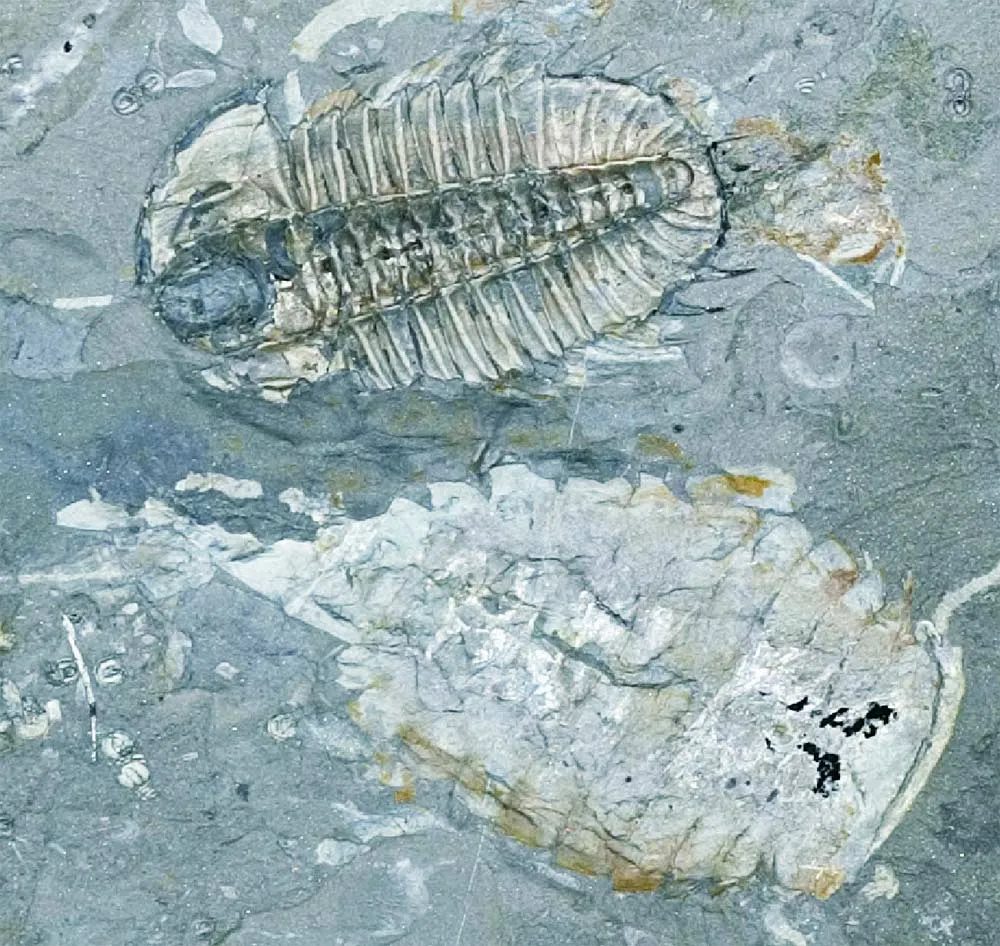
Ancient animals may have started their drive toward explosive diversity back when the Earth was a giant snowball, new research suggests.
A startling expansion in the diversity of life forms began about 540 million years ago, early in the Cambrian period. During this apparently sudden outburst, known as the Cambrian explosion, all the major groups of animals seemed to materialize rapidly. Scientists have debated the causes of this great flowering of life for centuries.
Now researchers have new evidence that major groups of animals actually may have existed many tens of millions of years before this seeming flurry of diversity. This early activity helped light the fuse of the later Cambrian explosion.
Latest Videos From
Scientists analyzed the fossil record and genomes of existing organisms that are related to Cambrian species. The aim was to figure out when different lineages of animals diverged from each other.
The results suggest that many of Earth's early organisms developed the genetic programs for their body plans during the Cryogenian period, which spanned from 635 million to 850 million years ago, with the last common ancestor of all living animalsoriginating nearly 800 million years ago. These early creatures may then have flourished later in more favorable environments — say, when more oxygen was around — leaving behind enough fossils to survive up to now.
"We see that there's this long lag between the evolution of the developmental toolkits for their bodies and the explosion of diversity we see in the fossil record," said researcher Douglas Erwin, curator of paleozoic invertebrates at the Smithsonian National Museum of Natural History.
During the Cryogenian period, recent studies suggest the planet may have been a "Snowball Earth" at times, completely coated in ice for stints lasting millions of years. Researchers have suggested the deep freeze could have spurred the evolution of animalsby pumping a surge of nutrients into the oceans.
"Lots of lineages of animals appear to have their start back in the Cryogenian," Erwin told LiveScience.
The burst in diversity later seen in the Cambrian might then be due to how traits of animals evolved and interacted with each other while Earth was a frozen orb. This interaction spurred the development of more features, and thus greater diversity. For instance, the advent of multicellular predators might have triggered arms races between hunters and prey, and sponges and burrowing worms around at the time might have altered the landscape in ways that helped other life flourish, just as earthworms do now by churning up soil.
"The explanation for what happened in the Cambrian lay in how organisms modified their environment," Erwin said.
The scientists detailed their findings in the Nov. 25 issue of the journal Science.
Follow LiveScience for the latest in science news and discoveries on Twitter @livescience and on Facebook.