















In photos: Spooky deep-sea creatures
Life In the Shadowy Depths

From frightful fangtooth fish and vampire squid to coffinfish and spiky, sinister sea urchins, plenty of strange and scary creatures lurk in the dark, cold depths of the ocean ... Be brave and dive on in!
Alien-like Anglerfish
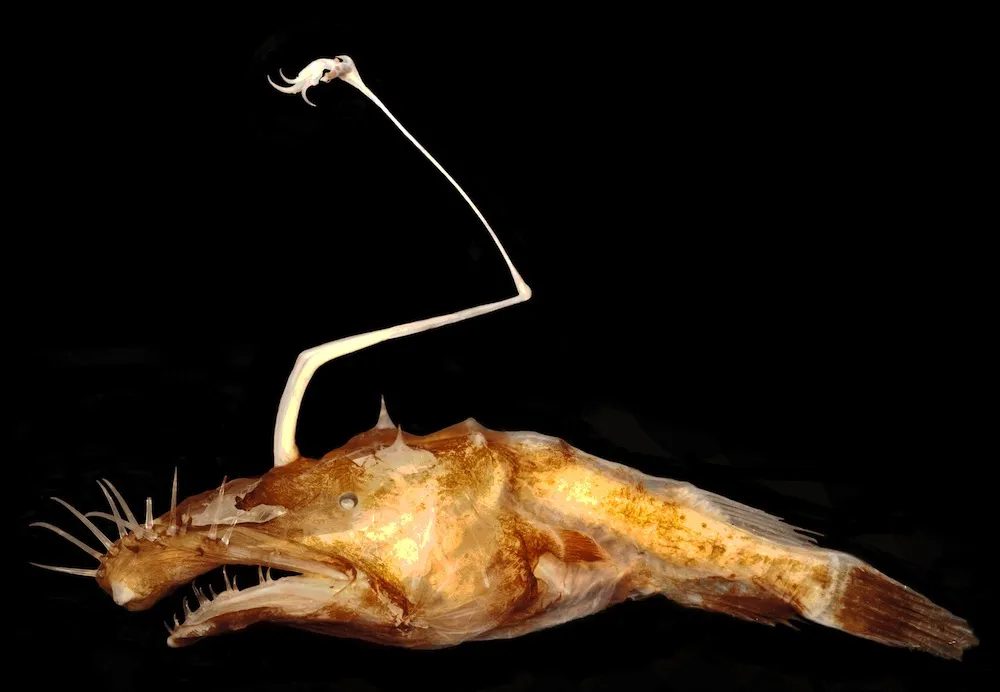
With its needle-like teeth and a pole-type structure protruding from its head, this fish looks more like an alien creature than something found here on Earth. This female specimen is actually a new species of anglerfish that was discovered in the deep waters beneath the Gulf of Mexico.
The fish, Lasiognathus dinema, has a curved appendage that sticks out of the organ at the tip of its "fishing rod," which contains light-producing bacteria. Anglerfish nab meals by using this structure to trick fish that are attracted to the light.
"Spaghetti Monster"
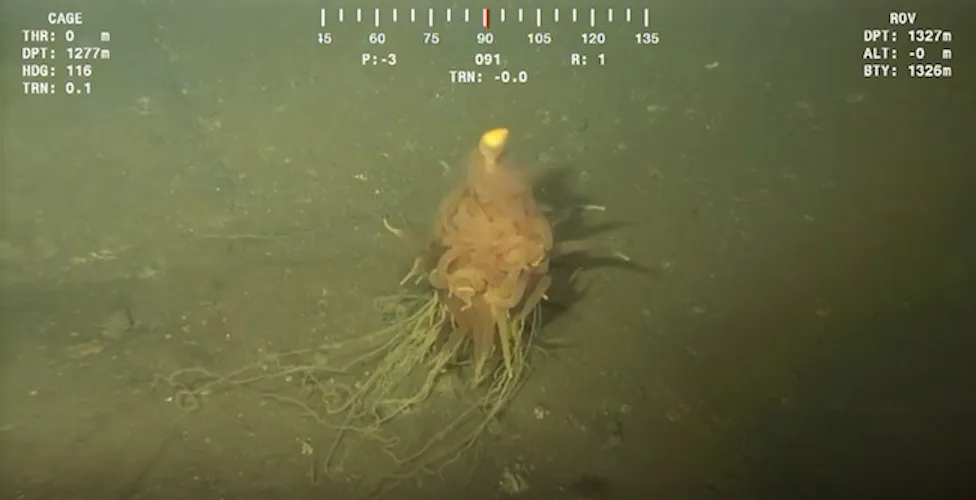
This odd critter is proof that things can get weird in the deep sea. Very weird.
This noodle-like beast, Bathyphysa conifer, was seen off the coast of Angola in 2015 by workers at the oil and gas company BP. The workers were collecting video footage at a depth of about 4,000 feet (1,220 meters) underwater when they spotted what they said reminded them of the deity of the Church of the Flying Spaghetti Monster.
B. conifer is a siphonophore, a group of marine animals that includes corals and jellyfish.
"Ghost Fish"
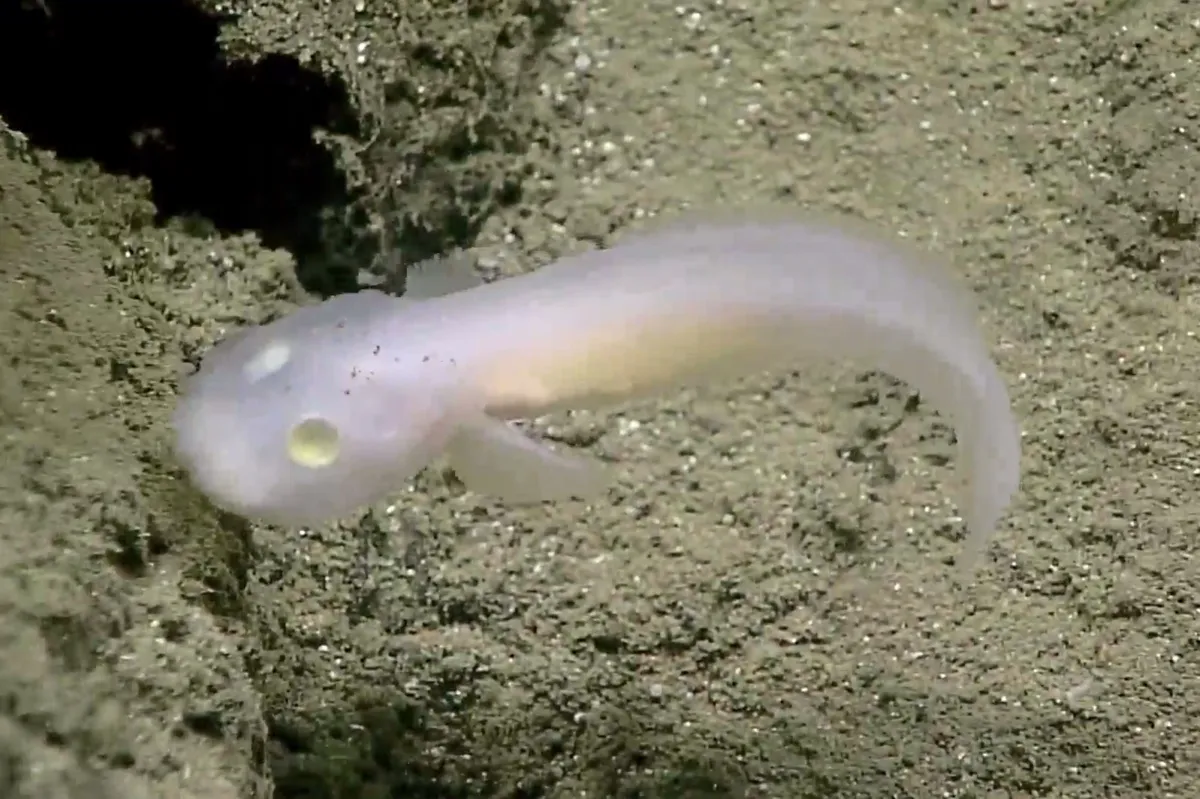
This ghost-like creature was spotted by scientists in July 2016 during a mission aboard the National Oceanic and Atmospheric Administration's (NOAA) Okeanos Explorer research ship. It marked the first time that this "ghost fish," part of the family Aphyonidae, was seen alive and swimming.
The fish was seen swimming along a ridge, at a depth of 8,202 feet (2,500 meters), at the Mariana Trench National Monument. This protected area covers 95,216 square miles (246,608 square kilometers) east of the Philippines.
The "ghost fish" has translucent, scale-less skin and strange-looking, colorless eyes.
Vampire Squid

Despite its terrifying name, the vampire squid is relatively tiny, reaching a maximum of 6 inches (15.4 cm) in length. It gets its name from its red coloring, glowing, bioluminescent eyes and the cloak-like webbing that connects its eight arms. Although it has similarities with both squid and octopuses, it is actually not a squid but in its own separate family, of which it is the last remaining member; as such, the animal is referred to as a "living fossil." Its scientific name, Vampyroteuthis infernalis, literally translates to "vampire squid from hell." Yikes.
Eerie Anglerfish

The terrifyingly toothy anglerfish became a common occurrence in little kids' nightmares ever since it chased Nemo and Dory in Pixar's "Finding Nemo." To attract prey, the scary-looking fish uses a bioluminescent "fishing pole" that hangs just above and in front of its toothy face. The lure is actually a piece of dorsal spine packed with millions of glow-in-the-dark bacteria.
Giant Crustaceans
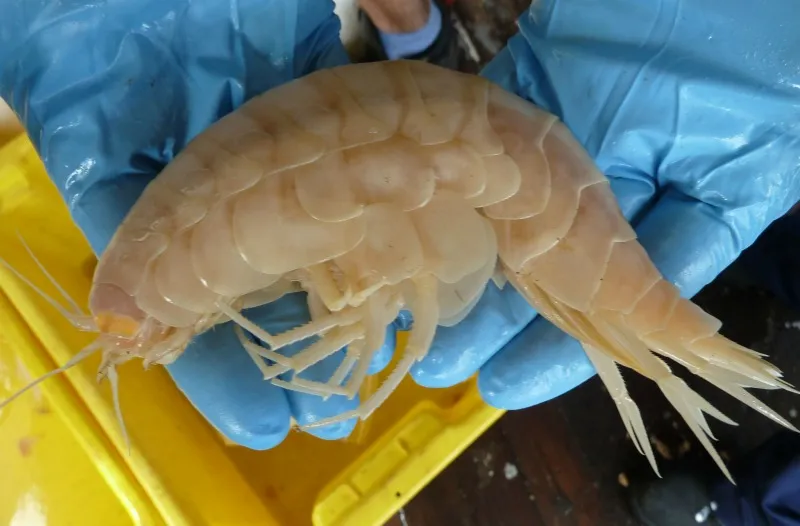
This huge crustacean was one of seven "supergiant" amphipods discovered by scientists in 2011 while they were exploring one of the deepest trenches on Earth, the Kermadec Trench off the northeast coast of New Zealand.
These pale, leggy creatures are more than 20 times larger than their typical crustacean relatives. The supergiant amphipods (Alicella gigantea) were found 4 miles (6 kilometers) down in the Kermadec Trench, according to the researchers.
Get the world’s most fascinating discoveries delivered straight to your inbox.
Monstrous Megamouth Shark

The megamouth shark, shown here, is an extremely rare species of deepwater shark. The megamouth swims with its mouth wide open, catching and sucking in fish and krill as it glides along. Its massive mouth extends past its eyes and is equipped with about 50 rows of small, sharp teeth on each jaw.
The Blackdragon Fish

Another bottom-dwelling bioluminescent creature, the blackdragon fish has light-emitting organs arranged all along its belly to fool predators by changing its silhouette. The spooky fish also has bioluminescencant "flashlights" next to each eye that it can flash on while on the look-out for prey or to signal potential mates. As you can see in the above photo, the blackdragon fish is so toothy that even its tongue has razor-sharp teeth.
Skeletal Jellyfish

The deep-sea Aequorea, or crystal jellyfish, has a translucent body and long tentacles that give it a ghostly appearance. A jellyfish's tentacles, which trail after its body, can be less than an inch to120 feet (30.48 meters) long.
Creepy Crawly: Giant Isopod

This deep-sea marine creature isn't for those with a phobia of bugs: the giant isopod is a crustacean that lives at the bottom of the ocean and is related to shrimp, crabs, and… the roly-poly pill-bugs that dwell in your garden. But unlike their insect cousins, giant isopods can grow to be more than 16 inches (40.6 cm) long.