 Live Science Plus





You are now subscribed
Your newsletter sign-up was successful
Want to add more newsletters?

Delivered Daily
Daily Newsletter
Sign up for the latest discoveries, groundbreaking research and fascinating breakthroughs that impact you and the wider world direct to your inbox.

Once a week
Life's Little Mysteries
Feed your curiosity with an exclusive mystery every week, solved with science and delivered direct to your inbox before it's seen anywhere else.

Once a week
How It Works
Sign up to our free science & technology newsletter for your weekly fix of fascinating articles, quick quizzes, amazing images, and more

Delivered daily
Space.com Newsletter
Breaking space news, the latest updates on rocket launches, skywatching events and more!

Once a month
Watch This Space
Sign up to our monthly entertainment newsletter to keep up with all our coverage of the latest sci-fi and space movies, tv shows, games and books.

Once a week
Night Sky This Week
Discover this week's must-see night sky events, moon phases, and stunning astrophotos. Sign up for our skywatching newsletter and explore the universe with us!
Join the club
Get full access to premium articles, exclusive features and a growing list of member rewards.
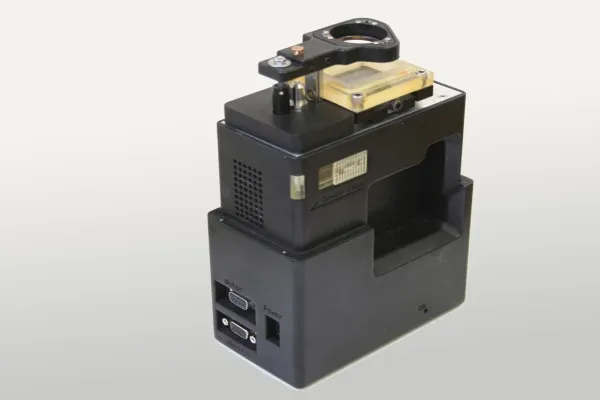
At-home 3-D printing could revolutionize shopping by allowing users to download and print anything from earrings to replacement machine parts to silverware. Unfortunately, most 3-D printers remain too large and too expensive for private use. The new milk carton-size printer developed by the Vienna University of Technology may finally change that by providing rapid fabrication in the small size and low price needed by the home consumer.
The printer itself weighs a little over three pounds and costs 1,200 Euros ($1,700).
“We will continue to reduce the size of the printer, and the price will definitely decrease too, if it is produced in large quantities,” said Klaus Stadlmann, one of its creators.
According to the university, the objects are printed with a special type of resin that “hardens precisely where it is illuminated with intense beams of light. Layer for layer, the synthetic resin is irradiated at exactly the right spots. When one layer hardens, the next layer can be attached to it, until the object is completed.”
This enables the smaller printer to make much more intricate interior designs than larger 3-D printers, which rely on casting techniques. This process also makes it possible to make individually adjusted pieces.
The individual layers hardened by the light beams are just one- twentieth of a millimeter thick, which makes them perfect for constructing items such as the parts for hearing aids, a process that requires extraordinary precision.
This story was provided by InnovationNewsDaily, a sister site to LiveScience. Follow InnovationNewsDaily on twitter @News_Innovation, or on Facebook.

