













Body's Hidden Defense Against Common Cold Virus Uncovered

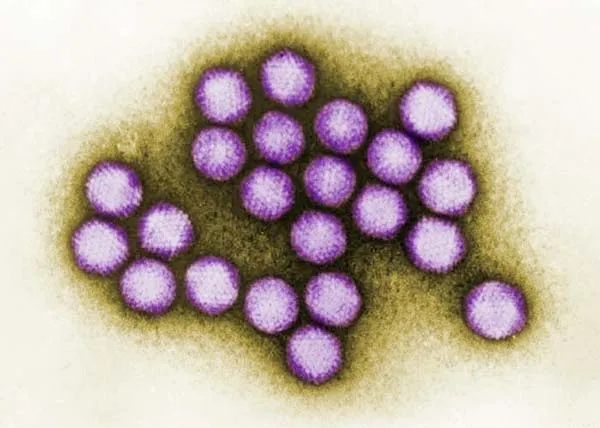
It has long been thought disease-causing viruses can take shelter from your body's defenses, the immune system, by hiding inside cells. But a new study from British researchers found this is not the case.
Antibodies, which are proteins in the immune system , can latch on to some viruses and follow them on their journey to a cell's interior. Once inside, these antibodies trigger an immune response within the cell, killing the virus without harming the cell, the researchers said.
Figuring out how to enhance this process may lead to new types of antiviral drugs, they said.
"It's a very interesting and exciting study that expands our understanding of the way that antibodies really can protect us," said Dr. Jordan Orange, an immunologist at the Children's Hospital of Philadelphia, who was not involved with the study.
The researchers said a key protein in cells, called TRIM21, is in charge of activating the virus' destruction once it's inside. TRIM21 can tag the virus to be destroyed by the cell's "garbage disposal" system. When the researchers increased the amount of TRIM21 in cells, they found the destruction happened more efficiently.
The destruction occurs quite rapidly, before the virus has a chance to seize control of the cell's machinery and replicate itself.
The experiments were conducted on human cells growing in laboratory dishes infected with adenoviruses , which are viruses that cause upper respiratory infections, including the common cold . More research needs to be done to see whether the viral destruction works the same way inside living animals, the researchers said.
Get the world’s most fascinating discoveries delivered straight to your inbox.
The immune system's antibodies were previously thought to combat viruses mainly by preventing them from infecting cells, a process known as neutralization.
"If this work is correct, the antibodies that bind but do not neutralize might still be able to inactivate the virus," said Thomas Moran, a professor of microbiology at the Mount Sinai Medical Center in New York.
However, more work needs to be done to determine if this process occurs for other viruses besides adenoviruses, and to see if the process invovling TRIM21 can prevent an infection from taking hold in a living animal, Moran said.
It is important to note the findings apply only to certain viruses those that lack an outer "envelope" encasing their protein coat. Viruses with these envelopes, such as the influenza virus, shed them before they enter a cell, and so an antibody tag attached to the virus envelope would be left behind, Moran said.
And it's too early to tell whether boosting the amount of TRIM21 could serve as a therapy for adenoviruses, Orange said.
But the work "really outlines some potential fertile ground for exploring a way to get more out of the defense system that you might already have," he said.
The study was published online Nov. 2 in the journal Proceedings of the National Academy of Sciences and was conducted by researchers at the Medical Research Council in the United Kingdom.

Rachael is a Live Science contributor, and was a former channel editor and senior writer for Live Science between 2010 and 2022. She has a master's degree in journalism from New York University's Science, Health and Environmental Reporting Program. She also holds a B.S. in molecular biology and an M.S. in biology from the University of California, San Diego. Her work has appeared in Scienceline, The Washington Post and Scientific American.