

-
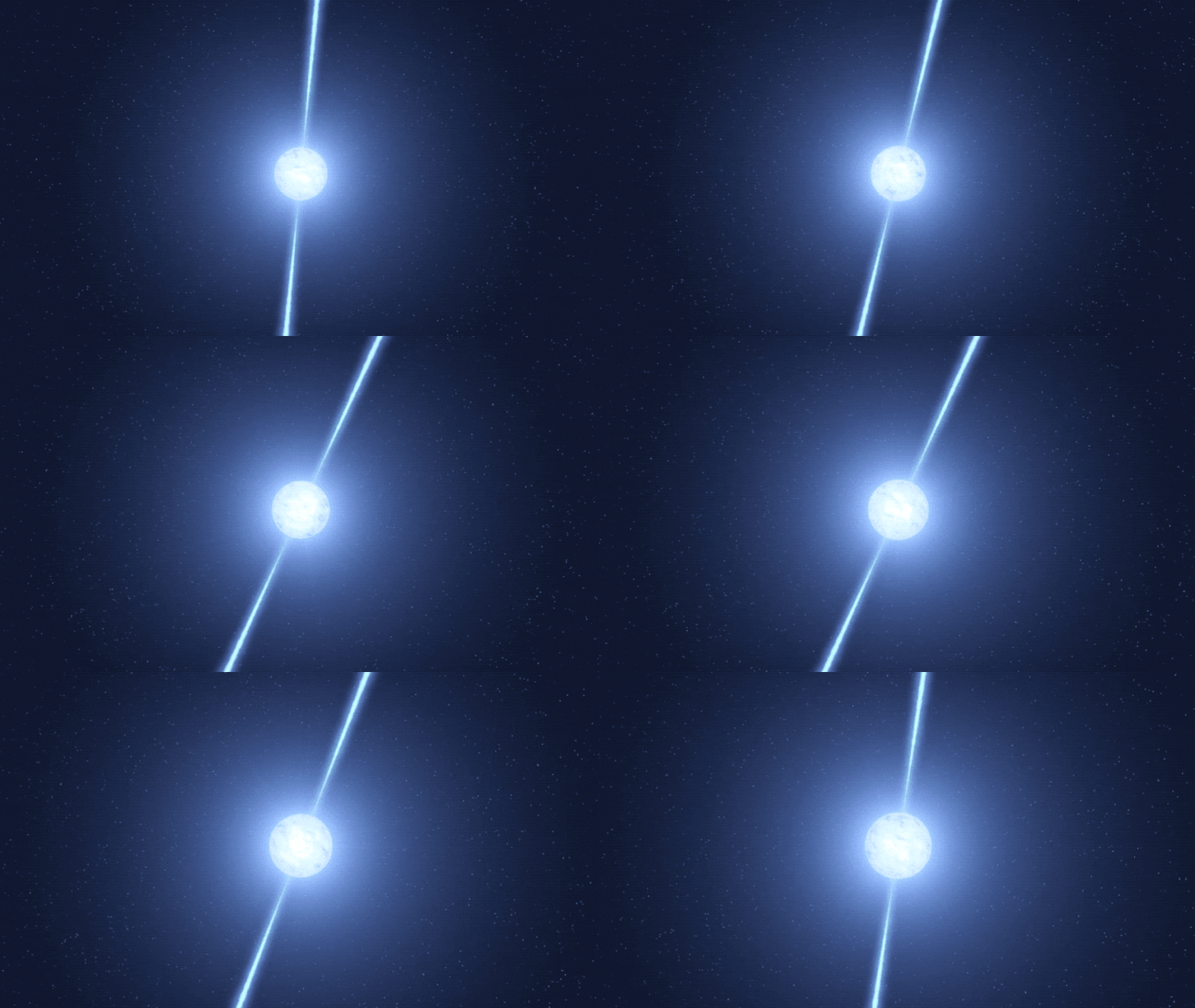 Science history: Astronomy graduate student Jocelyn Bell Burnell discovers a signal of 'little green men,' but her adviser gets the Nobel Prize — Nov. 28, 1967
Astronomer Jocelyn Bell Burnell detected a strange signal from outer space that would lead to the discovery of the radio pulsar. The signal, once described as coming from "little green men," would earn her adviser the Nobel Prize in physics in 1974.
17 Commentsspace -
 Science history: Iconic 'Lucy' fossil discovered, transforming our understanding of human evolution — Nov. 24, 1974
On an expedition in the Awash Valley in Ethiopia, two anthropologists uncovered the bones of a 3.2 million-year-old human ancestor. The iconic "Lucy" fossil would reveal much about our species' tangled family tree.
3 Commentshuman-evolution -
 Science history: Experiment shows mutations arise spontaneously, supporting pillar of Darwinian evolution — Nov. 20, 1943
Two bacteriologists showed that mutations arise spontaneously in bacterial cultures, thereby disproving Jean-Baptiste Lamarck's theory of evolution.
evolution -
 Science history: 'Patient zero' catches SARS, the older cousin of COVID — Nov. 16, 2002
A person came down with an atypical form of pneumonia in November 2002, but it would be two months before anyone realized it was the start of a pandemic.
viruses-infections-disease -
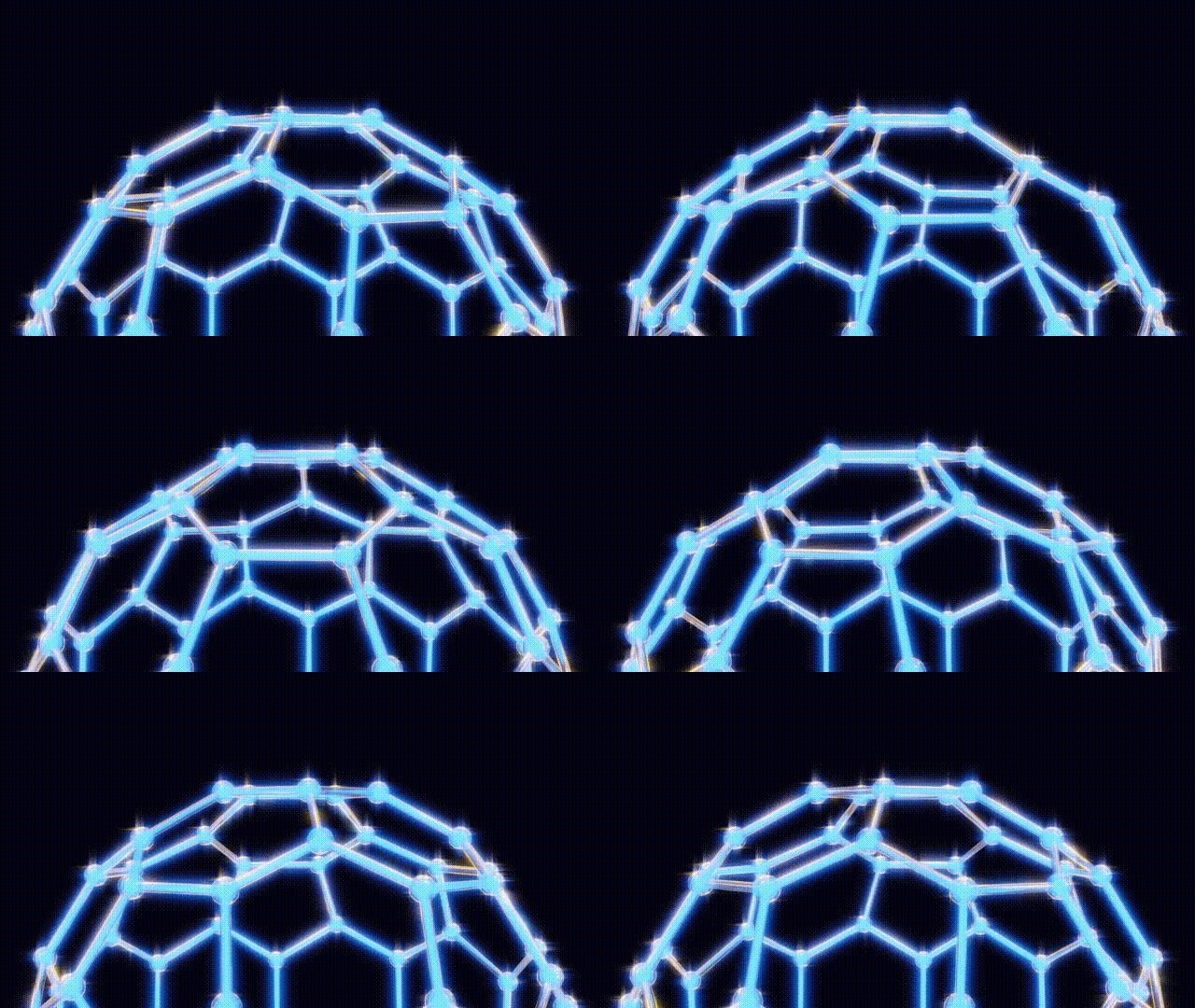 Science history: Chemists discover buckyballs — the most perfect molecules in existence — Nov. 14, 1985
Over a feverish 10-day period, scientists synthesized and described a new class of carbon molecules, called buckminster fullerenes, after the iconic 20th-century inventor.
chemistry -
 Science history: Russian mathematician quietly publishes paper — and solves one of the most famous unsolved conjectures in mathematics — Nov. 11, 2002
Mathematician Grigori Perelman solved the Poincaré conjecture, and then rejected the $1 million prize that came with it.
40 Commentsmathematics -
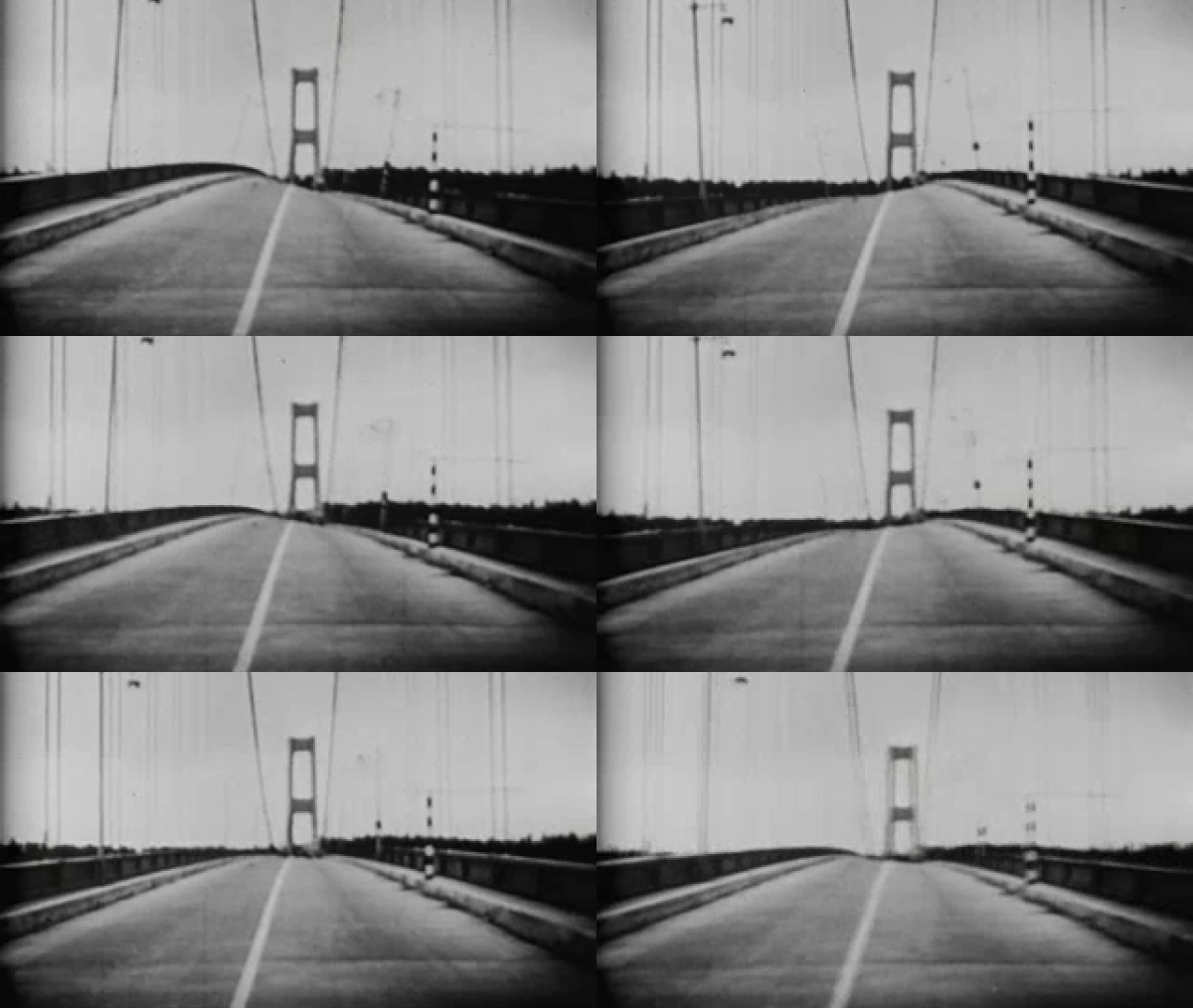 Science history: The Tacoma Narrows Bridge collapses, forcing a complete rethink in structural engineering — Nov. 7, 1940
One morning, the Tacoma Narrows Bridge began bouncing up and down and twisting to and fro before ultimately collapsing into the Puget Sound.
engineering -
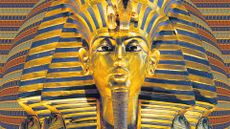 Science history: Archaeologists discover King Tut's tomb, and rumors of the 'mummy's curse' begin swirling — Nov. 4, 1922
While excavating in the Valley of the Kings, an Egyptian worker on an archaeological dig discovered a partially obscured step. It would lead into the unlooted tomb of King Tut.
8 Commentsancient-egyptians -
 Science history: Astronomers spot first known planet around a sunlike star, raising hopes for extraterrestrial life — Nov. 1, 1995
About 50 light-years from Earth, a gas giant about half the mass of Jupiter orbits a sunlike star. The discovery of Pegasi 51 b ushered in a new era of exoplanet research.
exoplanets


