A mock-up of the NASA Space Launch System (SLS) rocket booster is lowered onto a mobile launch pad during a training exercise. This weekend, NASA technicians will roll out the real thing.
NASA's first mission to take humans to the moon in half a century is creeping ever closer.
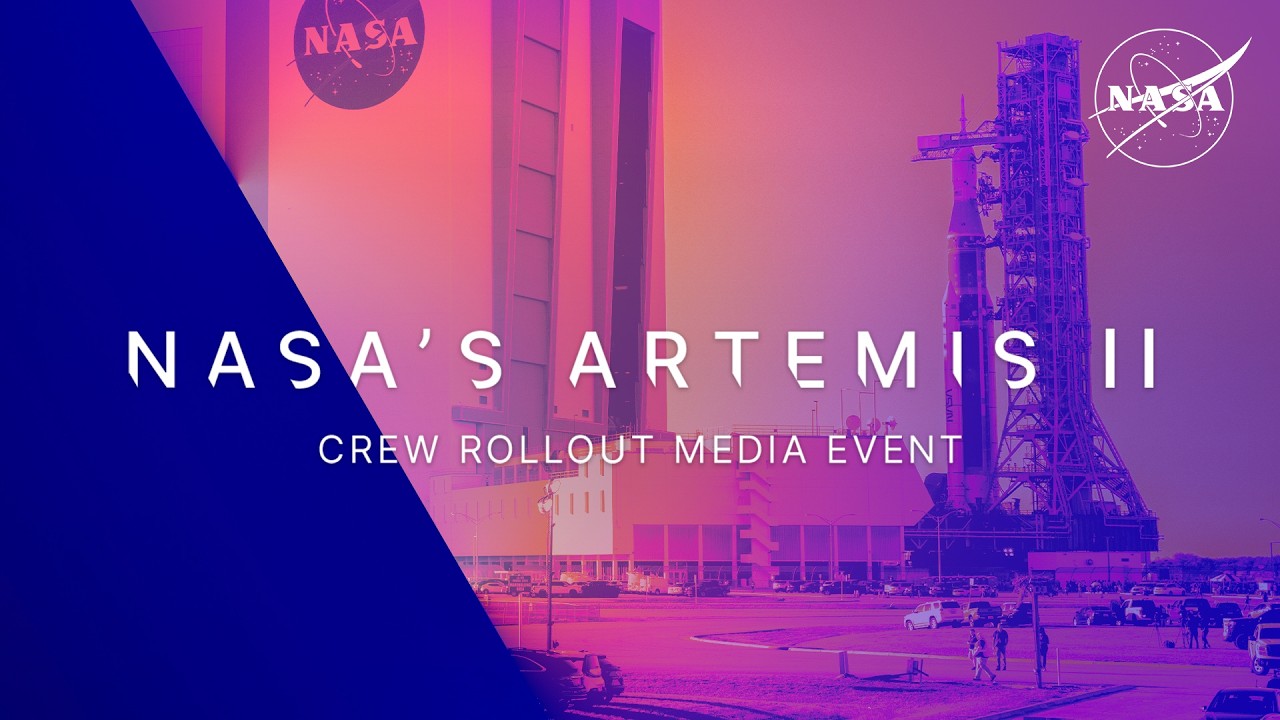
The space agency has announced that the rollout of its Artemis 2Space Launch System rocket and Orion Module will begin Saturday (Jan. 17) no earlier than 7 a.m. ET, ahead of a launch as early as Feb. 6.
Embarking from the Vehicle Assembly Building to Launch Pad 39B at NASA's Kennedy Space Center in Florida, the 11 million-pound (5 million kilograms) stack will be transported at a speed of about 1 mph (1.6 km/h along a 4-mile (6.4 kilometers) route — a journey that will take up to 12 hours and be streamed live on NASA's Youtube channel.
NASA's Artemis II Crew Rollout Media Event - YouTube
"We are moving closer to Artemis II, with rollout just around the corner," Lori Glaze, the acting associate administrator for NASA's Exploration Systems Development Mission Directorate, said in a statement released Jan. 9. "We have important steps remaining on our path to launch and crew safety will remain our top priority at every turn, as we near humanity's return to the Moon."
A historic mission to the moon
Artemis 2 is the first crewed spaceflight in the Artemis Program, which aims to send humans back to the moon for the first time since 1972. Four astronauts will take a 10-day flight around the moon and back to Earth, testing systems ahead of the Artemis 3 mission, which aims to deliver astronauts to the lunar surface by 2028.
The fully-stacked SLS awaits a visit from the Artemis 2 astronauts inside NASA's Vehicle Assembly Building
(Image credit: NASA/Joel Kowsky)
The Space Launch System is the most powerful rocket ever built. Standing 212 feet (65 meters) tall, its core stage is capable of generating 8.8 million pounds (3.9 million kg) of thrust to launch the Orion capsule mounted atop it into space.
The more than 700,000 gallons (2.6 million liters) of cryogenic propellant set to provide the rocket's thrust will be tested by NASA during a wet dress rehearsal at the end of January. The prelaunch test will also include things like a launch countdown, practice removing the rocket propellant, and safety procedures. If all goes to plan, NASA will then conduct a flight-readiness review before committing to a launch date.
Sign up for the Live Science daily newsletter now
Get the world’s most fascinating discoveries delivered straight to your inbox.
If the rocket does launch in February, it will do so 15 months later than it was initially scheduled. NASA says the delay is due to the Orion capsule needing additional prep time before it can safely carry a human crew.
Despite these delays, NASA remains confident that the Artemis mission will launch in time to beat China in the race to send a crewed mission to the moon. China has recently landed rovers on the moon and Mars and completed construction of its Tiangong space station in 2022. The country is also leading construction efforts of an International Lunar Research Station, which is slated for completion by 2030.
Ben Turner is the features editor at Live Science. He covers physics and astronomy, among other topics such as tech and climate change. He graduated from University College London with a degree in particle physics before training as a journalist. When he's not writing, Ben enjoys reading literature, playing the guitar and losing at chess.
You must confirm your public display name before commenting
Please logout and then login again, you will then be prompted to enter your display name.