















NASA telescope combines 100 maps of the universe into one: 'every astronomer is going to find something of value here'
NASA's SPHEREx telescope unveiled its first full-sky map of the universe, combining more than 100 infrared observations into one dazzling mosaic.

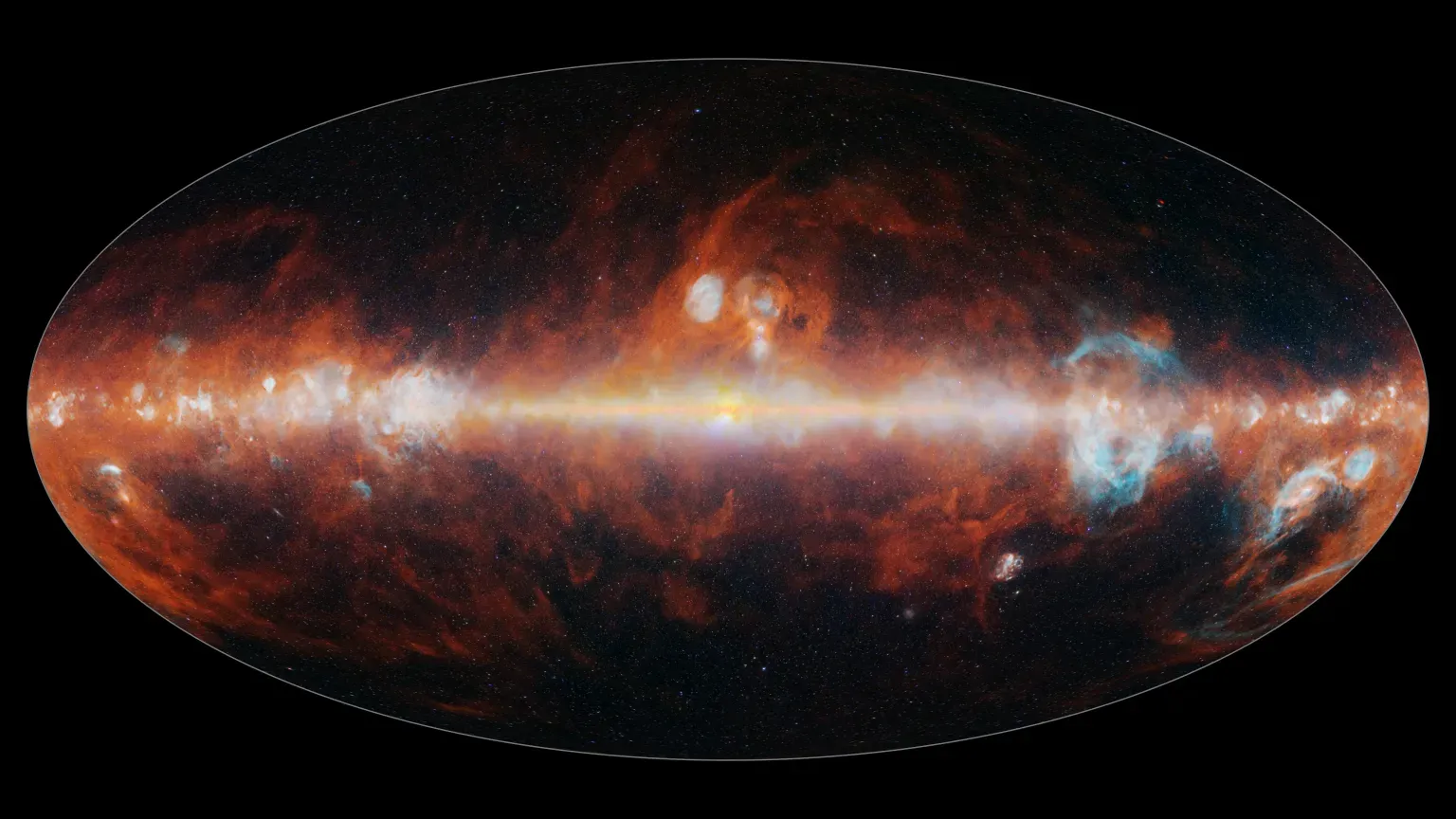
Half a year after first opening its eyes to the cosmos, NASA's SPHEREx spacecraft has unveiled its first complete, all-sky mosaic of the universe.
The first of at least four such maps anticipated from SPHEREx, the new composite of more than 100 individual exposures promises to reveal unprecedented details of the night sky.
"It's incredible how much information SPHEREx has collected in just six months — information that will be especially valuable when used alongside our other missions' data to better understand our universe," Shawn Domagal-Goldman, the acting director of the Astrophysics Division at NASA Headquarters in Washington, said in a statement.
"I think every astronomer is going to find something of value here," he added, "as NASA's missions enable the world to answer fundamental questions about how the universe got its start, and how it changed to eventually create a home for us in it."
'102 new maps of the entire sky'
Though modest in size and cost, SPHEREx (short for Spectro-Photometer for the History of the Universe, Epoch of Reionization, and Ices Explorer) is built to tackle some of astronomy's biggest mysteries, from probing the universe's explosive beginnings to tracing the icy ingredients delivered to planets that may have helped life to emerge.
SPHEREx's defining strength is its panoramic vision. The spacecraft surveys the entire sky every six months, splitting incoming light into 102 distinct infrared "colors" that are invisible to the human eye. The first of these observations, its new map released in December 2025, will allow scientists to chart the positions of hundreds of millions of galaxies in three dimensions and to study stars, dust and other cosmic objects in remarkable detail.
"We essentially have 102 new maps of the entire sky, each one in a different wavelength and containing unique information about the objects it sees," Domagal-Goldman said in the statement.
Get the world’s most fascinating discoveries delivered straight to your inbox.
Launched on March 12, 2025, SPHEREx took less than a month to open its eyes on the universe. Its debut image, containing more than 100,000 galaxies and stars, signaled to scientists that the spacecraft was performing as designed.
Over its planned two-year mission, the $488 million telescope will scan the entire night sky every six months and collect data from more than 450 million galaxies. To accomplish that, SPHEREx will capture roughly 3,600 images per day, according to NASA, with each full-sky pass layered atop the last to reveal ever fainter cosmic details.
"That's an amazing amount of information to gather in a short amount of time," Beth Fabinsky, the deputy project manager for SPHEREx, said in the statement. "I think this makes us the mantis shrimp of telescopes, because we have an amazing multicolor visual detection system and we can also see a very wide swath of our surroundings."

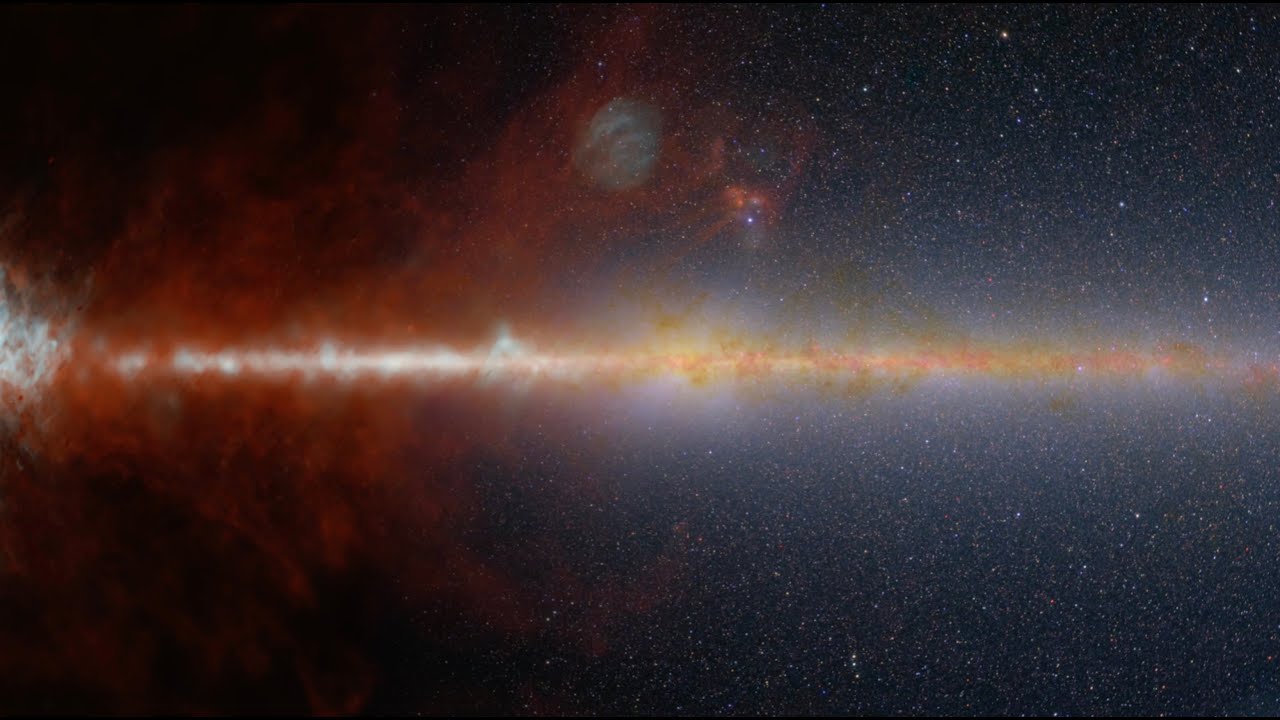
This edited SPHEREx image shows only the infrared light emitted by stars and galaxies. The telescope observes hundreds of millions of deep sky objects every six months.
One of SPHEREx's central science goals is to study cosmic inflation, a theorized burst of rapid expansion of the universe that occurred in the first fraction of a second after the Big Bang. During that fleeting moment 14 billion years ago, space itself ballooned outward, smoothing the early universe and leaving behind subtle patterns, or ripples, that still influence how galaxies are distributed today.
By mapping the universe in three dimensions on such an enormous scale, SPHEREx is expected to record the statistical distribution of these inflationary ripples, which could help scientists narrow down the elusive physics that powered the universe's early growth.
The observatory will also act as a cosmic scout within the Milky Way, surveying vast clouds of gas and dust for interstellar dust grains coated with frozen water, carbon dioxide and other icy compounds that may have helped seed planets, and potentially life.
Photobomb threats
As SPHEREx continues its survey, however, it does so amid a growing challenge for space-based astronomy.
Recent simulations modeling how future satellite megaconstellations will appear to orbiting telescopes suggest that more than 96% of exposures from SPHEREx — along with those from the Hubble Space Telescope and two planned space observatories, China's Xuntian telescope and the European Space Agency's ARRAKIHS mission — would be negatively affected.
Because each SPHEREx image covers a patch of sky roughly 200 times larger than the full moon, nearly every image it captures could contain at least one streak from a passing spacecraft, the analysis, published in early December in the journal Nature, found.
With today's satellite population of about 15,000 expected to swell to 1 million by the end of the 2030s, astronomers warn the damage could be irreversible, as once a faint cosmic signal is obscured, the lost scientific information cannot be fully recovered.

Sharmila Kuthunur is an independent space journalist based in Bengaluru, India. Her work has also appeared in Scientific American, Science, Astronomy and Space.com, among other publications. She holds a master's degree in journalism from Northeastern University in Boston. Follow her on BlueSky @skuthunur.bsky.social
You must confirm your public display name before commenting
Please logout and then login again, you will then be prompted to enter your display name.