













Surge of 'flesh-eating' bacteria infections plagues Florida following Hurricane Ian
Lee and Collier counties in Florida saw increases in flesh-eating bacterial infections after Hurricane Ian.

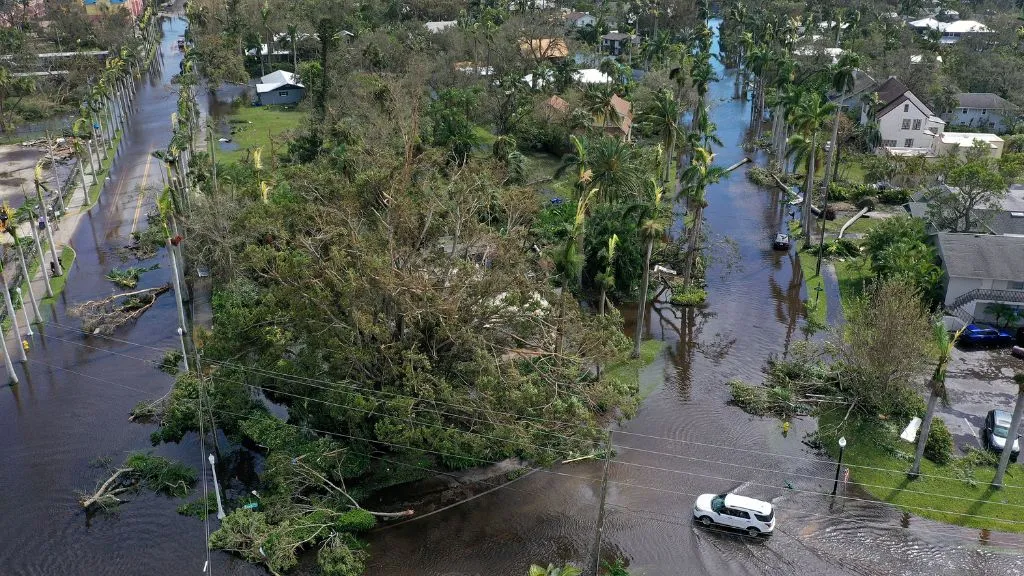
When Hurricane Ian slammed into Lee County, Florida, as a near-Category 5 storm last month, it left in its wake not just widespread destruction but also a surge of rare "flesh-eating" bacterial infections, state health data shows.
Flesh-eating bacteria can cause "necrotizing fasciitis" — an infection that triggers aggressive inflammation in the tissue surrounding muscles and other organs, causing that tissue to rapidly die, according to the Centers for Disease Control and Prevention (CDC). The bacteria enter the body through broken skin, and necrotizing fasciitis can set in quickly thereafter, leading to life-threatening complications like shock and organ failure. Up to 20% of people with necrotizing fasciitis die, some within days of the infection's start.
The type of flesh-eating bacteria behind Florida’s surge in infectionsis called Vibrio vulnificus. The salt-loving bacteria can be found in warm, brackish water, meaning a mix of fresh and salt water typically found in estuaries, salt marshes and the points where rivers meet the ocean, according to the CDC. Concentrations of the bacteria tend to be highest between May and October, when water temperatures rise, and the vast majority of V. vulnificus infections occur in that time window. Hurricanes, storm surges and coastal flooding can raise the risk of infection by increasing the likelihood that people come in contact with contaminated water.
"Flood waters and standing waters following a hurricane pose many risks, including infectious diseases such as Vibrio vulnificus," the Florida Department of Health in Lee County warned shortly after Hurricane Ian made landfall in Florida. "For that reason, the Florida Department of Health in Lee County is urging the public to take precautions against infection and illness caused by Vibrio vulnificus."
Related: 'Flesh-eating' bacteria may be spreading to beaches once thought off-limits. Here's why.
Before the hurricane struck, 37 cases of V. vulnificus infection had been reported for 2022 in Florida, according to Florida Department of Health data. Shortly after the storm, the number shot up to 65. Most of the newly reported cases occurred in Lee County, where Ian made landfall, and one occurred in Collier County, its neighbor to the south. The department's website notes that these counties experienced an "abnormal increase [in cases] due to the impacts of Hurricane Ian."
Out of the 65 people with reported infections, 11 have died, according to the health department.
Get the world’s most fascinating discoveries delivered straight to your inbox.
RELATED STORIES
In 2021, Florida reported 34 cases of V. vulnificus infection, 10 of which were fatal, and in 2020, the state reported 36 cases, seven of which were fatal. The number of cases seen this year is unusual — since the health department began reporting data in 2008, annual reported cases have generally ranged from 16 to 50 a year.
Thankfully, since the hurricane-related surge in infection, the rate of new cases now seems to be waning, Florida Department of Health spokesperson Jae Williams said Oct. 18, according to CNN.
The Lee County residents who were infected by V. vulnificus after the storm did so through "exposure to Hurricane Ian flood waters that occurred from the storm-surge entering their homes or during post-storm clean-up," department spokesperson Tammy Soliz told CNN in an email. But as the storm waters have abated, so too have the flesh-eating bacterial infections.

Nicoletta Lanese is the health channel editor at Live Science and was previously a news editor and staff writer at the site. She is a recipient of the 2026 AHCJ International Health Study Fellowship, with a project focused on antibiotic stewardship practices in Japan and the U.S. They hold a graduate certificate in science communication from UC Santa Cruz and degrees in neuroscience and dance from the University of Florida. Beyond Live Science, Lanese's work has appeared in The Scientist, Science News, the Mercury News, Mongabay and Stanford Medicine Magazine, among other outlets. Based in NYC, she also remains involved in dance and performs in local choreographers' work.