













First underwater methane leak discovered near Antarctica
What's worse, Antarctica's methane-eating microbes aren't doing their jobs.

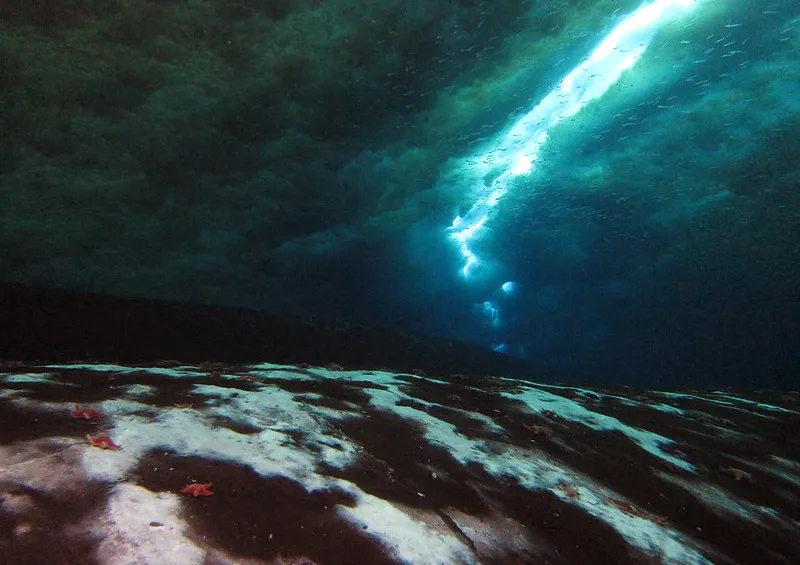
Just below the freezing Antarctic ice shelves, researchers have discovered a gas leak that could change the region's climate destiny.
For the first time, scientists have detected an active leak of methane gas — a greenhouse gas with 25 times more climate-warming potential than carbon dioxide — in Antarctic waters. While underwater methane leaks have been detected previously all over the world, hungry microbes help keep that leakage in check by gobbling up the gas before too much can escape into the atmosphere. But according to a study published July 22 in the journal Proceedings of the Royal Society B, that does not seem to be the case in Antarctica.
The study authors found that methane-eating microbes took roughly five years to respond to the Antarctic leak, and even then they did not consume the gas completely. According to lead study author Andrew Thurber, the underwater leak almost certainly sent methane gas seeping into the atmosphere in those five years — a phenomenon that current climate models do not account for when predicting the extent of future atmospheric warming.
"The delay [in methane consumption] is the most important finding," Thurber, a marine ecologist at Oregon State University, told The Guardian. "It is not good news."
Methane is a byproduct of ancient, decomposing matter buried below the seafloor or trapped in polar permafrost. Climate change is already causing some of that permafrost to melt, slowly releasing the vast stores of greenhouse gases underground. However, the impacts of underwater methane leaks remain poorly studied, especially in the inhospitable Antarctic, simply because they're hard to find, Thurber said.
The recent leak — located about 30 feet (10 meters) below the Ross Sea, near Southern Antarctica's Ross Ice Shelf — was discovered by chance when civilian divers happened to swim by in 2011. When Thurber and his colleagues visited the site later that year, the seafloor showed telltale signs of a methane leak: white "mats" of microorganisms that exist in a symbiotic relationship with methane-consuming microbes stretched out in a 200-foot-long (70 m) line along the seafloor.
Related content
A sediment analysis confirmed the obvious — methane was escaping from below the seafloor. When the team returned to the site five years later, more microbes had appeared, but the methane continued to flow. Thurber called the discovery "incredibly concerning," as most climate models count on methane-eating bacteria to remove this underwater threat almost immediately. This slow microbial response, coupled with the leak's shallow depth, suggests that significant amounts of methane have been pouring into the atmosphere above the Ross Sea for years.
Get the world’s most fascinating discoveries delivered straight to your inbox.
In big-picture terms, this is just one small leak, and it probably won't tip the climate scales in any significant way. But the waters around the southern continent may contain as much as 25% of Earth's marine methane, and more leaks could be occurring right now without anyone knowing. Understanding how Antarctica's submarine greenhouse gas stores interact with the ocean and the atmosphere above could have huge implications for the accuracy of climate models, the researchers said — now, the trick is finding and studying more of them while our models still matter.
Originally published on Live Science.

Brandon is the space / physics editor at Live Science. With more than 20 years of editorial experience, his writing has appeared in The Washington Post, Reader's Digest, CBS.com, the Richard Dawkins Foundation website and other outlets. He holds a bachelor's degree in creative writing from the University of Arizona, with minors in journalism and media arts. His interests include black holes, asteroids and comets, and the search for extraterrestrial life.