 Live Science Plus





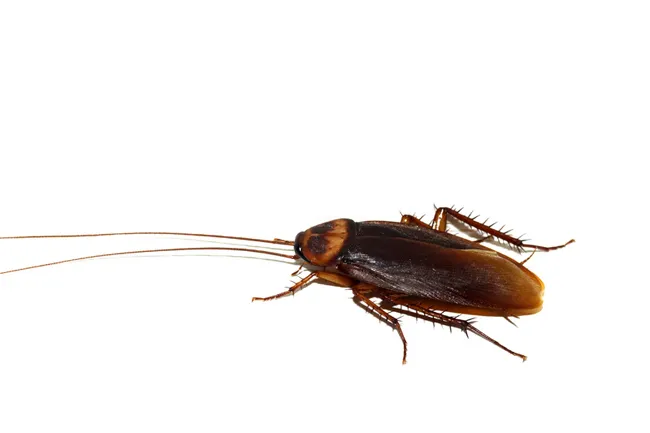
Cockroaches prefer dining as a group it seems. New research shows the pesky critters cluster and remain feeding on one lump of food even if another morsel exists nearby.
The result demonstrates that cockroaches possess a collective decision-making process previously thought to exist only in highly social species, such as ants and bees, according to the study scientists.
But while other animals direct one another to food through complex mechanisms like pheromone trails (ants), communicative dances (bees), or vocal calls (vervet monkeys) — all of which operate over a distance — cockroaches seem to simply continue munching when already at the food source.
Article continues below"There is certainly no signal intentionally emitted. Instead the cockroaches seem to glean information inadvertently provided by the others," researcher Mathieu Lihoreau at Queen Mary, University of London, told LiveScience.
The process sheds new light on simple ways in which societies self-organize. "We should definitively pay more attention to cockroaches and other simple 'societies' as they provide researchers with good models for co-operation and emergent properties of social life, that we could extrapolate to more sophisticated societies, like ours," Lihoreau said.
Previously, cockroaches were thought to forage for food alone, relying solely on individual experience. The large grouping of cockroaches at one food source among many alternatives shows the power of simple decisions at the individual level, the researchers say.
The more cockroaches there are at a food source, the longer each feeds, Lihoreau said.
"Although we think they signal to other cockroaches using a 'foraging pheromone,' we haven't yet identified it," he said. "Potential candidates include chemicals in cockroach saliva, and cuticular hydrocarbons, which cover the insects' bodies."
Even though they might be using a pheromone, as used by social ants, the cockroaches only use it as a short-range signal and they seem to do so inadvertently.
An artificial version of the pheromone could, if discovered, lead the way to improved pest repellants that don’t require insecticide, Lihoreau said. Better pest repellent is important because the U.K. economy wastes "millions of pounds" of wasted food and perishable products, he said.
"[Current] pest control measures … are frequently ineffective and involve the use of insecticides that can have health side-effects," Lihoreau said.
The social rules revealed through a better understanding of invertebrates can also eventually be used to understand the more complex group patterns in vertebrates. Fish, birds, hooved or pawed mammals, and humans all can exhibit dynamics of mass interactions that are the result of evolution.
"This is also helpful for people working in the field of artificial life to develop biologically inspired robots," Lihoreau said.
The team used a mathematical model coupled with real observations. Their research was detailed online May 18 in the journal Behavioral Ecology and Sociobiology.
