Live Science Plus





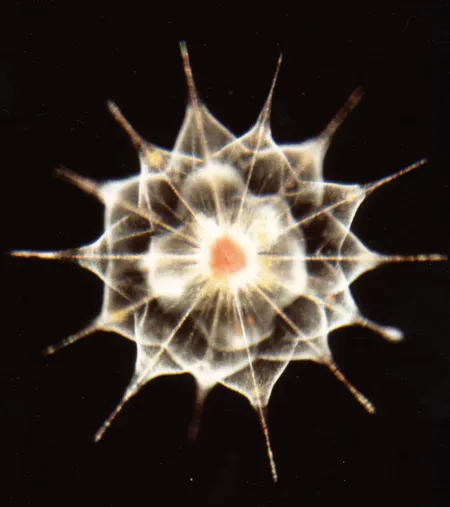
Microbes might be tiny and hard to see, but they account for a large percentage of Earth's biodiversity. They have been living on the planet for 3.8 billion years compared to 200,000 for humans, and for most of the Earth’s existence, they have been the only form of life around.
In fact, all life on Earth today, including trees and fish and people, is thought to have evolved from the earliest microbes.
The term “microbe” describes bacteria, archaea, single-celled eukaryotic organisms such as amoebas, slime molds and parameciums, and even viruses by some broad definitions. (Viruses are disputed because they are considered non-living and cannot replicate on their own, but the field of microbiology usually includes the study of viruses.) Most microbes are unicellular, meaning one cell comprises each individual.
Article continues belowThey are found almost everywhere on Earth, in soils, plants, geysers, ocean depths, frigid seas below Antarctic ice and in our bodies. (Trillions of bacteria have been found in our guts.) Some microbes, called extremophiles, are found in places where no other living organisms can survive—in boiling hot hydrothermal vents in the ocean and in rocks deep underground.
They can be helpful and/or harmful to other living things: bacteria such as Streptococcus and E. coli can infect and even kill humans, and algal blooms can be toxic to fish and deplete the water of oxygen, but other bacteria help us digest our food and replenish nutrients in soil, and some can help clean up oil spills.
Scientists are continually discovering new species, genuses, families and orders of microbes, with no end in sight. Because they have been around for so long, microbes evolve in more complicated ways than multicellular life—they can transfer genes between species and from one individual to another, something humans certainly can’t do.
Understanding microbes is critical to understanding how ecosystems function, how to combat disease and how infectious diseases, such as bird flu, emerge and spread.