













Microbe Goes to Extremes to Live

Some extreme microbes are able to survive through a chemical reaction that until now wasn't thought to produce enough energy to support life, a new study has found.
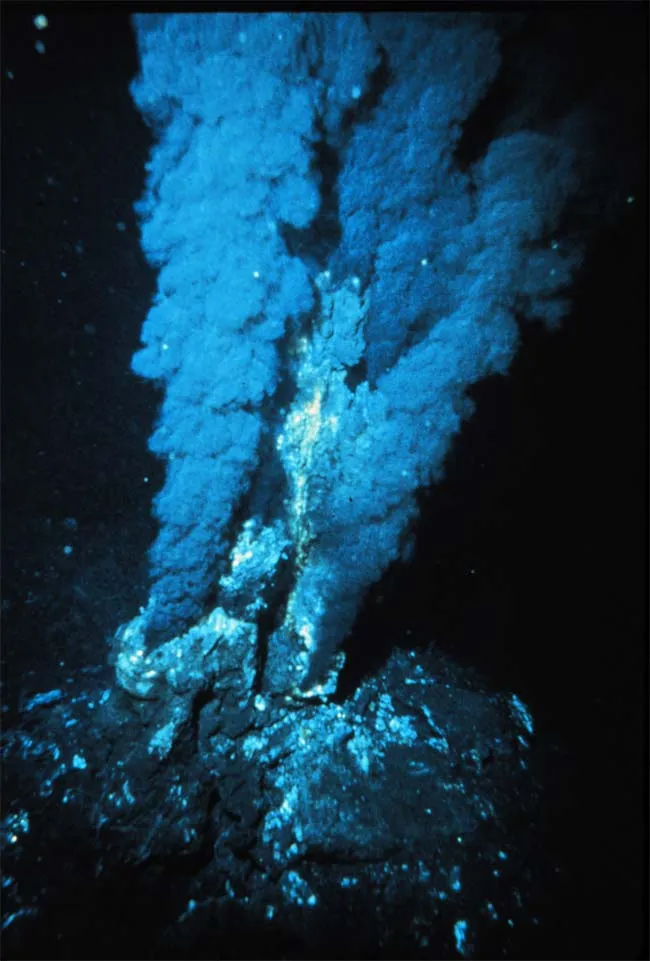
Scientists collected a sample of Thermococcus organisms – part of the archaea domain of single-celled life – from a deep-sea hydrothermal vent where super-hot water seeps out of the Earth's crust near Papua New Guinea. These microorganisms are hyperthermophilic, meaning they thrive in extremely hot environments where most other life couldn't. They are also anaerobic, meaning they do not require air or oxygen to grow.
Researchers led by Yun Jae Kim of the Korea Ocean Research & Development Institute analyzed this sample and discovered that the Thermococcus was generating energy through a simple chemical reaction where water and the compound formate (a molecule made of hydrogen, oxygen and carbon) are converted into molecular hydrogen and bicarbonate (a different molecule made of hydrogen, oxygen and carbon).
Originally, this reaction was not thought to supply enoughenergy to support microbial growth.
"But in our study, we clearly show that a bug by itself has a way to circumvent the limitation by living at high temperature and retaining a unique anaerobic respiration system," co-researcher Sung Gyun Kang, also of the Korea Ocean Research & Development Institute, told LiveScience.
The discovery is one more reminder of how resourceful and adaptive life can be.
And studying extremophiles like Thermococcus can also teach researchers about the types of environments that might host life on other planets. The reasoning goes: If organisms can make it without air deep under the ocean, surely living under the surface of Mars wouldn't be that hard?
Get the world’s most fascinating discoveries delivered straight to your inbox.
The research is detailed in the Sept. 16 issue of the journal Nature.
