













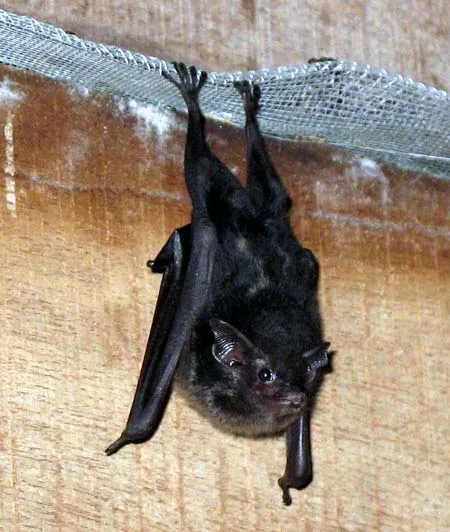
Baby bats babble just like newborn human babes, a new study finds.
Babbling is thought to be a kind of vocal play that provides human infants a chance to train their vocal tract muscles in preparation for speech and to practice combining the syllables they will use as adults. Humans begin babbling at about 7 months of age.
Apart from a few other primates, like the pygmy marmoset, babbling has never been observed in any other mammals until now. However, certain species of songbirds are known to engage in a similar behavior, called "subsong."
Barking pups
Researchers at the University of Erlangen-Nuernberg in Germany recorded vocalizations from male and female sac-winged bat (Saccopteryx bilineata) pups aged 4 to 8 weeks and found that pups of both sexes uttered barks, chatters and screeches similar to those made by adult bats. [Audio]
The study also found that both male and female pups made additional sounds—including whistles, trills and snippets of territorial song—that are produced only by males as adults.
Why female bats should make male sounds as pups but not as adults is unclear, but study team member Mirjam Knornschild points out that a similar thing happens in some species of songbirds.
Get the world’s most fascinating discoveries delivered straight to your inbox.
"If you look in the avian literature you come across several songbird species in which juvenile females practice vocalization types they don't use as adults," Knornschild told LiveScience. "One explanation for this is that juvenile females have to learn the male vocalizations in order to make educated decisions about which male to choose for mating."
Knornschild speculates that female bats might make male sounds as pups for a similar reason but says that further study will be needed to prove this.
Other animal babblers
The new findings, to be detailed in an upcoming issue of the journal Naturwissenschaften, raise the possibility that the animal kingdom contains many more babbling species.
"I expect all animals that have complex vocal repertoires to babble," Knornschild said.
In addition to songbirds, some species of whales, other species of primates and even parrots and hummingbirds might also babble when young, she said.
- AUDIO: The Babbling Bats
- Grammar Revealed in the Love Songs of Whales
- Monkey's Voice Good as Human's for Newborn Babies
- Yikes! Vampire Bats Can Run, Too
- In Search of the Real Dracula
- World's Ugliest Animals