













Baby Brain Growth Reflects Human Evolution

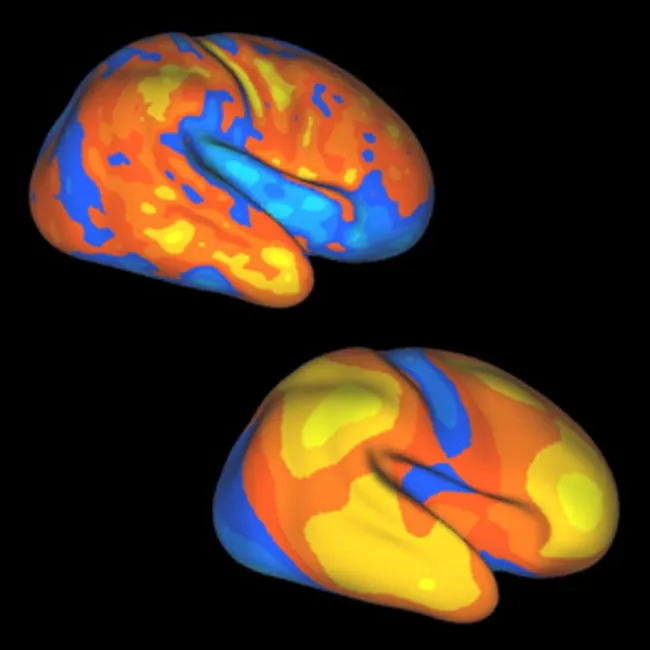
Watching human baby brains grow is a little like watching evolution in action.
A new study shows the human brain regions that expand the most during infancy and childhood are the same parts that expanded the most during evolution as humans diverged from other primates.
Researchers analyzed brain scans of 12 full-term infants and compared these with scans from 12 healthy young adults between the ages of 18 and 24. Data from the two groups were combined into a single atlas to help scientists quantify the differences between the infant and young-adult brains.
They found that the cerebral cortex, which is the wrinkled area on the surface of the brain responsible for higher mental functions, grows in an uneven fashion. Every region expands as the brain matures, but the research showed one-quarter to one-third of the cortex expands approximately twice as much as other cortical areas as an infant matures into a young adult.
"Through comparisons between humans and macaque monkeys, my lab previously showed that many of these high-growth regions are expanded in humans as a result of recent evolutionary changes that made the human brain much larger than that of any other primate," said study researcher David Van Essen of Washington University School of Medicine in St. Louis. "The correlation isn't perfect, but it's much too good to put down to chance."
The high-growth regions are areas linked to advanced mental functions, such as language, reasoning and what Van Essen calls "the abilities that make us uniquely human." He speculates that the full physical growth of these regions may be delayed somewhat to allow them to be shaped by early life experiences.
The limitations on brain size imposed by the need to pass through the mother's pelvis at birth might also force the brain to prioritize, said study researcher Dr. Terrie Inder, professor of pediatrics at Washington University School of Medicine.
Get the world’s most fascinating discoveries delivered straight to your inbox.
"Vision, for example, is a brain area that is important at birth so an infant can nurse and learn to recognize his or her parents," Inder said. "Other areas of the brain, less important very early in life, may be the regions that see greater growth as the child matures."
Inder and colleagues are currently conducting similar scans of premature babies at birth and years later.
"This study and the data that we're gathering now could provide us with very powerful tools for understanding what goes wrong structurally in a wide range of childhood disorders, from the aftereffects of premature birth to conditions like autism, attention-deficit disorder or reading disabilities," Inder said.
The results will be published online this week in the journal Proceedings of the National Academy of Sciences.
- 10 Things You Didn't Know About the Brain
- 7 Ways The Mind and Body Change With Age
- 10 Things That Make Humans Special
