New Technique Adds Muscle to Animated Characters

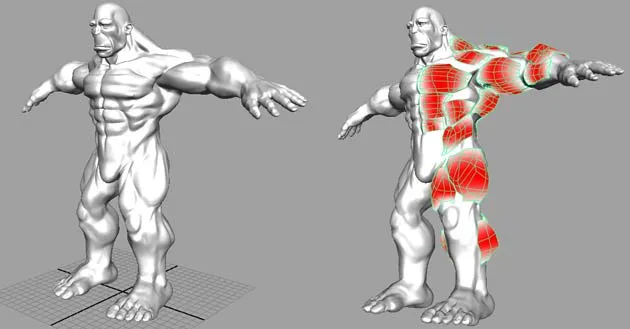
Skeletons and muscles are conjured automatically for computer-animated characters using a new technique that helps them move more realistically.
This research could accelerate the production pace of increasingly popular animated movies from studios such as Pixar.
To create characters that move realistically, animators often work from the inside out, meticulously crafting skeletons that are then fleshed out with muscle and skin.
That approach is, however, counterintuitive.
"You don't start with a drawing of a character, you start with what's underneath. That can be confusing," researcher Jian Zhang, director of the computer-animation research center at Bournemouth University in England, told LiveScience.
Instead, Zhang and his colleagues' new method, developed over the last three or so years, takes animated characters, scans their surface geometries and works from the outside in, automatically embedding skeletons and muscles. The results are anatomies that flow naturally.
"Creating a realistic human or humanoid computer-animated character is quite tricky," Zhang said. "This work will help reduce all the tedious labor of manually putting in the skeleton and muscles."
Get the world’s most fascinating discoveries delivered straight to your inbox.
The method works well on muscular characters. Future research will further investigate how to more realistically create characters with more fat on them, Zhang said. He and his colleagues reported their findings in August in the journal Computer Animation and Virtual Worlds.