













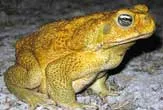
Toxic toads bound across the northern tropics of Australia faster than ever, thanks to the evolution of longer legs in the few short decades since humans introduced them to their own little paradise.
Cane toads (Bufo marinus) were first brought in from Hawaii in 1935 to control the spread of beetles that were ravaging Australia's sugar cane crop. But instead of controlling the pests, the toads have become pests themselves. A deadly chemical defense system disposes quickly of potential predators.
The toads have expanded their range to cover more than a third of Australia's total land area.
Hop to it
From the 1940s through the ‘60s, the toads were invading at a rate of about 6 miles per year; now they're taking over at a rate of about 30 miles a year.
To find out why the toads are spreading so fast, researchers stationed themselves about 40 miles east of Australia's port city of Darwin, in a region where the cane toads had not yet spread.
When the toads arrived, the researchers found that those in the vanguard of the invasion had legs that were up to 6 percent longer than average; shorter-legged stragglers followed. The study showed that newer populations of toads tended to have longer legs than those in long-established populations.
Get the world’s most fascinating discoveries delivered straight to your inbox.
A top pest
It should come as no surprise that cane toads are among the world's top 100 invasive species. They are the world's most introduced amphibian. They mate year-round and females lay up to 30,000 eggs at a time.
The toads can grow as large as dinner plates and weigh up to 4.5 pounds. Their heads and backsides are studded with rows of warts that secrete a milky white toxin called bufotoxin.
Because Australia has no native toads, many native predators such as snakes, lizards and mammals are very sensitive to the toxin. So when the toads spread, they immediately kill off many of the region's top predators.
"We don't know what effect it may have to remove so many top predators from a complex tropical ecosystem, but it's likely to be bad news," said study team member Richard Shine of the University of Sydney.
Ecological disaster
When an invasive species is first introduced, the population remains low for a few generations before exploding, Shine said.
"It's likely that such lags reflect, at least in part, adaptive changes in the invader to suit it to the new environment," Shine told LiveScience.
Shine and his colleagues warn in the February 16 issue of the journal Nature that Australia could face an "ecological nightmare" if the spread isn't controlled soon.
Australian scientists have tried for decades to eradicate the toads, but with limited success. Last year, researchers announced they had successfully lured and trapped the toads using ultraviolet lights like those used in disco clubs.
- Invasive Species: Photo Gallery
- Invasive Creatures Attack Like Internet Viruses
- Wanted, Dead or Alive: Exotic, Predator Frog in Georgia
- Evolution's Useless Limbs and Vestigal Organs