













There's No Medical Reason Not to Bake Your Grandpa's Ashes into a Sugar Cookie and Eat It

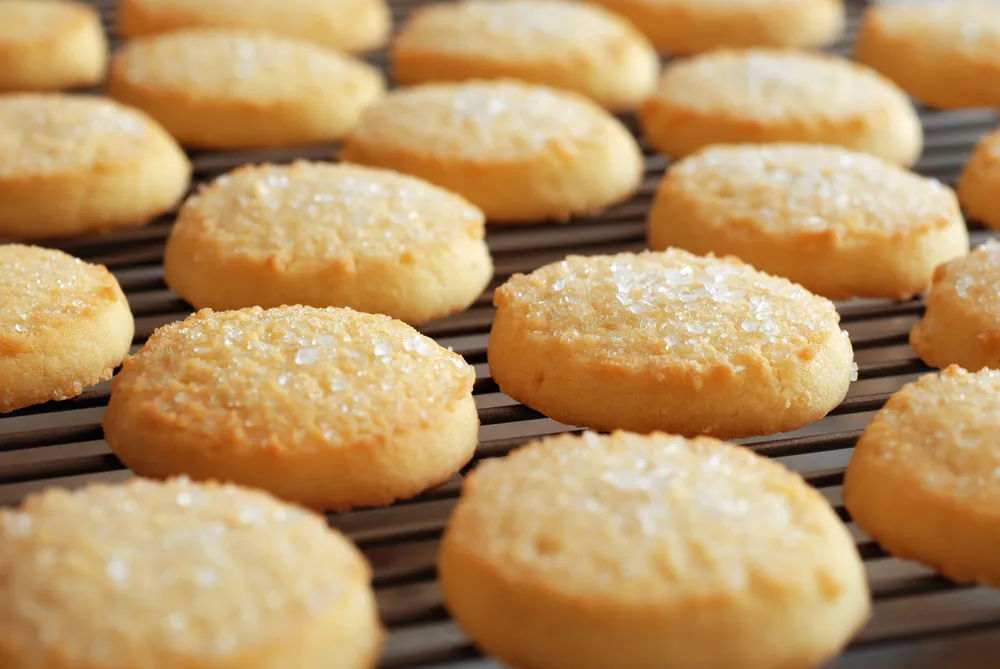
It appears that a high school student in Davis, California, baked her grandfather's ashes into sugar cookies and gave them out at school on Oct. 4. Yes, people ate them. And, yes, this is a real news story. It was reported in the Los Angeles Times. Apparently, some of the sugar-cookie-eaters knew about the ashes in the sugar cookies before they ate the sugar cookies. Again, this is a real news story.
Sit with that for a moment.
It's probably a pretty good guess that most folks would agree that baking a dead person's ashes into sugar cookies and then feeding those crematory confections to teenagers is a bad thing to do. [9 Disgusting Things That the FDA Allows in Your Food]
But how bad is it really, at least from a health perspective?
Live Science reached out to microbiologist Rolf Halden, director of the Center for Environmental Health Engineering at Arizona State University's Biodesign Institute and an expert in environmental contamination, for an answer to that question.
Halden said he didn't want to comment on this case in particular — Davis police are investigating the incident — but shared his views on the practice of baking cremated human remains (or "cremains") into sugar cookies and feeding those sugar cookies to other human beings.
It turns out that in some circumstances, this might not be much of a problem — at least in terms of making the cookie-eaters sick. (Whether it's an ethical problem is another issue.)
Get the world’s most fascinating discoveries delivered straight to your inbox.
"Cremation essentially mineralizes the human body and produces ashes that are rich in carbon and not much of a health concern," Halden said.
So, the ash isn't toxic, and it's not like it would carry any diseases.
"Proper cremation will remove all infectious properties of the remains, thus allowing people to take the ashes home and store them in living spaces," he added.
That doesn't mean there are no possible dangers.
"The one potential concern worthy of consideration would be heavy metals, as can be found particularly in tooth fillings," he said.
But even that probably wouldn't pose a problem, Halden added, because those materials are often removed from the ashes after cremation, and also because you'd need to consume a lot of them for them to pose a significant danger.
So, the verdict on eating sugar cookies with someone's grandfather's ashes in them from a purely health and safety perspective? It's probably no big deal.
But one of the teenagers who ate one of the cookies told the Los Angeles Times that the ashes looked like "tiny gray flecks" and had a texture of sand "crunching in between your teeth."
So, you know, maybe avoid that.
Originally published on Live Science.
