













Worst Anthrax Outbreak in Decades Strikes Farms in France

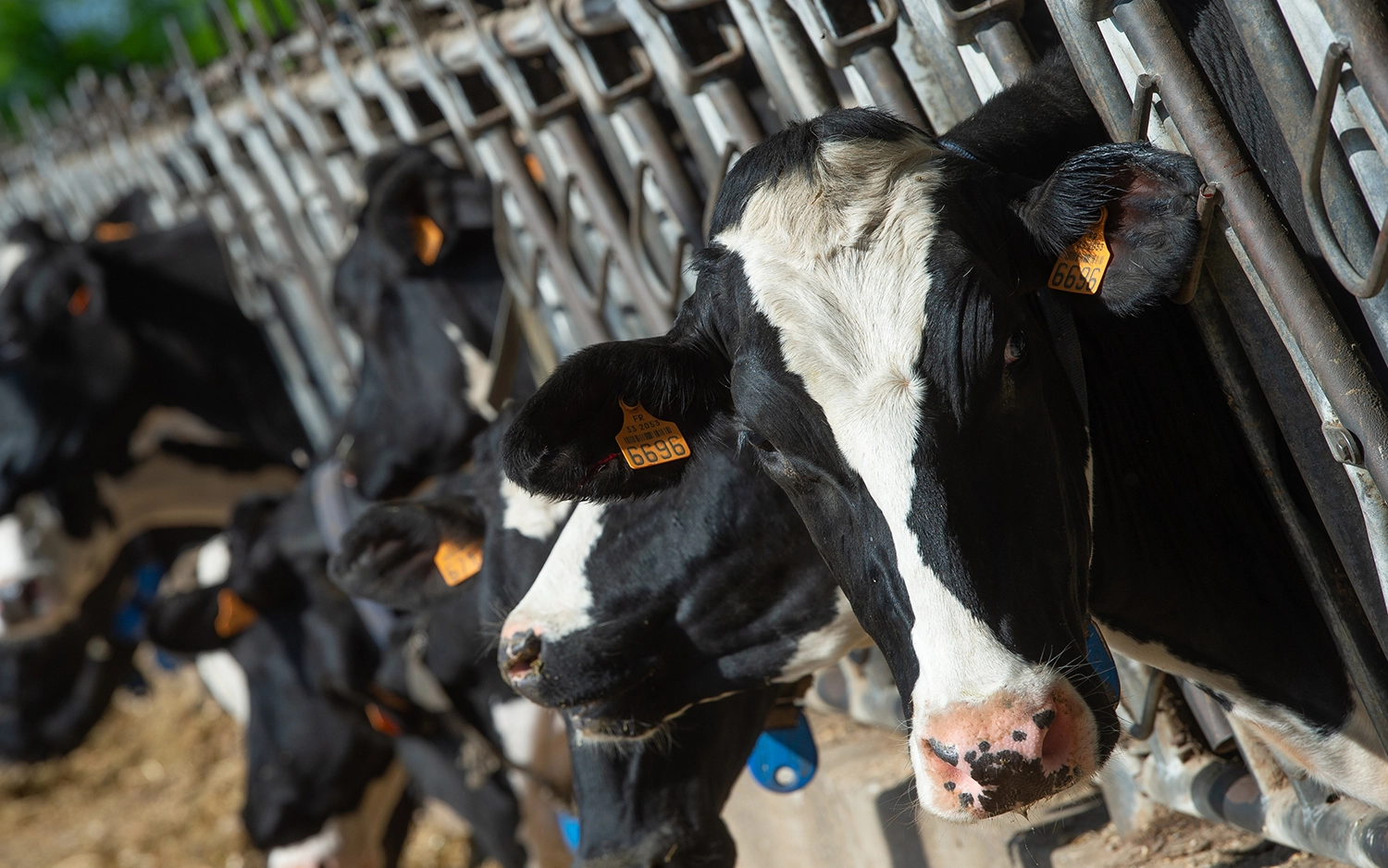
The deadliest anthrax outbreak in the past two decades is sweeping through the French countryside, leaving dozens of dead cows, sheep and horses in its wake, according to news reports.
Anthrax is a serious infection caused by the bacterium Bacillus anthracis, and 28 farms in the Hautes-Alps region in the southeastern part of France have been affected since the outbreak was first detected two months ago, the Agence France-Press (AFP) reported today (Aug. 20).
The first known case was identified on June 28 in the village of Montgardin, where it eventually killed six cows, the AFP reported. Since then, 50 animals have died, but no cases in humans have yet emerged, Dr. Christine Ortmans, a health official at the Agency Regional Health Authority (ARS), told the AFP. [Tiny & Nasty: Images of Things That Make Us Sick]
While anthrax can affect all mammals — including people — the disease isn't contagious between individuals. Instead, people become infected when the bacteria's spores enter the body, either through inhalation or ingestion, or through a cut or an abrasion in the skin, according to the Centers for Disease Control and Prevention (CDC).
People can also be infected with anthrax by handling infected animals or by eating their raw or undercooked meat, the World Health Organization (WHO) reported. The bacteria produce toxins that harm the heart and the liver, and can be fatal in humans about 60 percent of the time if ingested, and about 70 percent of the time if inhaled. All types of anthrax are treated with antibiotics, according to the CDC.
In cattle, horses and sheep, anthrax strikes quickly, and usually kills within hours of infection — anthrax is typically considered the most likely cause of sudden, unexpected deaths in livestock, according to Agriculture Victoria, the federal department regulating agricultural industries in Australia.
Although vaccinations can protect vulnerable livestock, the drugs in Hautes-Alpes are in short supply, as the laboratory in Spain that provides the region's veterinarians with vaccines is closed during the month of August, according to the news website The Local: France.
Get the world’s most fascinating discoveries delivered straight to your inbox.
Government representatives are investigating whether vaccines might be available from other countries that have stockpiled doses, a senior regional official told The Local.
Lying in wait
Anthrax-causing bacteria live in soil, where the spores can remain inactive for decades at a stretch, and outbreaks are most common in agricultural areas, according to the CDC.
However, the disease can also surface in unexpected places. In October 2017, an anthrax outbreak in a national park in Namibia was thought to be responsible for the deaths of at least 100 hippos. And in 2016, melting permafrost in Siberia released anthrax spores that had been dormant for 75 years, killing over 2,000 reindeer and sickening 13 people, Live Science previously reported.
Once an animal is infected, it sheds bacterial spores in its feces that insects can help spread to other animals, widening the reach of an outbreak, the WHO explained.
The last major anthrax outbreak in France — with 23 locations affected — dates to 2008, but anthrax hasn't been seen in the Haute-Alpes region since 1992, according to the AFP.
Original article on Live Science.

Mindy Weisberger is a science journalist and author of "Rise of the Zombie Bugs: The Surprising Science of Parasitic Mind-Control" (Hopkins Press). She formerly edited for Scholastic and was a channel editor and senior writer for Live Science. She has reported on general science, covering climate change, paleontology, biology and space. Mindy studied film at Columbia University; prior to LS, she produced, wrote and directed media for the American Museum of Natural History in NYC. Her videos about dinosaurs, astrophysics, biodiversity and evolution appear in museums and science centers worldwide, earning awards such as the CINE Golden Eagle and the Communicator Award of Excellence. Her writing has also appeared in Scientific American, The Washington Post, How It Works Magazine and CNN.