















Oldest Evidence for Life on Land Unearthed in South Africa
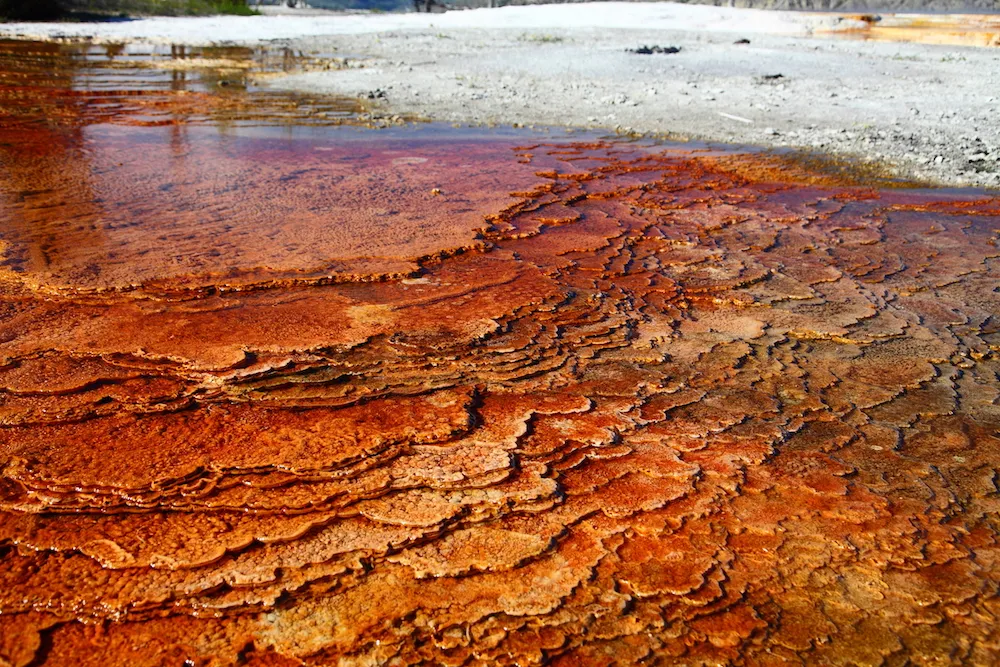
About 3.22 billion years ago, slimy layers of microbes coated pebbles in what was perhaps an ancient riverbed. Those ancient microbial mats, preserved for eons and only recently discovered in South Africa, may be the oldest fossil evidence of life on land, according to a new study.
The ancient evidence of terrestrial life is about a half billion years older than the previous record holder — fossilized remains of microbes found decades ago in South Africa and Australia, said Stefan Lalonde, a geochemist from the European Institute for Marine Studies in France and a co-author of the new study, published July 23 in the journal Nature Geoscience.
Geological evidence has hinted that life existed in the oceans as far back as 3.8 billion years ago. But signs of terrestrial life have been rarer — possibly because much of the planet might have been under water until 3 billion years ago. [In Images: The Oldest Fossils on Earth]
The idea that life made landfall this early in Earth's history has been around for decades, said Hugo Beraldi Campesi, a geobiologist at the National Autonomous University of Mexico, who was not involved in the new research. "The problem was always the lack of hard evidence — until now." The new discovery adds to the growing body of evidence that the continents have harbored life for a long time, he added.
The researchers, led by Martin Homann, a sedimentologist at the European Institute for Marine Studies, discovered the fossilized microbes on the side of a rocky cliff in the Barberton Makhonjwa Mountains of eastern South Africa, home to some of the world's oldest geological features. The fossils are part of a chunk of rock called the Moodies Group, which represents one of the world's oldest shorelines, Lalonde said.
The microbes are extremely well-preserved, he said, showing thick sheets that blanket pebbles, a sign that the critters lived on an ancient riverbed — a terrestrial environment — rather than a sandy beach. Ripple-like features suggest that water flowed in one direction in this area, further evidence that the microbes lived along a river or, perhaps, an alluvial fan. That's a geological feature formed when runoff flows outward in the shape of a fan.
"This is essentially Earth's oldest riverbed," Lalonde told Live Science. "And it's already containing life."
Get the world’s most fascinating discoveries delivered straight to your inbox.
Unlike other evidence of land-based life, such as fossilized structures built by bacteria, the newfound fossils are of the preserved microbes themselves. The layered fossils formed when a layer of sediment covered a sheet of microbes, only later to have another blanket of microbes grow on top. Over time, layers of microbes and sediment stacked on top of each other like primordial lasagna and became preserved. Because these are directly preserved microbes, the fossils even contain organic matter, such as carbon and nitrogen atoms that once were part of the organisms.
An analysis of the type of nitrogen atoms present in the fossils suggests that the ancient microbes thrived by consuming nitrate, or a nitrogen atom bonded to three oxygen atoms, Lalonde said. When these microbes lived, during the Archean eon (which lasted from 4 billion to 2.5 billion years ago), Earth's atmosphere wasn't filled with oxygen as it is now. But a nitrate-based metabolism is the most energy-efficient type of metabolism after an oxygen-based one — which is what humans, for example, use. Nitrate would've given the microbes plenty of energy, Lalonde said.
"Life may not have been so rough in the Archean if you're on land," Lalonde said.
Indeed, the study suggests that Earth's landscape may already have been teeming with life at the time.
"It confirms that terrestrial continents were fully developed." Beraldi Campesi said.
Editor's Note: This article was updated to indicate that "much" of the planet may have been underwater until 3 billion years ago, not "most," as was previously stated.
Originally published on Live Science.