













Why the FDA Just Approved a Drug for Smallpox, Nearly 40 Years After the Disease Was Eradicated

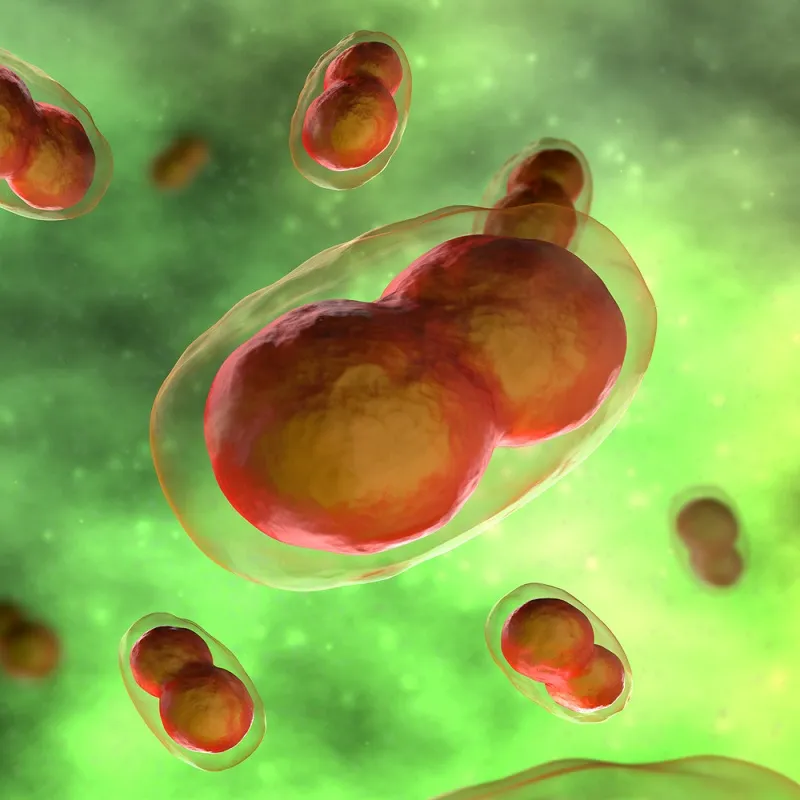
The Food and Drug Administration (FDA) just approved a drug for a disease that no longer exists...well, sort of.
Today (July 13), the agency announced it has approved TPOXX (generic name: tecovirimat), the first drug that specifically treats smallpox. Yes, smallpox, the disease that was eradicated from the world in 1980, thanks to a global vaccination campaign. (Eradication means that cases of the disease no longer occur naturally.)
However, despite global eradication, there remains a concern that the smallpox virus could be used as a bioweapon, the agency said.
"To address the risk of bioterrorism, Congress has taken steps to enable the development and approval of countermeasures to thwart pathogens that could be employed as weapons," Dr. Scott Gottlieb, the FDA commissioner, said in a statement. "Today's approval provides an important milestone in these efforts. This new treatment affords us an additional option should smallpox ever be used as a bioweapon."
Technically, smallpox has not been completely wiped off the planet — some stocks of the virus still exist in labs in the United States and Russia. There is concern that, in the past, some countries made the smallpox virus into bioweapons, and these weapons may have fallen into the wrong hands, according to the Centers for Disease Control and Prevention.
And in 2017, scientists in Canada announced that they had re-created the horsepox virus, a relative of smallpox, in a lab using DNA fragments. The findings suggest scientists could also make the smallpox virus in a lab.
The new drug was tested in animals infected with viruses that are closely related to the smallpox virus; however, it was not tested in people infected with similar viruses, the FDA said. Rather, TPOXX was approved under the FDA's Animal Rule, which allows animal studies to be used to support approval when it is not feasible or ethical to conduct studies of the drug's effectiveness in people. However, the drug was tested for safety in more than 350 healthy people who did not have smallpox.
Get the world’s most fascinating discoveries delivered straight to your inbox.
Original article on Live Science.

Rachael is a Live Science contributor, and was a former channel editor and senior writer for Live Science between 2010 and 2022. She has a master's degree in journalism from New York University's Science, Health and Environmental Reporting Program. She also holds a B.S. in molecular biology and an M.S. in biology from the University of California, San Diego. Her work has appeared in Scienceline, The Washington Post and Scientific American.