













People Could Make Smallpox from Scratch in a Lab, Scientists Warn

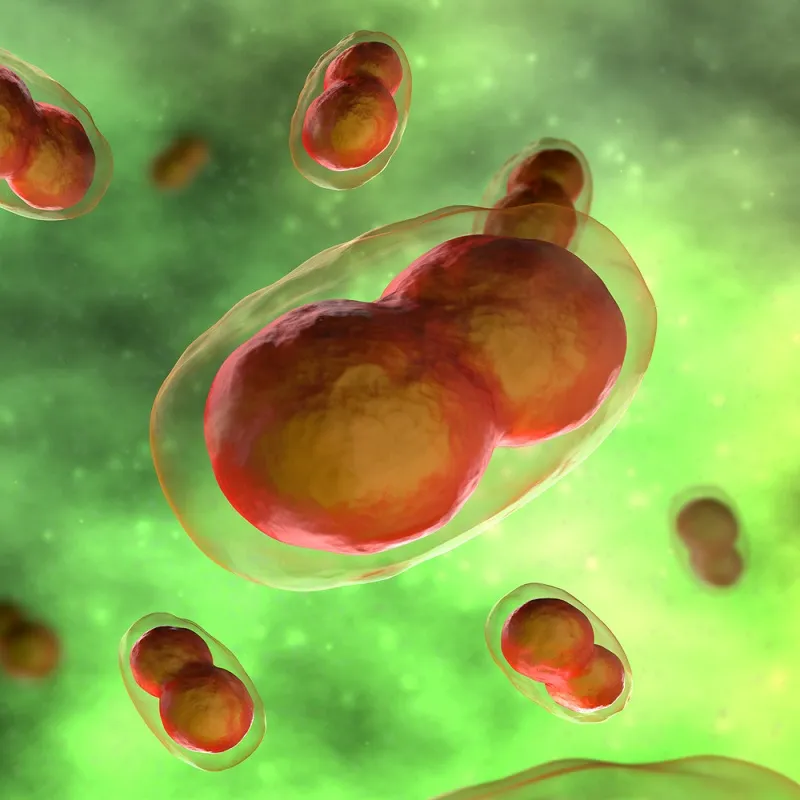
Scientists have re-created a relative of the smallpox virus in a lab, from scratch.
This virus, called the horsepox virus, is not harmful to humans, but the new findings suggest that it's possible for people to make the deadly smallpox virus in a lab. That virus was eradicated from the world in 1980, according to the journal Science.
Re-creating the horsepox virus wasn't a trivial feat, but it did not require extensive resources, either. The researchers ordered the DNA fragments they used to make the virus from a company that makes DNA pieces for researchers, with made-to-order sequences, and sends them through the mail. In total, the project cost $100,000 and took six months, Science reported. [The 9 Deadliest Viruses on Earth]
The researchers, from the University of Alberta in Canada, hope their effort could one day lead to a better smallpox vaccine. Although most people no longer receive smallpox vaccination, the shot is sometimes given to people who may be at risk for contracting the disease, such as those who work with smallpox or similar viruses in a lab. A small percentage of those vaccinated with the current vaccine may experience serious, life-threatening side effects, according to the Centers for Disease Control and Prevention.
The Canadian researchers are working with the pharmaceutical company Tonix to develop a smallpox vaccine. In March, Tonix issued a statement announcing that it had used the horsepox virus to develop a potential smallpox vaccine, which showed protective effects in an early study in mice.
Although many researchers assumed it would one day be possible to re-create poxviruses — the family of viruses to which smallpox and horsepox belong — there was still some debate about the issue. David Evans, the lead researcher of the horsepox virus work, told Science that he performed the feat in part to put an end to the debate. "The world just needs to accept the fact that you can do this, and now we have to figure out what is the best strategy for dealing with that," Evans told Science.
Some experts praised the work. "I think he did a terrific service," Peter Jahrling, chief of the Emerging Viral Pathogens Section at the National Institute of Allergy and Infectious Disease, told The Washington Post. "You had a lot of people saying this can't be done. And he said yes it can."
Get the world’s most fascinating discoveries delivered straight to your inbox.
Evans' findings have not yet been published, but he presented the work in November 2016 at a World Health Organization meeting. In a summary report of that presentation, the committee said it acknowledged that "given the advent of synthetic biology, it was no longer possible for society to entirely rid itself of the threat of smallpox or, indeed, other dangerous pathogens."
However, there are already measures in place to prevent people from re-creating smallpox. The World Health Organization recommends that no institution should be allowed to possess more than 20 percent of the smallpox genome, according to The Washington Post. And companies that synthesize DNA for research purposes are required to check the orders they receive for matches against certain human pathogens, the Post reported.
Original article on Live Science.

Rachael is a Live Science contributor, and was a former channel editor and senior writer for Live Science between 2010 and 2022. She has a master's degree in journalism from New York University's Science, Health and Environmental Reporting Program. She also holds a B.S. in molecular biology and an M.S. in biology from the University of California, San Diego. Her work has appeared in Scienceline, The Washington Post and Scientific American.