













Bioterrorism Prep: Docs Must Look Out for Rare Diseases

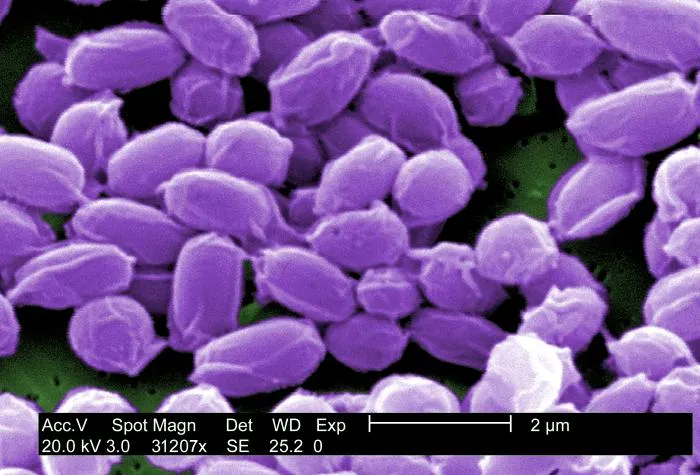
Doctors have better treatments for potential victims of bioterrorism attacks today than in the past, but it's critical for medical workers to quickly recognize illnesses such as anthrax and botulism, so they can respond properly, experts say.
It has now been more than a decade since the anthrax attack that killed five people and sickened 17 in New York and Washington, D.C., and many physicians may have forgotten how to diagnose and treat illnesses related to a biological attack, said Dr. Amesh Adalja, an infectious-disease specialist and a senior associate at the University of Pittsburgh Medical Center's Center for Health Security.
"I think there's been an erosion of [doctors'] knowledge base" since that 2001 attack, in which victims received letters laced with anthrax spores, Adalja said. And some people who are doctors today were just high school students when the event occurred, so they may not have really thought about the need to recognize these illnesses, Adalja said.
For this reason, Adalja and his colleagues have now outlined how to identify and treat five diseases that experts say have the most potential to be used as biological weapons, including anthrax, smallpox, plague, botulism and tularemia. The review, published in the March 5 issue of the New England Journal of Medicine, includes information about new treatments that have been developed for these diseases since 2001. [5 Most Likely Real-Life Contagions]
It is critical that doctors keep in mind the possibility of a biological attack, because they could be some of the first people to encounter victims after an attack, Adalja said.
"Having [doctors] as prepared as possible with the latest information is probably going to be the best line of defense that we have" against biological attacks, Adalja said.
Biological weapon vs. natural disease
Get the world’s most fascinating discoveries delivered straight to your inbox.
Identifying diseases such as anthrax and plague can be difficult, in part because these illnesses are typically rare. And if these pathogens were used as biological weapons, people's symptoms might be different from those of a textbook case of a person who encounters the germs in a natural way. Therefore, it's important for doctors to be familiar with the natural form of these diseases, and for them to understand how these diseases might look in the case of a biological attack, Adalja said.
For example, the most common symptom of anthrax infection is the skin blisters that occur when anthrax spores penetrate the skin. But in the case of a biological attack, anthrax could be released into the air, leading to "inhalation anthrax," which can first appear as flulike symptoms.
Inhalation anthrax can take as long as six weeks to cause symptoms, so people who may have been exposed to anthrax spores in the air need to undergo treatment for 60 days, according to the review. This differs from the treatment of typical anthrax skin infections, which is seven to 10 days.
With biological weapons, there is also a concern that the pathogens may be genetically engineered to be resistant to certain drugs, Adalja said, so doctors may need to treat the people who are sick more aggressively, or use different drugs, than they would in the case of a natural infection.
Spotting a biological attack
Efforts to counter bioterrorism threats have led to the development of several new treatments for these diseases. For example, in 2012, the U.S. Food and Drug Administration approved a new drug, called raxibacumab, that can be used to treat people with inhalation anthrax. The drug contains antibodies that neutralize the toxins produced by anthrax bacteria.
There are also two new experimental treatments for smallpox, a disease that has been eradicated from the world but could be used as a biological weapon.
And botulism, an illness caused by a toxin that can cause paralysis, also has a new treatment. The toxin can take many forms, and the new treatment works against seven types of botulism toxin.
But before doctors can begin the right treatment, they must first identify whether the illness was the result of a biological attack. This can be difficult, but there are clues to look for, Adalja said.
Because these diseases are typically rare, a cluster of cases in one area could be a sign of a biological attack, Adalja said. Doctors might also be suspicious if they see people with a very uncommon form of a disease, such as pneumonic plague, rather than the more common bubonic plague. And some illnesses, such as plague, are limited to certain geographical areas, so seeing a case outside this area could also lead doctors to suspect a biological attack, he said.
Doctors need to continue to stay up-to-date on the diagnosis and treatment of these diseases, because an attack could, in theory, happen at any time. "Biological terrorism has been with the human race since the B.C. era. It's not something that's going to go away," Adalja said.
Follow Rachael Rettner @RachaelRettner. Follow Live Science @livescience, Facebook & Google+. Original article on Live Science.

Rachael is a Live Science contributor, and was a former channel editor and senior writer for Live Science between 2010 and 2022. She has a master's degree in journalism from New York University's Science, Health and Environmental Reporting Program. She also holds a B.S. in molecular biology and an M.S. in biology from the University of California, San Diego. Her work has appeared in Scienceline, The Washington Post and Scientific American.