














Mysterious Eye Cancer Cases Pop Up in 2 States, and Doctors Can't Explain It

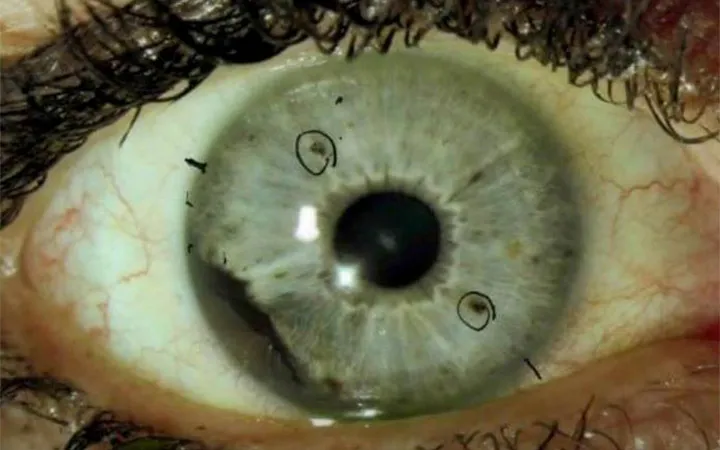
Dozens of people in Alabama and North Carolina have developed a rare eye cancer — and doctors don't know what's behind the apparent spike in cases in these areas, according to news reports.
So far, 18 people with this eye cancer, known as ocular melanoma, have been identified in Huntersville, North Carolina; and another group of more than 30 people in Auburn, Alabama, also say they've been diagnosed with the condition, according to CBS News. The condition typically affects just six out of every 1 million people per year, CBS reported.
What's more, three of the Alabama cases are friends who attended Auburn University at the same time.
"Most people don't know anyone with this disease," Dr. Marlana Orloff, an oncologist treating some of the patients at Thomas Jefferson University's Sidney Kimmel Cancer Center (SKCC) in Philadelphia, told CBS News. "We said, 'OK, these girls were in this location, they were all definitively diagnosed with this very rare cancer — what's going on?'" [10 Do's and Don'ts to Reduce Your Risk of Cancer]
Right now, doctors don't know the answer to the question, but they say something in the environment could be a factor, CBS reported.
Ocular melanoma is a cancer that develops in cells in the eye that produce the pigment melanin, according to the American Academy of Ophthalmology (AAO). The cancer usually begins in the middle layer of the eye called the uvea. The exact cause of ocular melanoma is unknown, but according to AAO, risk factors for the condition include: exposure to sunlight or tanning beds over long periods; light eye color; older age; and certain inherited skin conditions or having a mole in the eye.
Ocular melanoma can cause vision loss, and the cancer may also spread to other parts of the body, including the liver, lungs and bones, according to the Mayo Clinic. About 3 out of 4 people (75 percent) diagnosed with ocular melanoma survive at least five years after their diagnosis, according to the American Cancer Society.
Get the world’s most fascinating discoveries delivered straight to your inbox.
In Huntsville, researchers who studied the group of cases there recently announced that they did not find anything that could be directly attributed to the cause of the cancer cases, according to local news outlet WCNC.
One of the Auburn patients has set up a Facebook page to raise awareness, and so far, 36 people have responded saying they also attended Auburn University and were diagnosed with ocular melanoma.
"We've got to have it so that we can start linking all of them together to try to find a cause," Lori Lee, an Auburn University graduate with the cancer, told CBS News.

Rachael is a Live Science contributor, and was a former channel editor and senior writer for Live Science between 2010 and 2022. She has a master's degree in journalism from New York University's Science, Health and Environmental Reporting Program. She also holds a B.S. in molecular biology and an M.S. in biology from the University of California, San Diego. Her work has appeared in Scienceline, The Washington Post and Scientific American.