













How a Bizarre Nazi Military Machine Left a Lasting Mark on the Environment

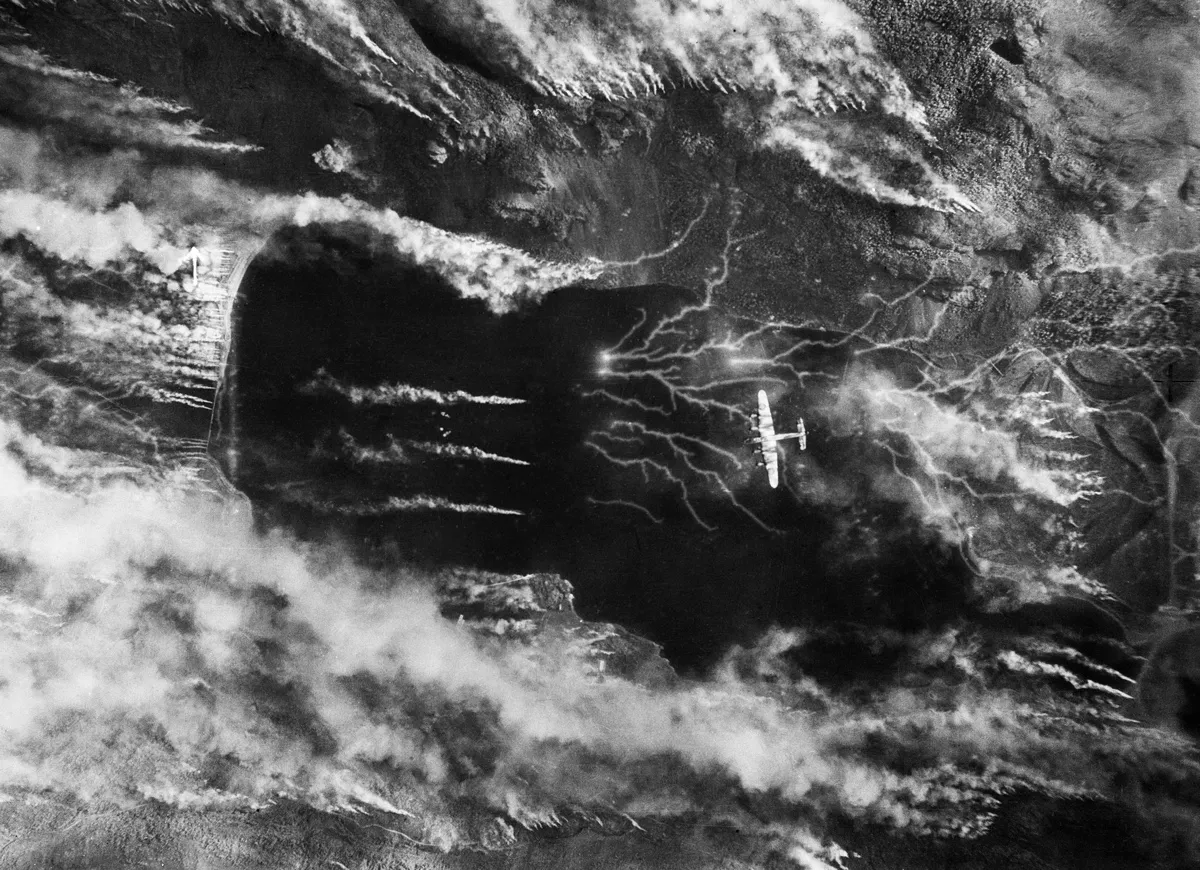
VIENNA —The Tirpitz was the Nazis' most imposing warship and the largest battleship ever built by a European navy. It should have been an easy target for bombers, but this massive vessel could hide in plain sight.
Hitler's navy used a toxic artificial fog to conceal the ship when it was stationed in a Norwegian fjord. And, according to new research, this ephemeral smoke left a lasting mark on some of the living witnesses of World War II: the trees.
"The effects of one military engagement during World War II are still evident in the forests of Norway, 70 years later," said Claudia Hartl, a tree-ring researcher at the Johannes Gutenberg University in Mainz, Germany. [Images: Missing Nazi Diary Resurfaces]
Hartl, who presented her findings here during the annual meeting of the European Geosciences Union, didn't set out to study "war dendrochronology." Rather, she was taking core samples from pine trees around Kåfjord, near the northern edge of Scandinavia, to reconstruct a record of yearly temperatures for the past 2,000 years. (The trees can live for dozens or hundreds of years, and even older stumps can be found preserved in frigid lakes.)
"Trees are limited by temperature there, so if you have a cold year, trees form a narrow ring, and if you have a warm year, then you have wide ring," Hartl explained.
At a site near the fjord, Hartl and her colleagues found trees that didn't produce rings in 1945. This "exceptional stress response" didn't fit with the researchers' climate reconstructions, so they had to look for another explanation. And they learned that the Tirpitz had been stationed at Kåfjord, and was finally sunk by Allied bombs, in 1944.
Nicknamed "The Lonely Queen of the North" by Norwegians and "The Beast" by Winston Churchill, the battleship had been moored at Kåfjord to threaten Allied ships bringing supplies to the Soviet Union. Part of the Nazis' defense was to release chlorosulfuric acid into the air, which attracts moisture and can create a smoke screen. Hartl said there is not much in historical records about the environmental impact of the fake fog. The substance is known to be corrosive, and the group of soldiers responsible for producing this smoke had to wear special protection suits.
Get the world’s most fascinating discoveries delivered straight to your inbox.
The researchers sampled pine trees from six sites near the fjord. Trees farther away from the Tirpitz's mooring were less affected by the fog. But at the site closest to the location of the battleship, 60 percent of the trees didn't produce a ring in 1945, and some of the trees didn't grow for several years after the war. Hartl's team thinks the trees lost their needles due to the fog, which harmed their ability to photosynthesize.
War dendrochronology could join other nascent fields like "bombturbation" (the study of how bombs alter landscapes) as scientists begin to investigate the environmental impact of war.
"What I think is very interesting is the human impact on ecosystems," Hartl told Live Science. "If you have a drought event, the trees also show a growth decline, but you can also see that these trees recover, and usually, it doesn't take longer than five years. But in northern Scandinavia, through this Second World War impact, it took the trees 12 years to recover. That's a really strong impact."
Original article on Live Science.
