Neanderthals Weren't Humans' Only Mating Partners. Meet the Denisovans.

The mysterious extinct human lineage known as the Denisovans may have interbred with modern humans in at least two separate waves, a new study finds.
The discovery suggests a more diverse evolutionary history than previously thought between Denisovans and modern humans.
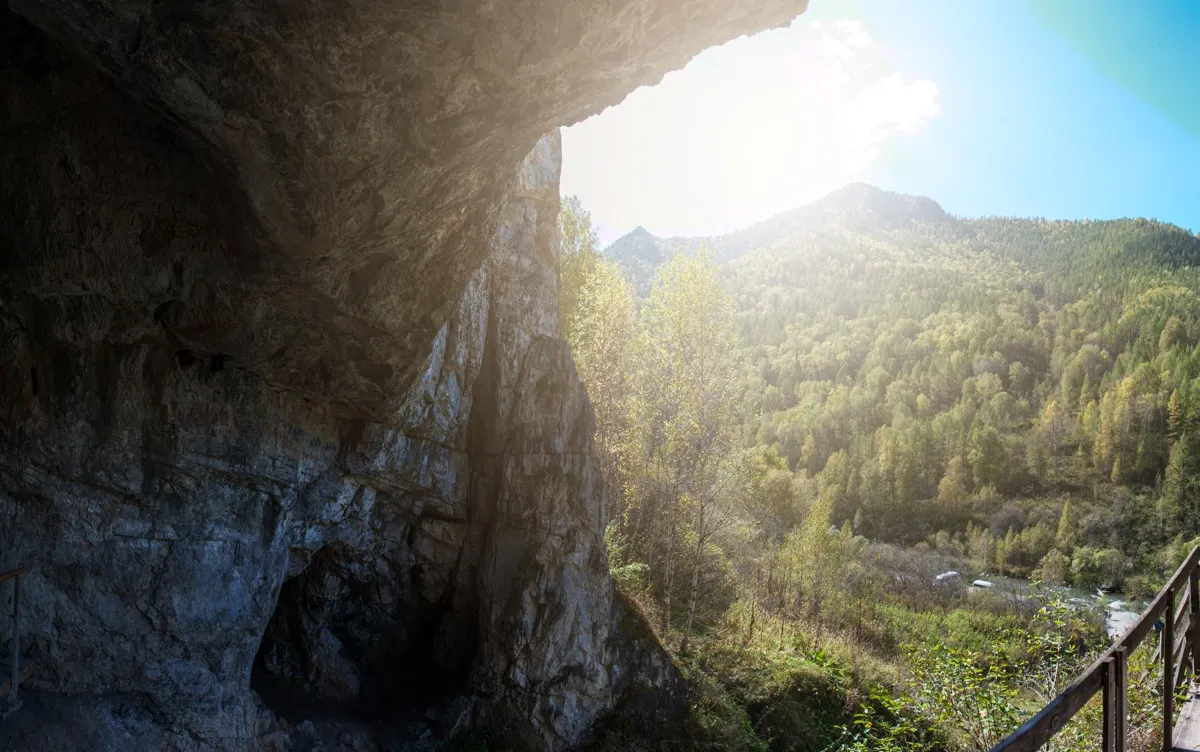
Although modern humans are now the only human lineage left alive, others not only lived alongside modern humans, but even interbred with them, leaving behind DNA in the modern human genome. Such lineages not only included the Neanderthals, the closest extinct relatives of modern humans, but also the mysterious Denisovans, known only from molars and a finger bone unearthed in the Denisova Cave in the Altai Mountains in Siberia. [Denisovan Gallery: Tracing the Genetics of Human Ancestors]
Previous research found that while Denisovans shared a common origin with Neanderthals, they were nearly as genetically distinct from Neanderthals as Neanderthals were from modern humans. Prior work also found Denisovans contributed DNA to several modern human groups — about 5 percent of their DNA to the genomes of people in Oceania, and about 0.2 percent to the genomes of mainland Asians and Native Americans.
Scientists had assumed that this Denisovan DNA found in modern humans in Asia came from interbreeding between the Denisovans and the Oceanians who had migrated to Asia. Now, researchers have found that Denisovan ancestry in modern humans came from two separate episodes of interbreeding.
"I was surprised that there were two very different groups of Denisovans that contributed DNA to modern humans — it wasn't something I was expecting to see," study lead author Sharon Browning, a statistical geneticist at the University of Washington,told Live Science.
While developing a new technique for comparing whole genomes between modern humans and now-extinct human groups, the scientists discovered that Denisovan DNA seen in individuals from Oceania and from East Asia are different. After comparing more than 5,600 genomes from modern humans across the world with the one complete Denisovan genome from the Altai Mountains, the researchers found that East Asians were more closely related to the Altai Denisovan, while the Oceanians were more distantly related to the Altai Denisovan.
Get the world’s most fascinating discoveries delivered straight to your inbox.
The researchers suggest that ancestors of Oceanians interbred with a southern group of Denisovans, while the ancestors of East Asians mixed with a northern group.
"The implication is that there were at least three instances of modern humans interbreeding with archaic humans — one with Neanderthals and two with Denisovans," Browning said. "To me, this suggests that modern humans weren't so very different from Neanderthals and Denisovans."
The scientists plan to look for more signs of interbreeding between modern humans and other archaic human lineages in Asians and other populations across the world.
"There are signs that intermixing with archaic humans was occurring in Africa, but given the warmer climate, no one has yet found African archaic human fossils with sufficient DNA for sequencing," Browning said in a statement.
The scientists detailed their findings online today (March 15) in the journal Cell.
Original article on Live Science.