














Harvey's Floodwaters Tied to Woman's Deadly 'Flesh-Eating' Bacteria Infection

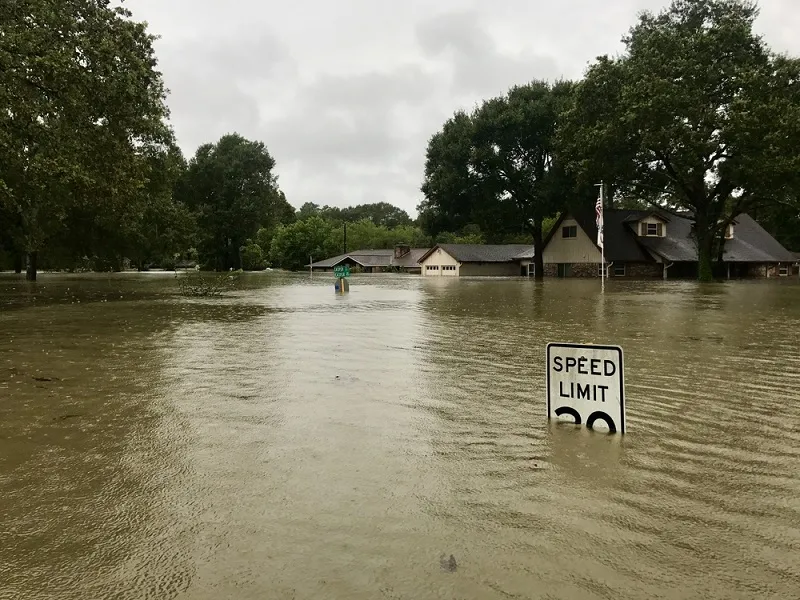
A woman in Houston contracted "flesh-eating bacteria" from water that flooded her home during Hurricane Harvey, and she ultimately died of this serious skin infection.
The 77-year-old woman, Nancy Reed, was initially injured when she fell in her home, which had been flooded by the hurricane, according to the New York Times. In addition to breaking her arm, she also sustained cuts during the fall, which allowed bacteria to enter her body. She died from her infection on Sept. 15, according to the Harris County Institute of Forensic Science.
Although commonly referred to as "flesh-eating bacteria," this condition is known to doctors as "necrotizing fasciitis." It is a serious bacterial infection that destroys skin and muscle tissue, according to the Centers for Disease Control and Prevention (CDC).
Several types of bacteria can cause necrotizing fasciitis: group A Streptococcus (group A strep), Klebsiella, Clostridium, Escherichia coli and Staphylococcus aureus, according to the CDC. In rare cases, the ocean-dwelling bacterium Vibrio vulnificus can also cause necrotizing fasciitis. There are about 700 to 1,100 reported cases of necrotizing fasciitis caused by group A strep (the most common cause) in the U.S. each year, the CDC said.
The most common way for people to get necrotizing fasciitis is when the bacteria enter the body through a break in the skin, the CDC said. The bacteria can spread quickly once they enter the body, and symptoms of necrotizing fasciitis can start within hours of an injury. The skin may become red or purplish from the infection, and some people get ulcers, blisters or black spots on their skin, the CDC said.
The condition is treated with antibiotics, but many people also need immediate surgery to remove dead tissue and help stop the infection, the CDC said.
Reed's death is the 36th fatality tied to Hurricane Harvey, according to the Harris County officials.
Get the world’s most fascinating discoveries delivered straight to your inbox.
Original article on Live Science.

Rachael is a Live Science contributor, and was a former channel editor and senior writer for Live Science between 2010 and 2022. She has a master's degree in journalism from New York University's Science, Health and Environmental Reporting Program. She also holds a B.S. in molecular biology and an M.S. in biology from the University of California, San Diego. Her work has appeared in Scienceline, The Washington Post and Scientific American.