














Plague Bacteria Found in Arizona Fleas

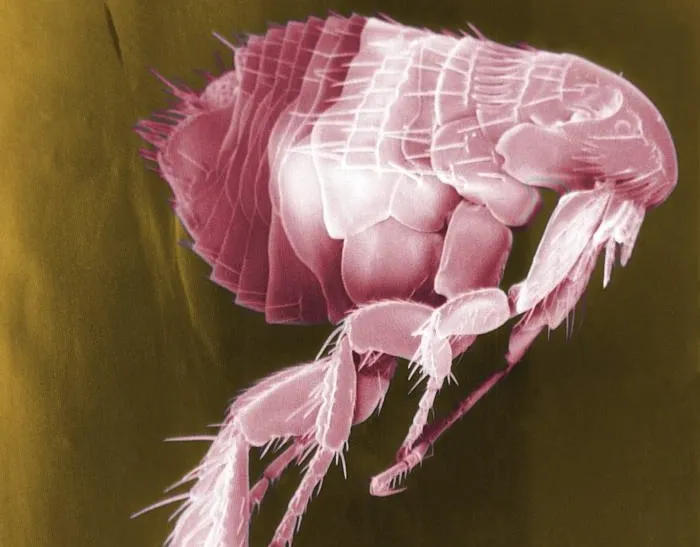
Fleas carrying the plague have been found in some parts of Arizona, according to health officials.
On Friday (Aug. 11), the Navajo County Health Department (NCHD) announced that fleas collected in the town of Taylor, Arizona, had tested positive for Yersinia pestis, the bacterium that causes plague.
The department "is urging the public to take precautions to reduce their risk of exposure to this serious disease," officials said in a Facebook post.
The plague is perhaps best known for killing millions of people in Europe in the 1300s in a pandemic called the Black Death. Today, the infection is relatively rare in the United States, but it still occurs, mainly in the Southwest — in New Mexico, Arizona and Colorado. Earlier this year, New Mexico officials reported that three people in the state had been infected with plague.
Plague is carried by rodents and their fleas, and most often, the disease is transmitted to humans through fleabites, according to the Centers for Disease Control and Prevention.
Arizona officials advised people to avoid rodent burrows and to keep dogs on leashes to avoid possible exposure to fleas with plague. In addition, people should avoid handling sick or dead animals, deflea their pets routinely and use insect repellent when visiting or working in areas where plague might be present, the NCHD said.
A sudden die-off of prairie dogs or other rodents also may be an indicator of plague, so people who notice a sudden die-off of rodents should contact the health department, the NCHD said.
Get the world’s most fascinating discoveries delivered straight to your inbox.
Symptoms of the plague typically appear within two weeks of exposure and include fever, chills, headache, weakness, muscle pain and swollen lymph glands (called "buboes"), the NCHD said. The disease is curable with antibiotics if treated early.
Original article on Live Science.

Rachael is a Live Science contributor, and was a former channel editor and senior writer for Live Science between 2010 and 2022. She has a master's degree in journalism from New York University's Science, Health and Environmental Reporting Program. She also holds a B.S. in molecular biology and an M.S. in biology from the University of California, San Diego. Her work has appeared in Scienceline, The Washington Post and Scientific American.