Age-Old Problem: River in Jordan Polluted by Copper 7,000 Years Ago

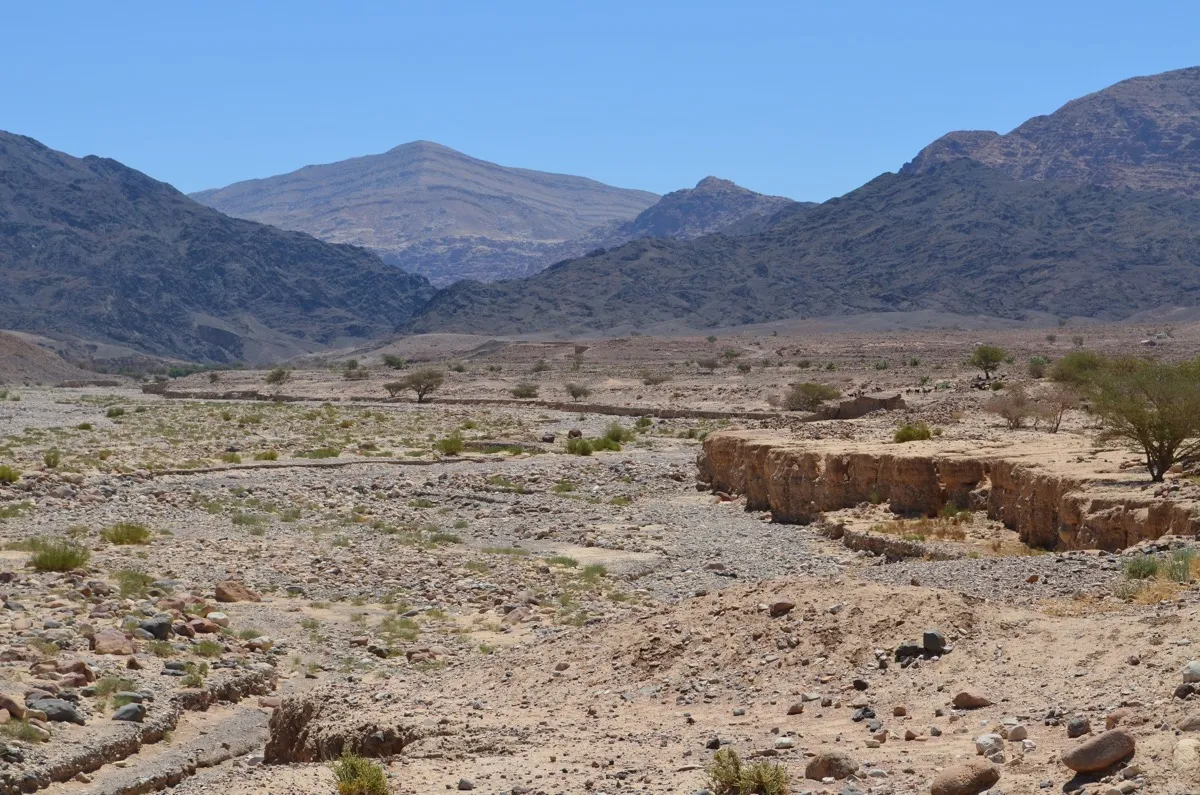
The first river polluted by humanity may have been discovered in Jordan, contaminated by copper about 7,000 years ago, a new study finds.
Scientists examined a now-dry riverbed in the Wadi Faynan region of southern Jordan. Archaeologist Russell Adams at the University of Waterloo in Canada and his colleagues have been studying the area for more than 25 years to learn more about a critical turning point in history — the origins of metallurgy, when humans began moving from making tools out of stones to making tools out of metal.
"The region is famous as one of the principal sites in the Middle East where copper occurs that can easily be mined," Adams told Live Science. [Photos of the World's 10 Most Polluted Places]
Copper production began in this region during the Chalcolithic, or Copper Age, which took place between about 5000 and 3200 B.C. in this region, Adams said. The Chalcolithic Age was a transitional period during the late Neolithic, or Stone Age, and the beginning of the Bronze Age.
"These populations were experimenting with fire, experimenting with pottery and experimenting with copper ores, and all three of these components are part of the early production of copper metals from ores," Adams said in a statement. "The technological innovation and the spread of the adoption and use of metals in society mark the beginning of the modern world."
This early copper production involved combining charcoal and the blue-green copper ore found in abundance in this area in pottery crucibles or vessels and heating the mixture over a fire. The process was time-consuming and labor-intensive, so it took thousands of years before copper became a central part of human societies, the researchers said.
Over time, communities in the region grew larger and copper production expanded. People built mines and then large smelting furnaces and factories by about 2600 B.C., the researchers said.
Get the world’s most fascinating discoveries delivered straight to your inbox.
"This region is home to the world's first industrial revolution," Adams said in the statement. "This really was the center of innovative technology."
Among other things, Adams and his colleagues were interested in the long-term effects of copper production on the environment in this region. "There are places in the Wadi Faynan basin where the pollution from the copper smelting residues, the slag, are significant health risks, and probably would've been that way for a long time," Adams said.
The international research team's analysis of the sediments in the area suggested that pollution of a meandering stream that once ran in Wadi Faynan began about 7,000 years ago. "This is the earliest example known yet of humanity's pollution of the world," Adams said.
The slag from copper production contained metals such as copper, lead, zinc, cadmium, and even arsenic, mercury and thallium. Plants absorbed these metals, and then people and animals such as goats and sheep ate them.
Pollution from millennia of copper mining and production likely led to widespread health problems in the region, such as infertility, newborn malformations and premature death, Adams said. He said that prior work examining human bones from Roman cemeteries in the region "found unhealthy levels of metals in people, and these were not necessarily people involved in mining and smelting themselves — many were infants and juveniles. There was clearly uptake of environmental pollution into the food chain."
Future research could look for signs of contamination in various parts of this region to learn more about how pollution in this area might have varied over time, Adams said.
The scientists will detail their findings Dec. 15 in the journal Science of the Total Environment.
Original article on Live Science.