













Calf Bones Bolster Evidence Plymouth Settlement Was Pilgrims' First

Nearly 400 years after the first Thanksgiving, researchers have uncovered evidence of the Pilgrims' original 1620 settlement in Plymouth, Massachusetts.
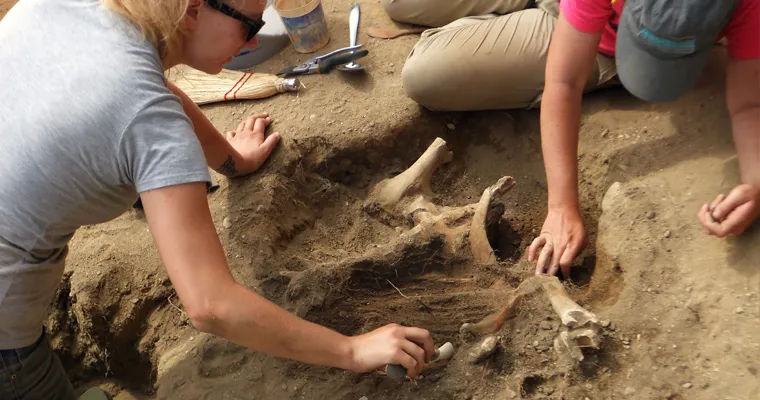
Archaeologists discovereda calf's remains and 17th-century artifacts at an archaeological site on Burial Hill in Plymouth — thought to be the location of the first Pilgrim settlement.
The bones of the calf, dubbed Constance, were found buried in a deep pit and offered the first clear evidence that the dig site was the original settlement, because Native Americans did not have domestic cattle, said David Landon, an archaeologist at the University of Massachusetts and leader of the dig. Constance, therefore, would have lived and died within the original Plymouth settlement, according to the researchers. [Plymouth Rock to the Blarney Stone: The World's 6 Most Famous Rocks]
"Oftentimes success in the colony depended on herds of cattle. It became a centerpiece of the economy," Landon said in a statement. "So the calf does connect us to that story."
Since 2013, Landon has led a group of students for five weeks each summer to hunt for evidence of the original Pilgrim settlement. The researchers had set a goal to find evidence of the original settlement by 2020, to coincide with the Plymouth Colony's 400th anniversary.
Along with Constance, the archeological digs also uncovered 17th-century artifacts at the site. The researchers said pottery, tins, beads and musket balls were found in an area distinguished by remnants of the early settlement's "post and ground construction" structures — essentially, holes for wood and dirt.
"While we're digging, we're constantly in the process of trying to interpret what we're finding," Landon said. "It's about much more than the artifacts — it's about trying to pin down soil color and trying to understand constructed features that are no longer there."
Get the world’s most fascinating discoveries delivered straight to your inbox.
Details of where the settlement was located and what kinds of items the Pilgrims owned and used will help further refine scientists' understanding of early Colonial activity, said Kathryn Ness, curator of collections at Plimoth Plantation.
Evidence of the original 1620 Plymouth settlement has the potential to "change dramatically our understanding of early European colonization," Ness said in a statement.
Researchers and students are still at work cleaning, labeling and researching this summer's discoveries. Another group of students will join Landon next summer to continue the dig, he said.
"We've opened the first window but we want a bigger view. We want the bay window," Landon said. "We want to see if we can find other components."
The research at Plymouth is a collaborative effort of the Plimoth Plantation museum, and the University of Massachusetts Boston's Andrew Fiske Memorial Center for Archaeological Research and the Institute for New England Native American Studies.
Original article on Live Science.
