













Listeria in Your Freezer: How Long the Bacteria Survive

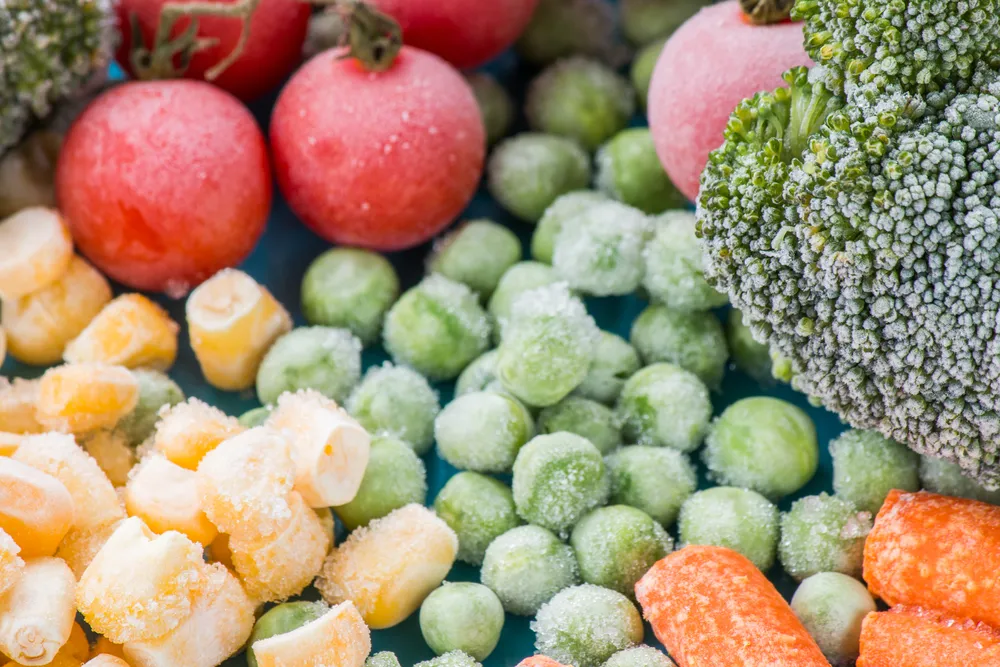
The latest Listeria-related food recall includes more than 350 frozen fruit and vegetable products, according to the Centers for Disease Control and Prevention (CDC).
The recall covers frozen foods produced as far back as May 2014, with "use by" dates through as far as April 2018, the CDC reported. Listeria bacteria represent one of the top causes of food-borne illness in the U.S., according to the CDC.
The seemingly long shelf life for the Listeria in these products results, in part, from how the foods are stored: in the freezer. [5 Scariest Disease Outbreaks of the Past Century]
Listeria can live for a really long time in the freezer, said Benjamin Chapman, a food-safety specialist and an associate professor at North Carolina State University.
In fact, freezing is how scientists preserve bacteria when they want to study the organisms in the lab, Chapman told Live Science.
Although freezing temperatures will prevent Listeria bacteria from growing, they don't kill the bacteria, Chapman said. The microbes survive in the freezer, he said.
In addition, Listeria are among the few bacteria that can actually multiply at refrigerator temperatures, according to the CDC. For most other bacteria, these temperatures halt the bacteria's growth, sending them into a state of suspended animation.
Get the world’s most fascinating discoveries delivered straight to your inbox.
Who's at risk?
Healthy people are unlikely to get sick from eating foods contaminated with Listeria. Rather, adults older than 65, people with weakened immune systems and pregnant women are at higher risk for illness, according to the CDC.
People who have been getting sick in this outbreak have ranged in age from 56 to 86, the CDC reported.
While Listeria is not ubiquitous, it is very common in raw foods, Chapman said. Most people ingest some Listeria daily, but not in high amounts, and those individuals are fine, he said. It takes, on average, thousands of Listeria cells to make a person sick, he said.
But when Listeria does make someone sick, "it's one of the most fatal pathogens we have," Chapman said.
Several CDC reports of Listeria outbreaks found that the infection's mortality rate was between 15 and 20 percent among people who became sick enough that they had to be hospitalized.
Staying safe
To protect yourself against Listeria, frozen vegetables should be cooked before they are eaten, Chapman said. Heating the foods kills Listeria, he said.
In fact, frozen vegetables are not considered "ready to eat" products, meaning that the foods should not be eaten raw, Chapman said. Though eating raw, frozen vegetables may sound unusual, frozen kale, for example, is increasingly being used in smoothies, he said. And it's not uncommon for pediatricians to recommend letting young children chew and suck on frozen veggies while teething, he added.
Chapman noted that microwaving these foods is not the best way to prepare them. That's because microwaves provide very uneven heat distribution, Chapman said. The food will get very hot in some places and not hot in other places, he said. In other words, the bacteria might not be killed throughout the food. [Top 7 Germs in Food That Make You Sick]
He also recommended avoiding thawing frozen vegetables in the refrigerator. This can be risky, especially if a person leaves the food in the refrigerator for multiple days, he said.
Follow Sara G. Miller on Twitter @saragmiller. Follow Live Science @livescience, Facebook & Google+. Originally published on Live Science.
