













Women's rights, the foundations of capitalism and the warping of space-time can all take a backseat to meticulous descriptions of long-beaked finches, at least if public opinion is any measure.
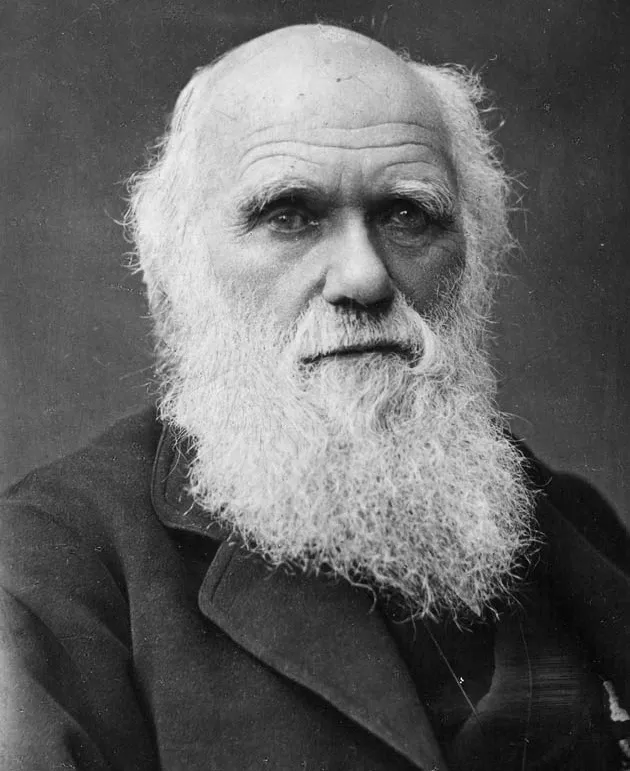
"On the Origin of Species," Charles Darwin's famous tome on evolution, has been voted the most influential academic book in history, according to an online survey answered by the public.
The biology bombshell edged out competitors such as "The Complete Works of William Shakespeare"; "On the Vindication of the Rights of Women," by Mary Wollstonecraft Shelley; "The Wealth of Nations," by Adam Smith; and even physics classics such as the theory of general relativity by Albert Einstein and "A Brief History of Time," by Stephen Hawking.
A group of academic booksellers, publishers and librarians conducted the survey in advance of Academic Book Week in the United Kingdom. [Creationism vs. Evolution: 6 Big Battles]
Controversy and consensus
Darwin's famous book made a splash when it was first published in 1859, and it has been making waves ever since. The book, which emerged from the naturalist's observations as he traveled aboard the ship HMS Beagle, lays the groundwork for modern evolutionary theory, the process by which organisms change as a result of heritable changes. In Darwin's theory, species emerge through natural selection, where genetic changes lead some in a population to be more fit for their environment than their competitors. Over time, those with the genetic change may outcompete or outbreed their counterparts, causing those changes to become widespread. In one of the most iconic examples in the book, Darwin noted that, over time, the finches of the Galapagos Islands had evolved long or short beaks, depending on whether they needed to dig deep to access the food inside the cactus fruit.
From almost the instant the book was published, it sparked controversy, with many taking issue with its implications for religion and the origin of human beings. In the United States, for instance, conflicts arose when public schools began teaching the theory of evolution after World War I, with Tennessee passing a law stating that no theories of human origins taught in public schools could contradict the Bible. The law was tested in the famous Scopes Trial, and stayed on the books until 1968, when the Supreme Court ruled such laws contradicted the separation of church and state.
Get the world’s most fascinating discoveries delivered straight to your inbox.
Despite the controversy, the theories laid out in the classic book have been validated time and again, and there is now broad scientific consensus that evolutionary theory explains how species, including humans, got to be the way they are. Despite this near-unanimous agreement among scientists, roughly half of Americans continue to reject the notion that humans evolved from earlier primates.
Academic Book Week is a week of activities, held from Nov. 9 to Nov. 16, related to the Academic Book of the Future project, launched in 2014 by the Arts and Humanities Research Council and the British Library to brainstorm what that future book looks like with the backdrop of open-access publishing and the evolution of digital publishing.
Follow Tia Ghose on Twitterand Google+. Follow Live Science @livescience, Facebook & Google+. Original article on Live Science.

Tia is the editor-in-chief (premium) and was formerly managing editor and senior writer for Live Science. Her work has appeared in Scientific American, Wired.com, Science News and other outlets. She holds a master's degree in bioengineering from the University of Washington, a graduate certificate in science writing from UC Santa Cruz and a bachelor's degree in mechanical engineering from the University of Texas at Austin. Tia was part of a team at the Milwaukee Journal Sentinel that published the Empty Cradles series on preterm births, which won multiple awards, including the 2012 Casey Medal for Meritorious Journalism.