













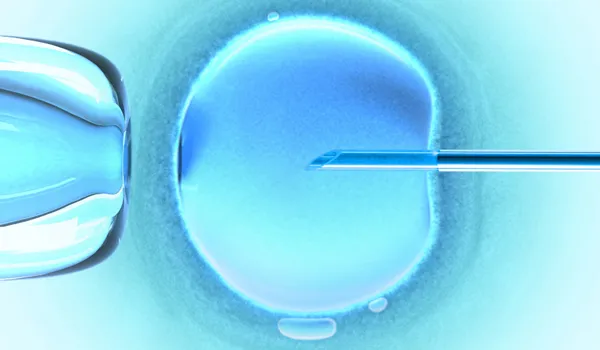
With the news that Chinese scientists have attempted to modify the genes of human embryos, many scientists have called for a halt to such technology, saying the techniques are too risky to use in human embryos.
In a study published Saturday (April 18) in the journal Protein & Cell, Chinese scientists reported that they had used a genetic engineering technique called CRISPR to cut out a faulty gene and replace it with a healthy one in human embryos. The vast majority of the embryos did not get the needed genetic repairs, however; instead, their genomes were cut in many other unintended locations.
"This paper is a complete confirmation of the issues that were raised about the readiness of the CRISPR platform to be applied in therapeutic genome editing," said Edward Lanphier, president and CEO of Sangamo BioSciences, a company that works on genome editing in adult cells but not embryonic cells. Lanphier, along with other scientists, published a commentary in March in the journal Nature, calling for a moratorium on such research.
Even the authors of the new study think the technology isn't ready for prime time. To use CRISPR in normal embryos would require 100 percent accuracy, but the new study showed the process is not anywhere close to that, study co-author Junjiu Huang, a researcher at Sun Yat-sen University in Guangzhou, China, told Nature News.
"That's why we stopped. We still think it's too immature," Huang said. [How Human Embryo Genome Editing Works]
Embryo editing?
At the heart of the controversy is a genetic cut-and-paste system called CRISPR/Cas 9, in which a stretch of RNA called CRISPR targets specific spots on the genome, and an enzyme that works with CRISPR called Cas 9 cuts them, leaving an empty space in the genome. When scientists also provide a section of replacement DNA, the cell's repair machinery inserts the new genetic material into the slot left by Cas9. The system is incredibly powerful and works in cells from virtually all animals, studies have shown.
Get the world’s most fascinating discoveries delivered straight to your inbox.
Huang and his colleagues used CRISPR to replace a gene for Beta thalassemia, a blood disorder, with a healthy version of the gene, in 86 human embryos. The embryos were created at fertility clinics for couples undergoing in vitro fertilization but were discarded because two sperm had fertilized them. These types of embryos go through the early stages of development but cannot become full-term babies.
The team injected the embryos with the CRISPR/Cas 9 complex and then waited to see whether the problematic genes were replaced. Of the 86 embryos, 71 grew to eight-celled embryos. The team tested 54 of these for genetic modifications and found that just 28 of the embryos had been cut at the required spot on the genome. Only some of these contained the replacement gene. In addition, the researchers found many "off-target" spots where CRISPR had cut the genome in error. And the team tested only a small portion of the genome for these aberrant snips.
"If they'd done whole genome sequencing, they would have found many, many more off-target effects," Lanphier told Live Science.
Missing the target
There are ethical problems inherent to tinkering with human embryos and genetic engineering in general, but beyond that, the CRISPR technology is simply too risky to use in embryos, Lanphier said.
The problem is that CRISPR relies on a piece of RNA, called guide RNA, that matches the target gene — in the recent study, that would be the gene for Beta thalassemia — and can then find and latch onto that target. But this guide RNA sometimes binds to other spots in the genome as well, leading to off-target cuts. That, in turn, could lead to the introduction of harmful genetic mutations in embryos, Lanphier said. Another risk of CRISPR is that it creates genetically mosaic embryos, meaning that different cells in the body would have different DNA, Lanphier said. That could lead to problems down the road for a person who was born using this technique, he added.
Less risky CRISPR?
However, the current study may not have used the best technology to evaluate the risks inherent to CRISPR, said George Church, a synthetic biologist at Harvard University who was not involved in the study.
"There are improvements in the Cas9 technology that greatly reduce off-target mutations that Liang et al. cited (Mali et al. 2013c) but did not employ," Church wrote in an email to Live Science.
For instance, a 2014 study in the journal Nature Communications showed it is possible to use CRISPR without creating off-target effects, at least in groups of identical cells known as clonal cells, Church said. Follow-up work should confirm the results. It's possible that if scientists can verify that such a line of cells has no mutations, these cells could be used to create sperm cells, Church said.
Either way, it will be tricky to control the use of CRISPR, even with a voluntary moratorium, because it's just so easy to use, Lanphier said.
"It is trivial for any trained laboratory to develop that capability and use it for genome editing," Lanphier told Live Science, referring to the use of CRISPR.
Already, there are rumors that at least a half dozen other labs in China are working on this technique, Lanphier said.
Follow Tia Ghose on Twitterand Google+. Follow Live Science @livescience, Facebook & Google+. Originally published on Live Science.

Tia is the editor-in-chief (premium) and was formerly managing editor and senior writer for Live Science. Her work has appeared in Scientific American, Wired.com, Science News and other outlets. She holds a master's degree in bioengineering from the University of Washington, a graduate certificate in science writing from UC Santa Cruz and a bachelor's degree in mechanical engineering from the University of Texas at Austin. Tia was part of a team at the Milwaukee Journal Sentinel that published the Empty Cradles series on preterm births, which won multiple awards, including the 2012 Casey Medal for Meritorious Journalism.