













Bugs Smell Funny
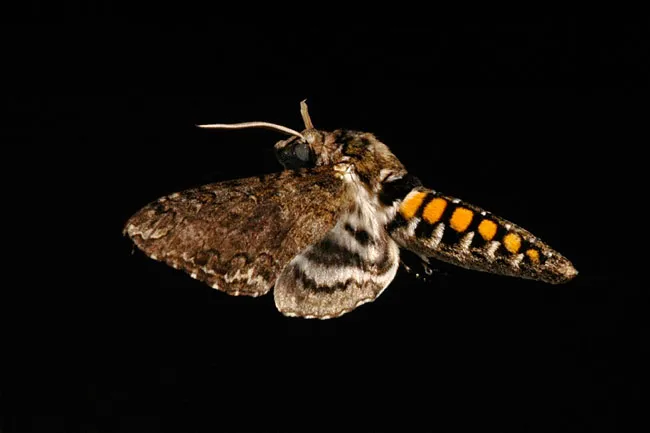
When an animal detects an odor, a flurry of activity ensues inside its sensory cells — whether they're in a dog's nose or a moth's antenna. Those cellular mechanisms are extremely complex and were thought to be universal.
New research shows, however, that in a striking departure from the rest of the animal kingdom, insects smell things their own way.
The classical mechanism works like this: an odor molecule binds to a molecular receptor in the membrane of a sensory cell, which triggers a series of reactions inside the cell, which opens a gate that lets in ions, which sends off a message to the brain.
The new research, by Koji Sato and Kazushige Touhara of the University of Tokyo, Leslie B. Vosshall of the Rockefeller University in New York City, and colleagues suggests that insects skip the intermediate steps. Instead, the odor molecule binds directly to the gate to open it.
It's not clear what, if any, advantage the insects' unique system might confer, but a rapid response to odors is one possibility. Among the insects the team tested was a species of mosquito that transmits malaria. The skeeters sniff out their victims; the new study may help find ways to block their sense of smell, and thus prevent the spread of disease.
The findings were detailed in the journal Nature.
- Mosquito Wars: Scientists Take a Swat
- The Surprising Impact of Taste and Smell
- Can Snakes Smell Anything?
Get the world’s most fascinating discoveries delivered straight to your inbox.