













Near-Death Experiences: What Happens in the Brain Before Dying

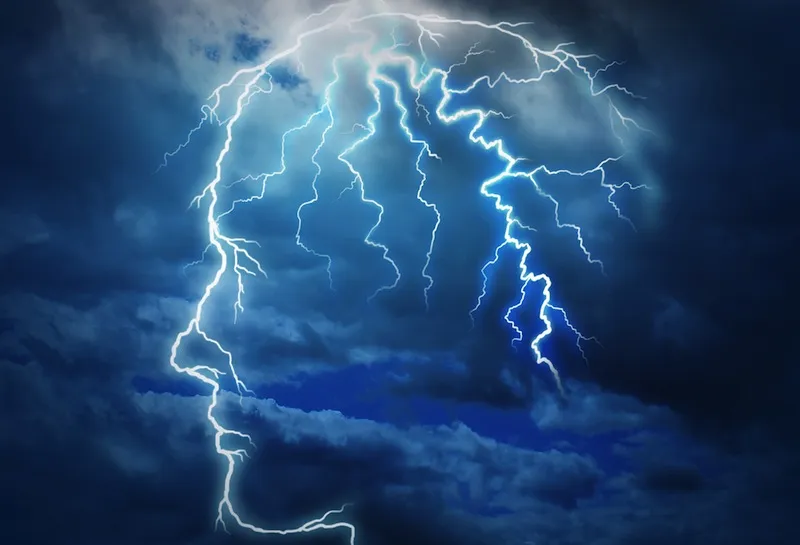
In the moments before death, the heart plays a central role, conventional wisdom says. That is, as the heart stops beating and blood stops flowing, the rest of the body slowly shuts down. But new research suggests this view may be wrong.
Scientists studied the heart and brain activity of rats in the moments before the animals died from lack of oxygen, and found that the animals' brains sent a flurry of signals to the heart that caused irrevocable damage to the organ, and in fact caused its demise. When the researchers blocked these signals, the heart survived for longer.
If a similar process occurs in humans, then it might be possible to help people survive after their hearts stop by cutting off this storm of signals from the brain, according to the study published today (April 6) in the journal Proceedings of the National Academy of Sciences. [Beyond Vegetables and Exercise: 5 Surprising Ways to Be Heart Healthy]
"People naturally focus on the heart, thinking that if you save the heart, you'll save the brain," said study co-author Jimo Borjigin, a neuroscientist at the University of Michigan Medical School in Ann Arbor. But her team found something surprising. "You have to sever [the chemical communication between] the brain and heart in order to save the heart," Borjigin told Live Science, adding that the finding is "contrary to almost all emergency medical practice."
Every year, more than 400,000 Americans experience cardiac arrest — which is when the heart stops beating. Even with medical treatment, only about 10 percent survive and are discharged from the hospital, according to the American Heart Association.
The researchers addressed the question of why the heart of a previously healthy person suddenly stops functioning completely, after only a few minutes without oxygen.
It turns out that even when a person in cardiac arrest loses consciousness and shows no signs of life, the brain continues to be active. In a previous study published in PNAS in 2013, Borjigin and her colleagues found that as the heart is dying, it gets flooded with signals from the brain, probably in a desperate attempt to save the heart.
Get the world’s most fascinating discoveries delivered straight to your inbox.
This barrage of signals may be responsible for the near-death experiences some people report, Borjigin said.
In the new study, the researchers induced cardiac arrest in rats by having them breathe carbon dioxide or by subjecting them to lethal injection. The researchers then studied the animals' brain activity using electroencephalography (EEG) and their heart activity using echocardiography (ECG) in the moments leading up to death. The team also measured the signaling chemicals present in the rats' hearts and brains throughout the experiment.
Initially, the animals' heart rates dropped off steeply. But then, their brain activity became strongly synchronized with the heart activity. The researchers used a new technology they developed for measuring heart rate, beat by beat.
While the heart and brain were in sync, the researchers observed a flood of more than a dozen neurochemicals, such as dopamine, which produces feelings of pleasure, and norepinephrine, which causes feelings of alertness. This flood of chemicals could explain why people who undergo near-death experiences describe them as "realer than real," Borjigin noted.
In the rats, the brain and heart activity remained synchronized until the heart went into a state called ventricular fibrillation, in which the lower chambers of the heart quiver instead of contracting properly, preventing the heart from pumping blood.
But when the researchers blocked the flow of these chemicals from the brain to the heart, by severing the rats' spinal cords before killing them, it delayed ventricular fibrillation. As a result, the animals survived for three times as long as the rats whose heart-brain connection was left intact.
Of course, all of this research was done in rats. Whether human bodies behave similarly is the million-dollar question, Borjigin said.
If researchers can find a way to "sever" the connection between the brain and the heart using drugs (rather than by actually severing the actual spinal cord), then it could be possible to administer these drugs to a person experiencing cardiac arrest. This would give health care workers more time to treat these patients, Borjigin said.
Follow Tanya Lewis on Twitter. Follow us @livescience, Facebook & Google+. Original article on Live Science.
