













Google Brings Fact-Checked Health Info to Top of Pages

Dr. Google is trying to become more reliable.
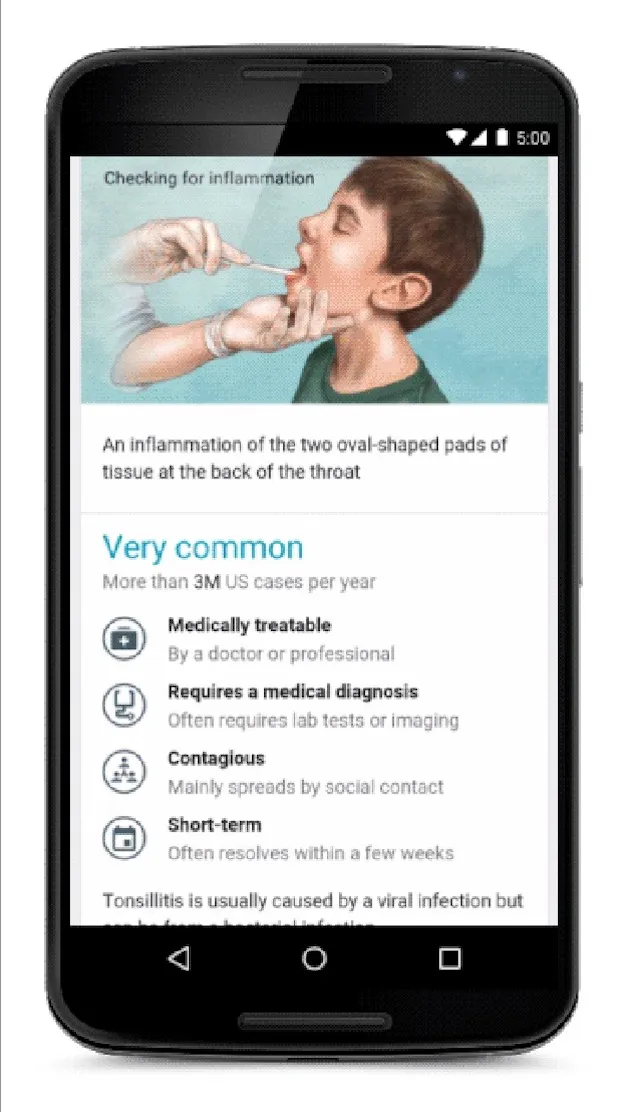
To combat bad health information on the web, Google is rolling out a new feature to bring fact-checked, doctor-vetted medical data to the top of the search results page when users look for information on conditions such as pink eye, concussions and measles, the company announced today (Feb. 10).
The medical facts will start popping up in Google's Knowledge Graph, a feature that the company introduced in 2012 to make it easier to find basic information on a variety of topics. For example, when you search for Marie Curie, you see a box with basic biographical information about the physicist — when and where she was born (Nov. 7, 1867, in Warsaw, Poland) and what she discovered (radium, polonium).
Now the same type of Knowledge Graph information will show up when you search for a medical ailment — its symptoms, treatments, the ages it affects and whether it's contagious.
In a blog post announcing the development, Google product manager Prem Ramaswami said that a team of medical doctors helped "carefully compile, curate, and review this information" to ensure that all of the facts presented are based on high-quality medical sources.
"That doesn't mean these search results are intended as medical advice," Ramaswami added. "We know that cases can vary in severity from person to person, and that there are bound to be exceptions. What we present is intended for informational purposes only — and you should always consult a healthcare professional if you have a medical concern."
The feature is being rolled out in the United States in English over the new few days. Ramaswami said Google might expand its curated health searches to cover more medical conditions, more languages and more parts of the world.
Get the world’s most fascinating discoveries delivered straight to your inbox.
Follow Megan Gannon on Twitter. Follow us @livescience, Facebook & Google+. Original article on Live Science.
