













Weird Earth Movement After Japan Earthquake Finally Explained

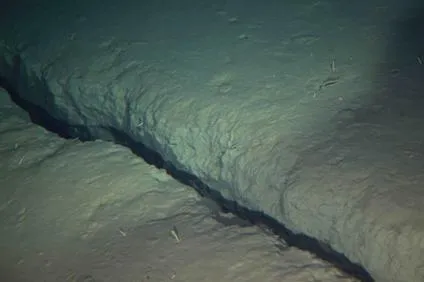
Japan's terrifying 2011 Tohoku-Oki earthquake unleashed about 1,000 years of pent-up pressure that was stored between two colliding tectonic plates.
During the Tohoku earthquake, northeast Japan jumped 16 feet (5 meters) eastward — a permanent shift — and the seafloor closer to the fault skipped 101 feet (31 m) to the east, according to GPS data. But immediately afterward, offshore GPS receivers in the extreme damage zone were traveling westward again, a puzzling sight.
A new study explains why: Geologists were watching the Earth ooze like warm putty after a giant earthquake. The unusual westward movements provide a new picture of how the Earth adjusts after giant earthquakes, said study co-author Kelin Wang, a seismologist with the Geological Survey of Canada, part of Natural Resources Canada. [7 Craziest Ways Japan's Earthquake Affected Earth]
"This is one of the pleasant rare cases where a few critical observations can answer a big question," Wang told Live Science. "To understand the whole earthquake cycle, you need to see the early stages. For the first time, we've seen how a system behaves right after a big one, and that's important for both earthquake physics and for risk and hazard assessments."
The findings were published yesterday (Sept. 17) in the journal Nature.

It's well known that after an earthquake, Earth's crust continues settling into its new position. Scientists thought these creaks and groans were both short term, like popping a neck joint, and long term, as with curving of the spine. The immediate changes took place through quiet movements along the fractured fault, in the same direction as the earthquake, according to one popular model. These movements are called afterslip. Along the Tohoku-Oki fault zone, the little lurches released energy equal to a magnitude-8.5 earthquake.
The long-term deformation was deeper beneath Earth's surface, in rock layers that flow rather than rupture, scientists thought. Subduction zone megaquakes like Tohoku disturb the Earth down into the mantle, the layer under the brittle crust. Subduction zones are tectonic collision sites where one tectonic plate yields to another and sinks into the mantle. Scientists thought the mantle took years to decades to catch up after giant earthquakes, slowly oozing under the suddenly shifted plates. [How Japan's 2011 Earthquake Happened (Infographic )]
Get the world’s most fascinating discoveries delivered straight to your inbox.
The problem is, no one had data to prove this is how subduction zones worked. On land, both afterslip and the flowing mantle produce similar effects at the surface. The best way to test the idea would be to drop GPS receivers at sea after a giant earthquake, which is both expensive and a hassle.
Then the Tohoku earthquake hit. Japan had an extensive GPS network on land and offshore, which was in place before the magnitude-9.0 earthquake and tsunami struck on March 11, 2011.
Immediately after the earthquake, GPS receivers above the seafloor's worst damage zone started shifting westward, even though hundreds of their fellow stations on land were tracking east. (The mantle can alter the crust, because sideways mantle flow drags the crust along with it.)

"This flow is going to endure for decades and could affect earthquake hazard levels across Japan," said Roland Bürgmann, a geophysicist at the University of California, Berkeley, who was not involved in the study. "This provides essential information about how megathrust earthquake cycles in subduction zones work. We really need to have a similar seafloor geodetic network offshore Cascadia in the United States and along other global subduction zones."
Based on the GPS data, Wang and his co-authors think the land-based motions are due to afterslip on the Tohoku fault. The westward shifts are due to mantle flow under the seafloor. Both processes can act at the same time, he said. The findings imply that afterslip accounts for less of the topographic reshaping seen after earthquakes than thought.
"Now we know with confidence that we need to revise our understanding of fault afterslip," Wang said.
The results have important implications for understanding how subduction zone faults accommodate tectonic plate motions and the earthquake cycle, Wang said. For example, large earthquakes along the Japan Trench relieve only part of the tension that builds up between the two plates. The rest could be released silently through afterslip or other processes. Comparing Japan's GPS data to Alaska, Chile, Sumatra and other subduction zones could help researchers build a complete geodetic history of the earthquake cycle to help answer such questions, Wang said. Mantle flow, also called viscoelastic relaxation, can also transmit stresses to other active faults along the trench.
"These are breakthrough observations that will advance our understanding of the earthquake cycle," Wang said.
Email Becky Oskin or follow her @beckyoskin. Follow us @livescience, Facebook & Google+. Original article on Live Science.
