













Spider Personalities Shine Among Friends

Novelty is no good if you're an arachnid. Spiders get a personality boost from hanging out with the same group day in and day out, new research finds.
The study examined a bizarre species of social spiders that build communal nests as big as cars. Results showed that social interactions can shape an animal's personality, said study leader Andreas Modlmeier, a postdoctoral researcher at the University of Pittsburgh.
"If you live in the same group for a long time, with the same individuals, you are able to specialize in your own niche, and therefore avoid conflict with other group members," Modlmeier told Live Science.
Finding a niche
The study builds on a theory of animal behavior known as "social niche specialization." The idea is that within social groups, individuals have to stand out from each other, and will thus develop distinct personalities — defined, in this case, as differences in behavior. The notion of a spider with personality may seem strange, but animals from cats to bees have been found to show individual personality differences.
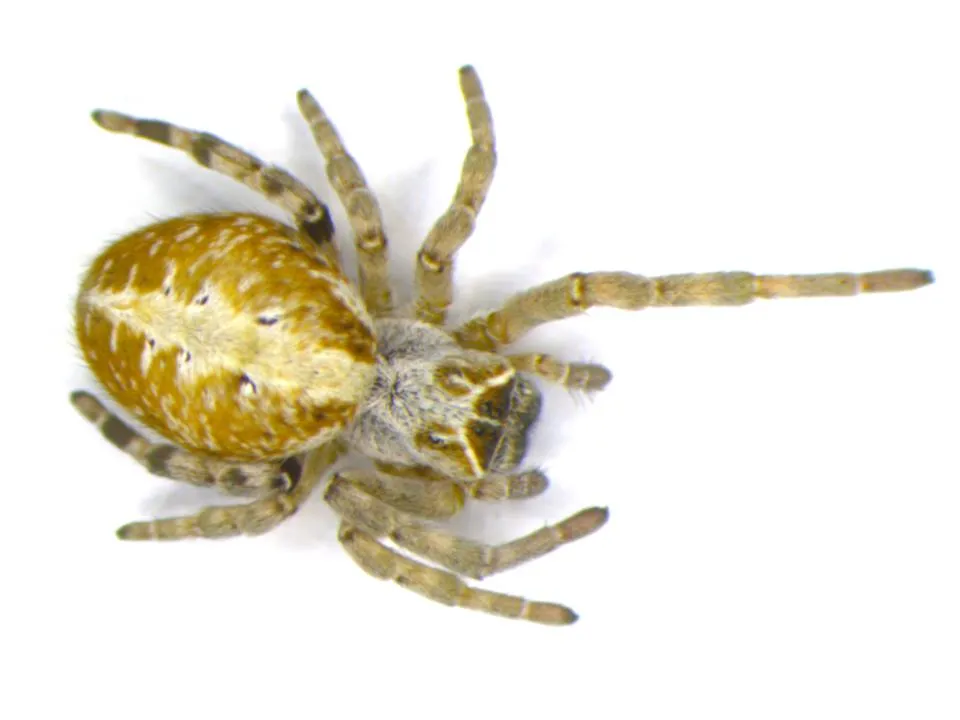
Modlmeier and his colleagues tested the theory on Stegodyphus dumicola, a social spider native to the Kalahari Desert in southern Africa. These spiders live together in communally built webs of up to 2,000 individuals, Modlmeier said. They share the responsibility of guarding every community member's eggs and young, and hunt together for prey. When adult females die, they liquefy their inner organs to feed the young of the colony, a behavior called gerontophagy. [Images: Creepy, Crawly and Incredible Spiders]
The researchers created 84 colonies of six spiders each. After a period of time, the researchers disturbed the colonies, forcing the spiders to rebuild the structures. But in half the cases, the researchers simply dumped the spiders out of their containers and put them back in a new container with the same individuals. In the other half, the researchers dumped the spiders out and mixed up their groups.
Get the world’s most fascinating discoveries delivered straight to your inbox.
The researchers also looked at the spiders' personalities, by testing the arachnid's boldness. By puffing air at each spider, the scientists mimicked an attempted attack by a predator, and then timed how long it took for the spider to move again. The less time it took to move again, the bolder that spider.
Personality blooms
Overall, spiders became shyer after they were disturbed. This result was likely a side effect of the spiders' natural environment, Modlmeier said. Predatory ants that overrun S. dumicola's webs have put the species under threat, and laying low after an attack may increase the spiders' chances of survival.

However, a difference emerged in spiders that spent the entire experiment with the same buddies compared to those that had to integrate with strangers. The spiders that stayed in their colonies became more consistent in their behavior over time, and more divergent from one another. In other words, spiders settled into "bold" or "shy" personalities, and differed very little in how they responded to fake attacks.
In contrast, the spiders that had to cope with new colony-mates were less individualistic and less consistent in their behavior. This is likely because these spiders had failed to find their "niches" in the changing social groups, Modlmeier said.
"It's a huge part of what makes social groups successful and effective," he said. "If you have a very efficient group that works together well, where everyone knows their place and has a task to work on, that group will be much more successful."
The same is likely true for other social insects, and social animals in general, up to and including humans and other primates, Modlmeier said. A few studies have failed to find evidence for social niche specialization in meerkats and stickleback fish, but those results are surprising, he said.
"I would expect to find it in social species, especially species that have close groups where animals live together for a long time," Modlmeier said.
The researchers report their findings today (Aug. 26) in the journal Biology Letters.
Follow Stephanie Pappas on Twitter and Google+. Follow us @livescience, Facebook & Google+. Original article on Live Science.

Stephanie Pappas is a contributing writer for Live Science, covering topics ranging from geoscience to archaeology to the human brain and behavior. She was previously a senior writer for Live Science but is now a freelancer based in Denver, Colorado, and regularly contributes to Scientific American and The Monitor, the monthly magazine of the American Psychological Association. Stephanie received a bachelor's degree in psychology from the University of South Carolina and a graduate certificate in science communication from the University of California, Santa Cruz.