













Color-Changing Octopus Skin Inspires New Camouflage Tech

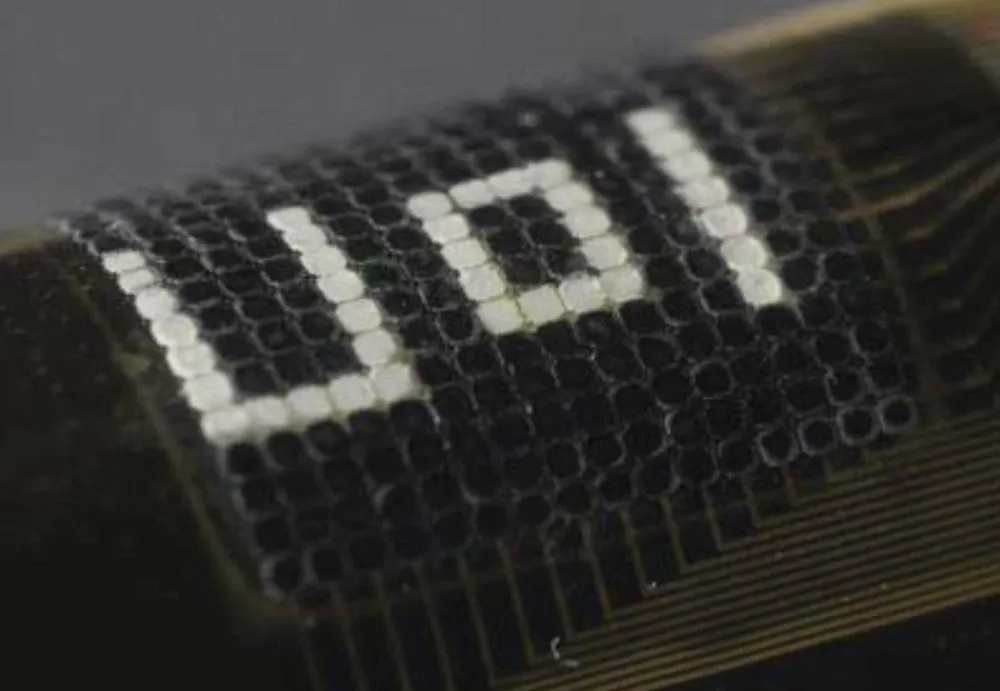
Octopuses and squid possess the amazing ability to blend in with their surroundings, but now, researchers have created a man-made system that mimics this form of camouflage.
The team developed flexible sheets of light sensors, containing a temperature-sensitive dye, that can automatically sense and adapt to the color of their surroundings. The technology could have consumer, industrial and military applications, according to the study, published today (Aug. 18) in the journal Proceedings of the National Academy of Sciences.
"These devices are capable of producing black-and-white patterns that spontaneously match those of the surroundings, without user input or external measurement," the researchers wrote in the paper. [See video of octopus-inspired camouflage]
Octopuses and squid are members of a group known as cephalopods, marine animals that have bilaterally symmetric bodies, large heads and arms or tentacles derived from the soft foot of a mollusk. These creatures have developed sophisticated forms of camouflage to conceal themselves, communicate, hunt and reproduce. Recently, scientists have come to understand how these animals perform these vanishing acts on an organ and cellular level.
In the study, researchers from the University of Houston and the University of Illinois at Urbana-Champaign created cephalopod-inspired materials that can sense and move in order to blend in with their surroundings. They developed flexible sheets consisting of color-changing elements on top of a white reflective surface with moving devices and light sensors. The color-changing parts contain dyes that change from opaque to colorless in response to temperatures above 117 degrees Fahrenheit (47 degrees Celsius).
The color-changing elements act like chromatophores, the tiny pigment-containing and light-reflecting organs in cephalopods. The reflective background is like leucophores (white chromatophores found in some cephalopod species); the motors act like the muscles that control the chromatophores; and the light sensor acts like structures that contain opsins, which are light-sensitive receptors involved in vision.
The researchers tested their camouflage material, showing it was able to adapt to changing patterns of light in its surroundings within 1 to 2 seconds, the scientists said. The researchers also programmed the material to produce a variety of black-and-white patterns, including one that spelled the letters "U o I" (for University of Illinois).
Get the world’s most fascinating discoveries delivered straight to your inbox.
Systems like this one could lead to adaptive camouflage technology that can be tuned to its environment, and integrated into electronics for a variety of applications, from military to industrial uses, the researchers said.
Editor's Note: If you have an amazing animal camouflage photo you'd like to share for a possible story or image gallery, please contact managing editor Jeanna Bryner at [email protected].
Follow Tanya Lewis on Twitter and Google+. Follow us @livescience, Facebook & Google+. Original article on Live Science.
