In the badlands of southern Saskatchewan, Canada, scientists discovered evidence of a 66-million-year-old forest fire locked in stone.
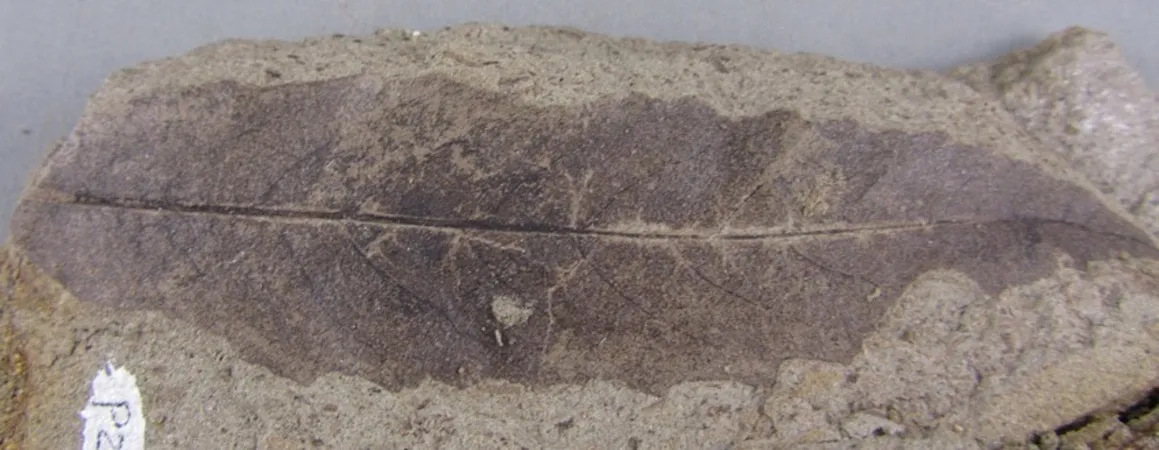
Fossilized plants found on top of the layers of ancient charcoal show that forests bounced back from wildfires during the last days of the dinosaurs much like they do today, the new study found.
Dry, treeless grasslands cover much of southern Saskatchewan today, but 66 million years ago, the region was covered in swampy, lowland forests. It was perhaps six times rainier and 18-26 degrees Fahrenheit (10-12 degrees Celsius) warmer than it is today, the researchers said. The area may have resembled North America's Pacific Coast, with forest canopies dominated by towering sequoias and a diversity of smaller plants growing closer to the ground. [See Photos of Fossils from the Ancient Forest]
A view of the badlands in Grasslands National Park in 2009.
(Image credit: Larsson/Bamforth)
The ancient forests also suffered the occasional fire. Researchers from McGill University, in Montreal, and the Saskatchewan Museum found evidence of one of those blazes among fossilized plants at Grasslands National Park, in a geologic layer known as the Frenchman Formation (so named because it's exposed around the Frenchman River).
This rock deposit is a natural time capsule from the Late Cretaceous Period, just before a mass extinction wiped out the dinosaurs. In this layer of stone and dirt, scientists have discovered the fossils of ancient turtles, crocodiles, croc-like champsosauruses, as well as dinosaurs, including Tyrannosaurus rex and the three-horned Triceratops horridus.
The scientists compared the fossils at Grasslands to another deposit without any fire disturbance, located about 125 miles away (200 kilometers) in a valley called Chambery Coulee. Differences in the type of plants found at both sites reveal how the prehistoric landscape recovered after a fire.
Similar to patterns of regrowth seen today, the fossils from Grasslands showed that plants like alder, birch and sassafras started popping up in the early stages after the fire. Meanwhile, the fossils from Chambery Coulee told the scientists that sequoia and ginkgo would have been thriving in mature forests that hadn't been scorched by a blaze.
Sign up for the Live Science daily newsletter now
Get the world’s most fascinating discoveries delivered straight to your inbox.
The researchers hope their findings and further study will help them understand the forest ecology and biodiversity in this region immediately before the dinosaurs fell.
"We won't be able to fully understand the extinction dynamics until we understand what normal ecological processes were going on in the background," study researcher Hans Larsson, of McGill University, said in a statement.
The findings were detailed last month in the journal Palaeogeography, Palaeoclimatology, Palaeoecology.
Megan has been writing for Live Science and Space.com since 2012. Her interests range from archaeology to space exploration, and she has a bachelor's degree in English and art history from New York University. Megan spent two years as a reporter on the national desk at NewsCore. She has watched dinosaur auctions, witnessed rocket launches, licked ancient pottery sherds in Cyprus and flown in zero gravity. Follow her on Twitter and Google+.