













Human Evolution 'Definitely Not' Over, Expert Says

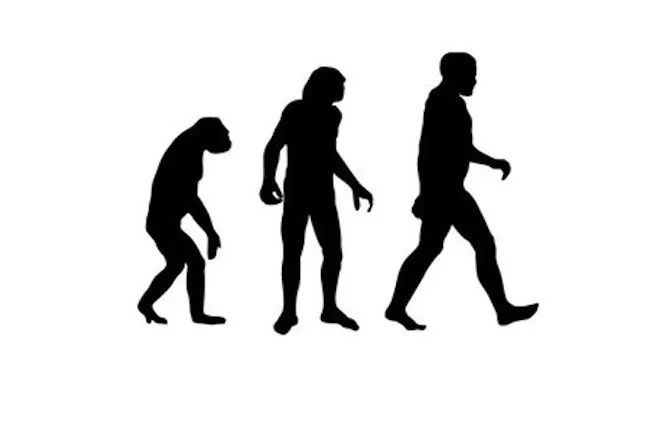
WASHINGTON — Is human evolution over? That’s the question Briana Pobiner, an anthropologist at the Smithsonian’s National Museum of Natural History, asked an audience here Saturday (May 17).
Humans are evolving at an increasing rate, thanks to medical advances and a larger population, Pobiner said at the “Future Is Here,” a two-day conference celebrating the future of humans, the planet, life beyond Earth and deep space, hosted by Smithsonian Magazine. But just as humans are continuing to evolve, human parasites are evolving, too.
“I invite you to look into the eyes of our ancient relatives,” Pobiner said. "Why did most human ancestors go extinct, while homo sapiens survived? The answer has a lot to do with human brains." [Top 10 Mysteries of the First Humans]
The human brain represents only about 2 percent of the body’s weight, but consumes 20 percent of its energy. The biggest evolutionary changes have occurred in the neocortex, the brain’s outer wrapping that processes abstract thinking, long-term planning, empathy and language, Pobiner said.
As human brains continue to evolve, will humans eventually develop gigantic heads and scrawny bodies, as depicted in some sci-fi films? Historically, the birthing process has limited brain size, because babies’ heads had to fit through the birth canal.
Today, however, Caesarian sections circumvent that process. As many as 46 percent of babies born today in China are delivered via C-section, Pobiner said. With advances in fertility and better postnatal medical care, she asked, "Are we screwing with natural selection?"
The world population is growing, and a bigger population also evolves faster, Pobiner said. But, with rising sea levels and less land available, waterborne and airborne illness could spread more easily, Pobiner said.
Get the world’s most fascinating discoveries delivered straight to your inbox.
The largest virus ever found was a virus thawed from permafrost, known as Pithovirus. While this parasite doesn’t infect humans, what if other ancient viruses thaw out that are harmful? For example, the smallpox virus was eradicated in 1979, according to the World Health Organization, but some experts say it has only been eradicated from the Earth’s surface, surviving instead in frozen form.
And human evolution persists in other areas too, such as sexual selection. A recent study found that beards become more attractive when they’re rare in a population. When “peak beard” is reached, they become less attractive, the study found. Economic conditions may also influence beardedness, as unemployed men may use beards as a sign of masculinity, Pobiner said.
So is human evolution over? "Definitely not," Pobiner said. "As long as there are humans, there will be human evolution."
Follow Tanya Lewis on Twitter and Google+. Follow us @livescience, Facebook & Google+. Original article on Live Science.
