













How Spider-Man Compares to the Real Thing

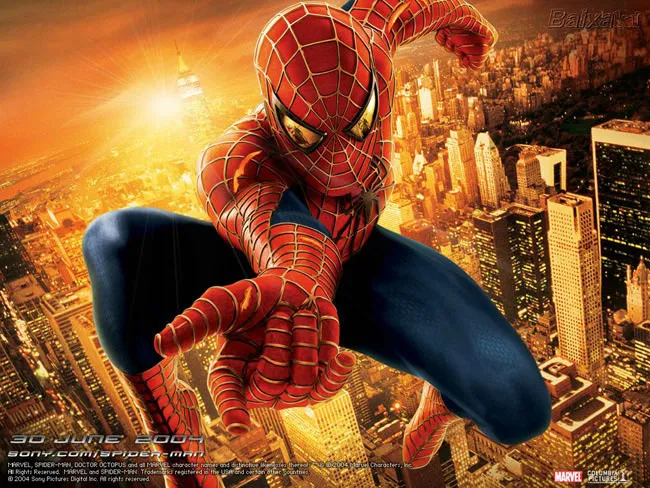
In a culture that finds it hard to love most bugs, spiders are nonetheless the ones we tend to accept or at least admire at a distance for their ingenuity with locomotion, insect hunting and home-building. In each of those areas, the web's the thing, as any Spider-Man fan can see starting Friday when "Spider-Man 3" opens. Spider silk could stop a Boeing 747 in flight, is stronger than bullet-proof Kevlar and more elastic than nylon, biologists say. "All spiders spin at least one kind of silk and some spiders can produce seven different types," said Cheryl Hayashi, a University of California-Riverside biologist. Most spider silks vary in their strength and elasticity. "Dragline silk is the strongest silk because it supports the weight of the spider," said Hayashi's colleague Randy Lewis at the University of Wyoming. This silk attaches the arachnid to the web and provides support like a rapeller's rope as the spider drops below the web to avoid prey. Most people thinking of spider silk envision an insect-catching orb web, a wagon-wheel shaped net with its spokes made from strong silk. The center of the wheel, the capture spiral, is made from flagelliform silk that is covered with sticky adhesive droplets. Once dinner is caught, spiders use achniform silk to wrap and immobilize their prey, Hayashi said. "Spiders are incredibly fascinating in the way they make and are able to manipulate their silks," she said. "They can even recycle their silk by eating it—it's a good source of protein." It is difficult to study spider silk because of the many types the 39,000 species of spiders produce. However, by cloning spider silk genes and adding them to E. coli bacteria, Hayashi and Lewis have found that the bacteria can produce chemically identical spider silk proteins for experiments. "By combining different genes, we can create spider silk proteins with novel properties," Hayashi said. And while "Spidey-sense" might be a comic-book fiction, some of Spider-Man's other abilities are ripped straight from nature, Hayashi says. She and Adam Summers, a University of California, Irvine, biologist, were studying Costa Rican zebra tarantulas and discovered they spun silk from their legs as well as their abdomen.
Tarantulas spin silk from their feet. Other spiders cast silk into the wind and fly hundreds of miles.
Spider-Man's high-speed glides through the Manhattan grid of highrises might not be too far off the truth.
- The Real Spiderman
- The Invisible Sex Dance of Psychedelic Spiders
- The Best Creepy Spider Images
Get the world’s most fascinating discoveries delivered straight to your inbox.
