
 Live Science Plus


US Navy's Next-Generation Aircraft Carrier Begins Testing Phase

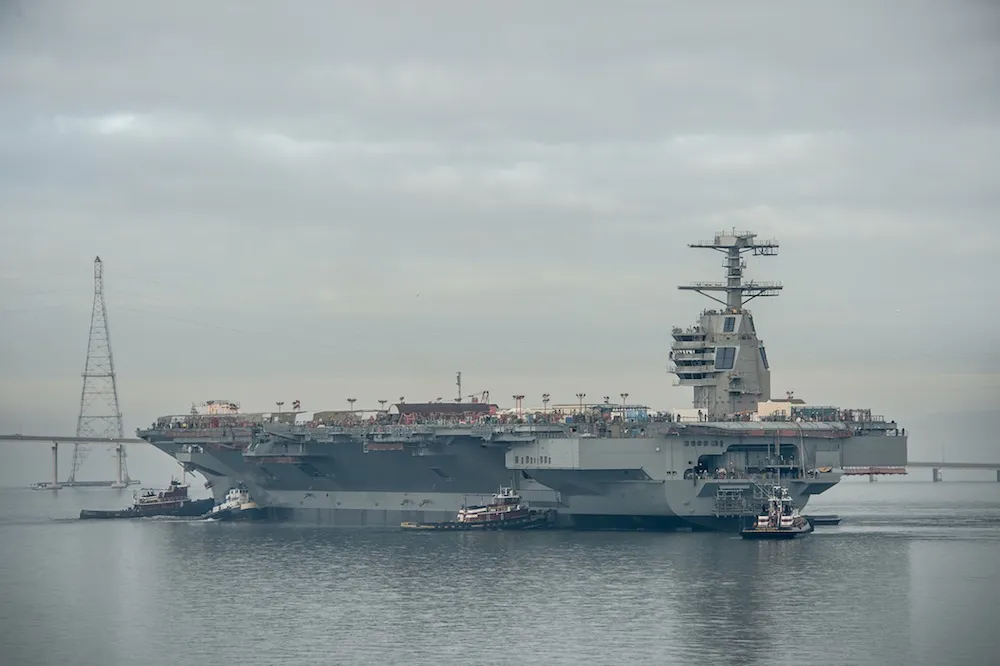
The U.S. Navy's newest aircraft carrier — a massive warship outfitted with the latest radar technology and sophisticated systems to accommodate unmanned, carrier-launched drones — is set to undergo more than two years of rigorous testing.
The USS Gerald R. Ford is the first of what will eventually be the Navy's fleet of next-generation Ford-class aircraft carriers. The upgraded ships are the first new designs of aircraft carriers since the USS Nimitz was built in the late 1960s.

"We're kind of in the infancy stage of the test program, and the early returns are good," Rear Adm. Thomas Moore, program executive officer for aircraft carriers, told the Daily Press. "We have a long way to go."
The USS Ford's testing phase is longer and more labor intensive than normal because the next-generation warship incorporates many new technologies, including upgraded radar systems, more efficient nuclear power plants and electromagnetic launchers designed to more effectively propel aircraft off the carrier's deck.
The mammoth USS Ford weighs nearly 100,000 tons, and will eventually be home to more than 4,600 service people and up to 75 aircraft, according to Newport News Shipbuilding, which constructed the aircraft carrier.
The Ford-class carriers are designed to replace the Navy's existing Nimitz-class warships, which have been in operation since the 1970s. The upgraded designs feature larger flight decks, three aircraft elevators and the new ships also replace steam-powered systems with more efficient onboard electrical power.
Some lawmakers and industry officials have criticized the USS Ford — particularly for its $12.8 billion price tag — but the Navy is staunchly defending the warship and its new technologies, according to the Daily Press.
The Ford-class ships are expected to usher in a new era of American naval power, and are designed to operate for 50 years. Construction is already beginning on the next aircraft carrier in the fleet, the USS John F. Kennedy.
Follow Denise Chow on Twitter @denisechow. Follow Live Science @livescience, Facebook & Google+. Original article on Live Science.
