













Bizarre Physics, Exomoons & Humanoids: Science Wishes for 2014

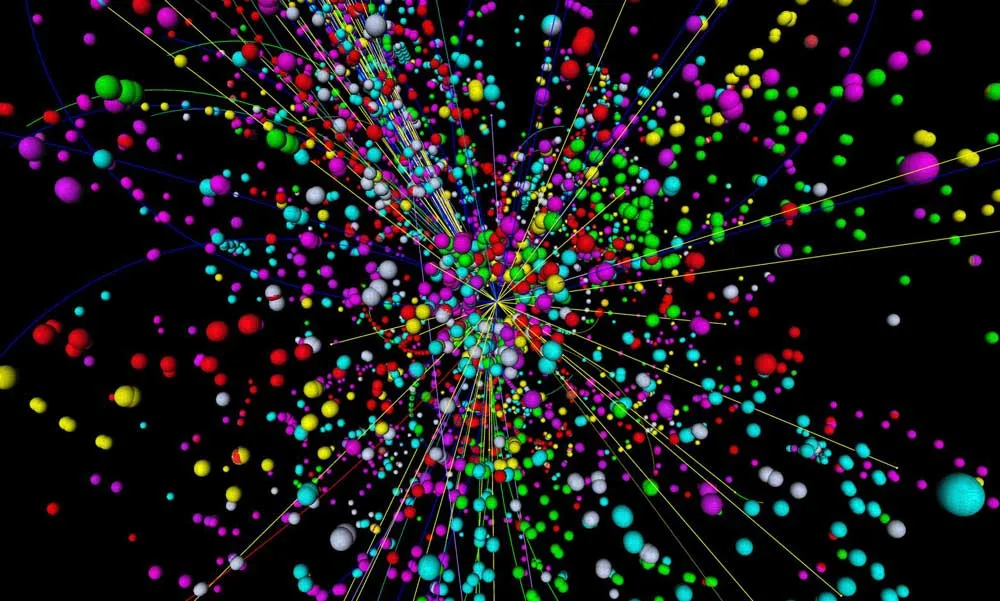
Science breakthroughs in the past year include the discovery of new planets far beyond Earth's solar system, the confirmation of an elusive particle and new clues about the evolutionary history of early humans. But science keeps marching on, raising the question: What will next year bring?
An unscientific survey of scientists from a variety of fields yields some predictions — and some ambitious hopes and dreams for 2014.
From discoveries to send the physics world reeling to the search for alien moons, here's what scientists are wishing for in the new year.
Physics
For now, the famous Large Hadron Collider (LHC) on the border of France and Switzerland is quiet, shut down for two years of maintenance and improvements that will make the particle collider stronger than ever when it comes back online in 2015.
But the pace of physics hasn't slowed. The last of the LHC results from earlier tests are still to come, said Tara Shears, a physicist at the University of Liverpool in the United Kingdom. And other big experiments are underway. In 2014, Shears will watch an experiment at the European Organization for Nuclear Research (CERN) that is investigating antihydrogen, the antimatter component of hydrogen. Antimatter is a material with the same mass as ordinary matter but is made of particles with opposite charges. CERN's ALPHA experiment seeks to investigate the gravitational interaction between matter and antimatter.

Shears is also intrigued by measurements by the Alpha Magnetic Spectrometer (AMS), which is aboard the International Space Station. In April 2013, scientists announced the AMS had detected an excess of high-energy positrons, an antimatter particle that is essentially the opposite of an electron. Finally, Shears is hoping for more knowledge about neutrinos, neutral subatomic particles, from a new measurement chamber at Fermilab in Illinois. [Twisted Physics: 7 Mind-Blowing Findings]
Get the world’s most fascinating discoveries delivered straight to your inbox.
Most of all, Shears hopes for a measurement that disrupts the Standard Model of physics, an explanation of how tiny particles interact. So far, discoveries such as the confirmation of the Higgs boson particle all match the Standard Model's predictions, which is disappointing because the model can't explain all the weirdness of the universe, Shears said.
"I hope for a stealth measurement, a Trojan horse that makes the Standard Model crumble 'round it," Shears told LiveScience.
Deep space
Other mysteries are lurking in the far reaches of the universe, where new observations are increasingly revealing planets far outside the bounds of this solar system. Researchers have found more than 800 of these exoplanets, but they're most excited about the dozen or so that have the potential to be habitable.
The past year turned up a few potential "Earth 2.0s," said Abel Mendez, a planetary scientist and director of the Planetary Habitability Laboratory at the University of Puerto Rico at Arecibo. But the worlds still need to be confirmed as such. Mendez has ambitious hopes for 2014. He'd like to see a calculation of the density of a potentially habitable exoplanet, he told LiveScience. He'd also like to see an Earth-like planet discovered closer to Earth, which would allow for better characterizations than can be made about far-flung worlds.
Mendez's final dream for the new year? The discovery of an exomoon. So far, scientists have not been able to detect whether the exoplanets they've found have their own satellites, but experience in this solar system suggests they should.
"These three goals are very ambitious for just next year, but would represent a big advancement for exoplanets science," Mendez said.
Medicine
Back on Earth, 2014 could be a strong year for medical science, said bioethicist Arthur Caplan of the New York University Langone Medical Center. Caplan predicts major advances in diagnosing Alzheimer's disease using computed tomography (CT) scanning or magnetic resonance imaging (MRI). He also hopes to see stem cells— cells that can differentiate to become many types of tissue — take their place in doctors' bags of tricks.
"2014 could be the year in which regenerative medicine using stem cells shows its first real breakthrough for treating intractable diseases such as spinal-cord injury," Caplan told LiveScience. [7 Devastating Infectious Diseases]
Caplan has high hopes for medical ethics in the new year, too. Electronic forms for informed consent should start to replace paper consent forms, he said, which will make it easier to quiz patients to be sure they really understand the procedures they're agreeing to undergo. He also expects patients to challenge the norm of donated tissue samples being used in research; currently, any monetary benefit from these donations goes to researchers or drug developers rather than to the donors who made the work possible.
Finally, Caplan said, 2014 should be the year in which the Food and Drug Administration (FDA) makes guidelines for at-home genetics testing. There are rumblings that the regulatory agency is turning its attention to these new tests. In November, California-based genetics testing company 23andMe received a FDA warning to stop marketing its mail-in genetics tests, which can tell buyers their genetic risk of certain diseases. The company has temporarily suspended those tests while it works with the FDA.
Caplan expects that when the FDA releases new regulations, it will change the way at-home genetics testing operates.
"No existing companies using current methods will meet those regulations, but they will begin to add more counseling and information on test accuracy in order to do so," he said.
Paleontology
New will meet old in 2014 in the field of paleontology, where technology is making it increasingly easier to investigate fragile fossils.
"The use of technology in the recovery and analysis of fossils is blossoming," said Matthew Mossbrucker, director of the Morrison Natural History Museum in Morrison, Colo. "For example, fine-scale CT scanning and virtual preparation can accelerate the process of examining fossils that were thought to be inaccessible — either because they are locked in hard rock or perhaps too delicate to prepare mechanically."
Researchers can even use new 3D-printing technology to take digital scans of fossils and turn them into perfect 3D copies to be studied and displayed. Mossbrucker and his colleagues plan to use CT scanning to analyze delicate fossils trapped in hard sandstone in the coming year, he said. [10 Modern Tools for Indiana Jones]
"These methods will not replace traditional fossil preparation, but will be another arrow in our quiver," Mossbrucker told LiveScience.
Robotics
Robotics and biomechanics researcher Andy Ruina of Cornell University calls his 2014 wishes "rather pedestrian" — that is, he wants to see robots act more like pedestrians.
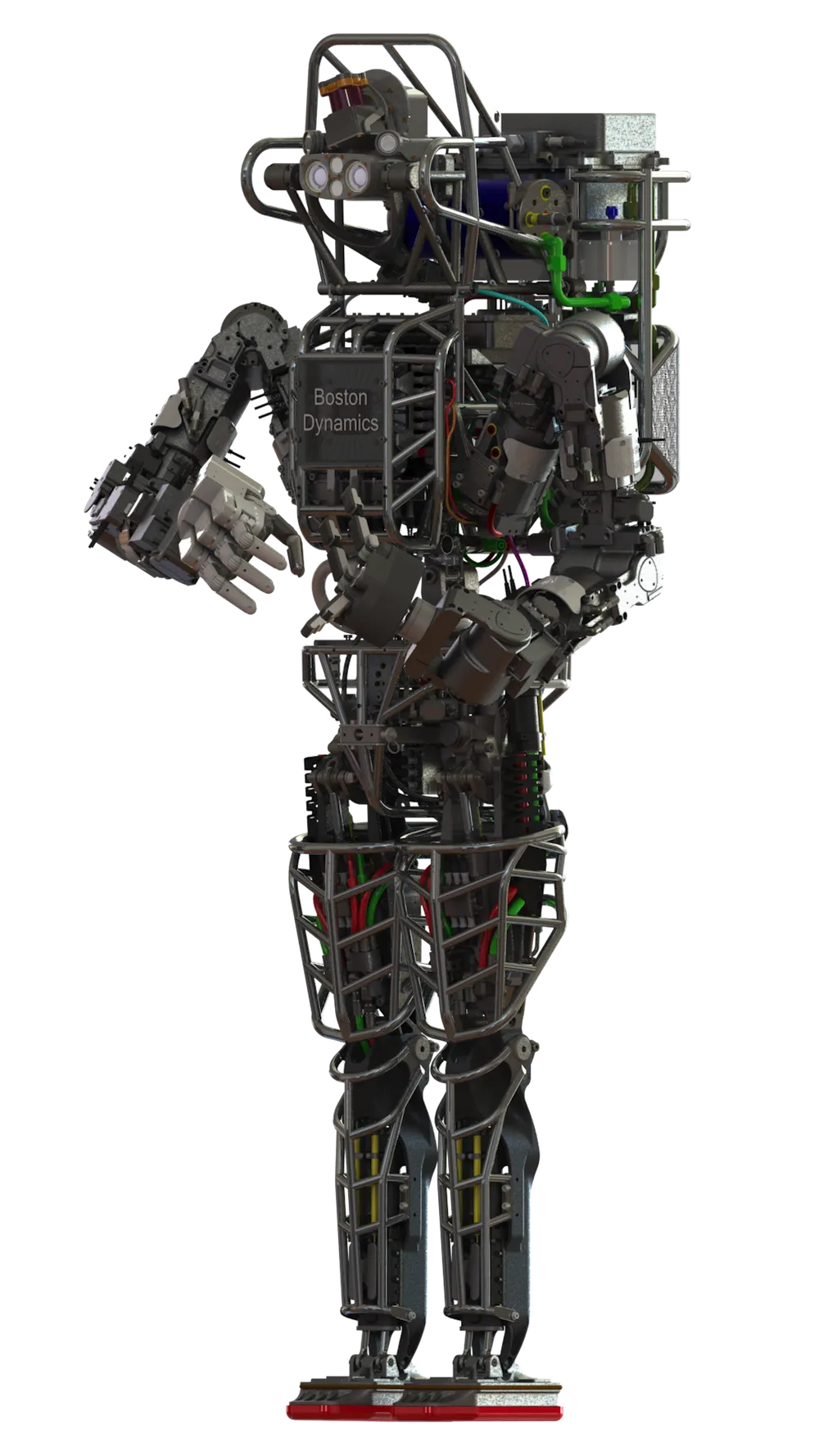
The challenge is to create legged automatons that can walk on uneven surfaces, as humans do, using about the same amount of energy that humans do, Ruina told LiveScience. So far, Boston Dynamics' humanoid robot Atlas can handle rough terrain, but only while tethered to a power supply.
Ruina would also like to see a theory of robot control that explains how living creatures move and handle objects while also providing blueprints on how to get a machine to make the same movements.
Jekanthan Thangavelautham, a roboticist at Arizona State University has similar dreams of an graceful robot that could manage greyhound-like speeds outdoors — in the range of 43 mph (70 km/h), that is. He'd also like to see a fully 3D-printed robot, as well as more robots put to more practical uses. The military, for example, could start using robotic exoskeletons in the field to give soldiers a boost of strength for carrying heavy packs or lifting armaments.
Follow Stephanie Pappas on Twitter and Google+. Follow us @livescience, Facebook & Google+. Original article on LiveScience.

Stephanie Pappas is a contributing writer for Live Science, covering topics ranging from geoscience to archaeology to the human brain and behavior. She was previously a senior writer for Live Science but is now a freelancer based in Denver, Colorado, and regularly contributes to Scientific American and The Monitor, the monthly magazine of the American Psychological Association. Stephanie received a bachelor's degree in psychology from the University of South Carolina and a graduate certificate in science communication from the University of California, Santa Cruz.